

 Flat 1


Project Initiation Phase: Definition, Process & Key Documents
This blog explains the project initiation phase in project management and why it’s critical for defining goals, scope, and feasibility. It covers key initiation documents like the project charter and business case using clear PowerPoint templates. The guide shows how proper initiation helps align stakeholders and reduce project risks early.
Introduction
The project initiation phase is the first stage of the project management lifecycle, where a project is evaluated, justified, and formally approved. Its purpose is to define why the project should exist, assess feasibility, identify key stakeholders, and establish high-level scope before any planning or execution begins.
A well-structured initiation phase ensures that projects start with clarity, alignment, and executive support—reducing risk, avoiding rework, and preventing misalignment later in the lifecycle.
What Is the Project Initiation Phase?
The project initiation phase is the stage where an organization determines whether a proposed project is valuable, feasible, and worth pursuing.
At this stage, the focus is not on execution details but on answering fundamental questions:
- What business problem are we solving?
- What outcomes are expected?
- Is the project viable within current constraints?
- Who will sponsor and own the project?
The outcome of this phase is formal authorization to proceed.
Objectives of the Project Initiation Phase
The primary objective of the project initiation phase is to decide whether a project should move forward.
Key objectives include:
- Establishing a clear business justification
- Defining high-level objectives and success criteria
- Identifying sponsors and key stakeholders
- Clarifying ownership and accountability
- Reducing uncertainty before investing resources
Projects that skip or rush initiation often face scope creep, unclear priorities, and stakeholder misalignment later.
Why the Project Initiation Phase Matters for Project Success
- It sets the direction: This phase defines what the project is really about. Without it, teams move fast—but often in the wrong direction.
- Aligns everyone early: Stakeholders, managers, and teams get on the same page from day one, reducing confusion and future conflicts.
- Clarifies goals and success criteria: You know exactly what “success” looks like before work begins—no guessing later.
- Prevents scope creep: Clear boundaries are set early, so the project doesn’t slowly turn into something bigger, messier, and more expensive.
- Identifies risks before they explode: Potential problems are spotted early, when they’re cheaper and easier to fix.
- Ensures the project is worth doing: It validates the business value, so time and money aren’t wasted on low-impact work.
- Defines roles and ownership: Everyone knows who is responsible for what—no finger-pointing later.
- Builds stakeholder confidence: A well-initiated project feels organized and credible, earning trust from leadership.
- Saves time and money long-term: A little planning upfront prevents major rework, delays, and budget overruns later.
Key Activities in the Project Initiation Phase
- Business Case Development: A business case outlines the problem, proposed solution, expected benefits, estimated costs, risks, and alternatives. It supports informed decision-making by leadership.
- Feasibility Assessment: Feasibility is assessed across technical, financial, operational, and legal dimensions to ensure the project can realistically succeed.
- Stakeholder Identification: Key stakeholders—such as sponsors, decision-makers, and impacted teams—are identified early to ensure alignment and accountability.
- High-Level Scope Definition: The boundaries of the project are defined at a high level, clarifying what is included and excluded without going into detailed requirements.
- Project Authorization: Once reviewed and approved, the project receives formal authorization to proceed to planning and execution.
Key Documents Created During Project Initiation
1. Project Charter
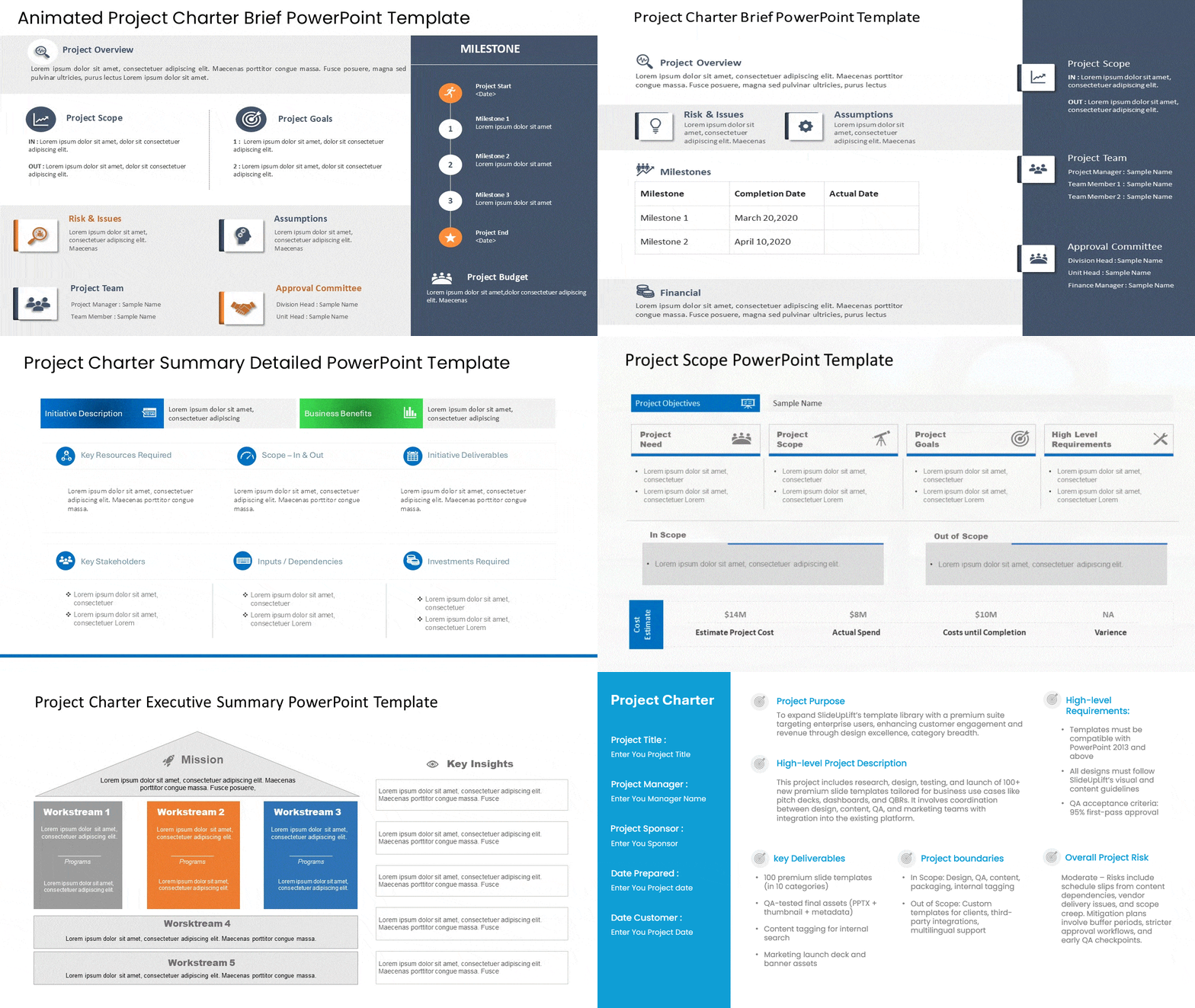
The project charter is the most important output of the initiation phase. It formally authorizes the project and appoints the project manager.
Typical elements include:
- Project purpose and objectives
- High-level scope
- Key stakeholders
- Assumptions and constraints
- Success criteria
2. Business Case
The business case justifies the project from a financial and strategic perspective and is often used to prioritize initiatives.

3. Stakeholder Register
A simple record of stakeholders, their roles, and the level of influence on the project.
These documents provide a single source of truth before planning begins.
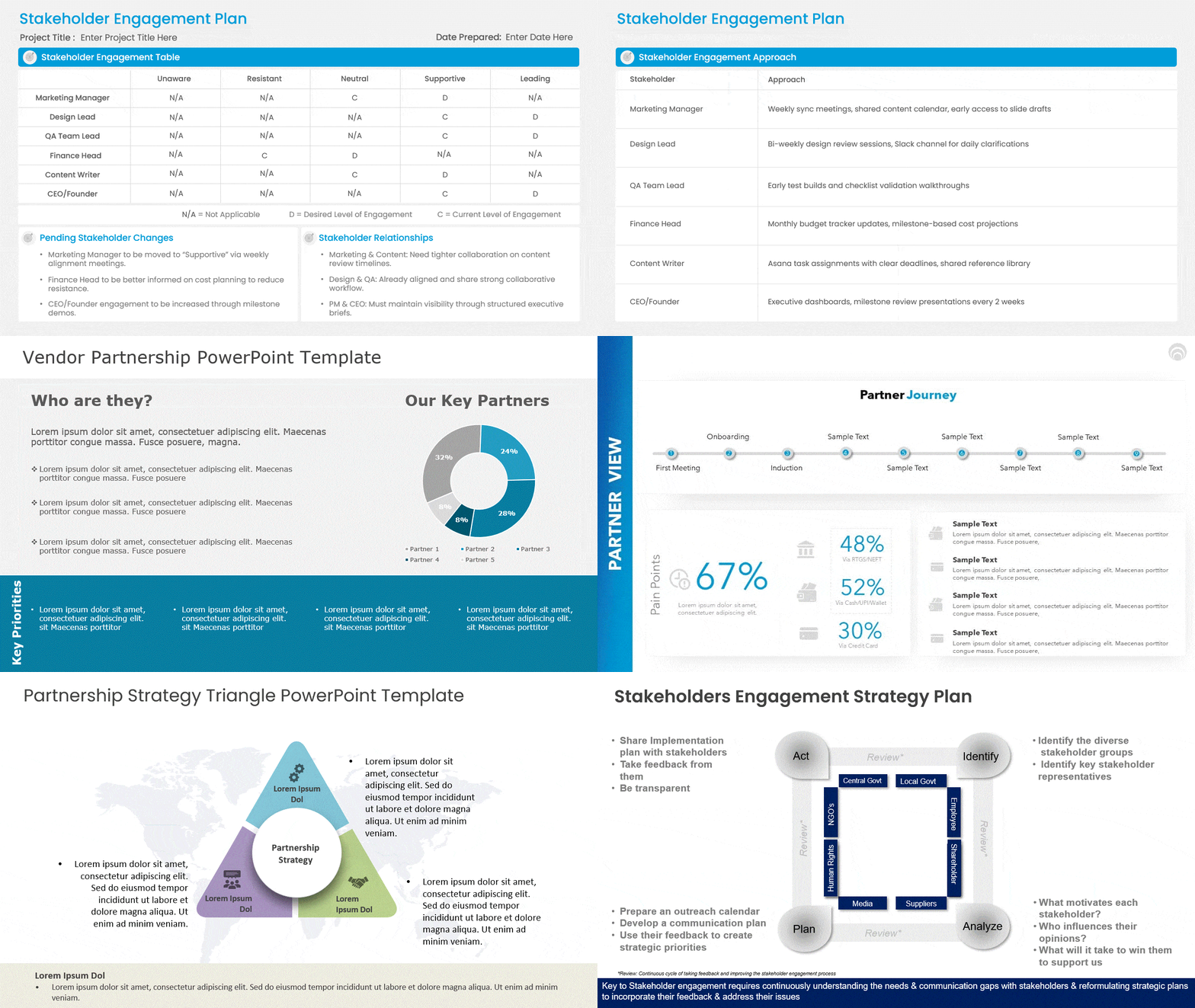
Each of these project initiation documents—such as the project charter, stakeholder register, and business case—needs to be communicated clearly to decision-makers.
Using project management PowerPoint templates helps you present these documents in a structured, visual, and professional way, ensuring alignment and faster approvals.

Project Initiation vs Project Kickoff: Key Differences
Although often confused, project initiation and project kickoff serve distinct purposes.
| Aspect | Project Initiation | Project Kickoff |
| Purpose | Decide if the project should exist | Align the team for execution |
| Timing | Before planning | After approval |
| Audience | Sponsors and leadership | Project team |
| Outcome | Formal authorization | Shared understanding |
Project initiation focuses on approval. Project kickoff focuses on alignment.
Who Is Involved in the Project Initiation Phase?
Typical participants include:
- Executive sponsor
- Business owner
- Project manager
- Finance or governance teams
- Subject matter experts (as needed)
Early involvement of decision-makers improves alignment and speeds up approvals.
Common Mistakes in the Project Initiation Phase
Organizations often underestimate the importance of initiation. Common mistakes include:
- Skipping formal approval
- Vague or unmeasurable objectives
- Weak business justification
- Unclear ownership
- Incomplete stakeholder identification
Avoiding these issues early prevents costly corrections later.
How Project Initiation Sets Up a Successful Project Kickoff
A strong initiation phase ensures that:
- Objectives are clearly defined
- Leadership alignment is established
- Roles and responsibilities are understood
- Teams begin execution with clarity
Once the project is approved, teams typically align execution details using a structured project kickoff presentation, ensuring everyone understands goals, scope, responsibilities, and next steps.

FAQs
-
What is the most important document developed during the initiation phase?
The most important project initiation document is the project charter. In project management, this document formally authorizes the project’s existence and gives the project manager authority to proceed. It summarizes the key components of the project, including its objectives, scope, and stakeholders, making it the foundational agreement for all future work.
-
Which activities are crucial for successful project initiation?
For a successful project initiation, several activities are crucial. These include creating a strong business case to justify the project, conducting feasibility studies to assess its viability, and ensuring early stakeholder engagement. These project management steps ensure the project is well-defined, realistic, and has the support it needs to succeed.
-
What challenges might arise during project initiation?
During project initiation, challenges often include unclear objectives, insufficient stakeholder buy-in, and an underestimation of complexity. These potential risks can derail a project before it starts. Effective risk management and a focus on creating clear objectives are key project management practices to overcome these common hurdles.
-
What are the main objectives of the project initiation phase?
The main project objectives during project initiation are to define the project goals and scope, identify key stakeholders, assess feasibility, and secure formal approval. This phase aims to establish the project’s purpose and its expected business value, ensuring it is a worthwhile undertaking for the organization before committing significant resources.
-
Which key steps should be completed during the project initiation phase?
Key steps to complete during project initiation include building a compelling business case, conducting a feasibility study and initial risk assessment, defining the high-level project scope, and performing a stakeholder analysis. Completing these steps ensures the project starts on a solid and well-documented foundation.
-
Why is the project initiation phase important for successful project management?
The project initiation phase is vital for successful project management because it builds a strong foundation for the entire project. As the first phase, it clarifies goals, aligns stakeholders, and defines boundaries. This upfront work prevents future confusion and is a key predictor of overall project success.
-
How do you define the project initiation phase in project management?
In project management, project initiation is the first step where a new project is formally recognized and defined. The goal of this phase is to create a high-level project definition and establish clear objectives. It’s about determining a project’s viability and getting the authorization needed to move forward.
-
What documents are typically prepared in the project initiation phase?
During project initiation, several key documents are prepared. The most common ones include the project charter, which is the main project initiation document, a feasibility study, a stakeholder register, and an initial risk assessment. These documents collectively define, justify, and authorize the project.
-
Can you give examples of common activities in the project initiation phase?
Common activities in project initiation include developing a business case to justify the project, conducting feasibility studies to assess viability, identifying stakeholders through stakeholder analysis, and holding a kickoff meeting. These actions lay the groundwork for the more detailed project planning that follows.
-
What are the potential risks to watch out for during the project initiation phase?
During project initiation, potential risks include vague objectives, poor stakeholder engagement, and unrealistic timelines or budgets. Effective risk management involves identifying these issues early and developing risk mitigation strategies. This ensures these problems don’t undermine the project before project planning even begins.
Table Of Content





Related posts from the same category

6 Jun, 2024 | SlideUpLift
Project Kickoff Meeting: Agenda, Checklist & Best Practices
A project kickoff meeting is the first formal meeting held after a project is approved. Its purpose is to align stakeholders, clarify objectives, confirm roles, and set expectations before execution

8 Jul, 2021 | SlideUpLift
Avoid Making These 7 Project Management Mistakes
Making mistakes is not a bad thing; tons of lessons can be learned from them. And in the field of Project Management, lessons abound. Projects, unfortunately, seldom go smoothly. There

31 Oct, 2022 | SlideUpLift
The Savvy Project Manager Series: 5 Steps To Successful Project Planning
We encounter projects in our everyday lives. You might be building or contributing to a deliverable like a report, a website, a tool, or a product. These are real projects

5 Jul, 2022 | SlideUpLift
Communicate With Authority Using These Highly Effective Project Presentations
Project management is the application of resources, techniques, and talent to create the required deliverables. Yet, mere delivery is not sufficient- a key differentiator within Project Management is seamless communication

10 Oct, 2025 | SlideUpLift
What Is A Project Charter? Definition, Examples & Best Practices
Launching a project without adequate planning can result in confusion, delays, and misaligned expectations. A project charter is a key document in the project documentation process that lays the groundwork
12 Sep, 2025 | SlideUpLift
What is KPI? Step-by-Step Guide with KPIs Examples That Work
Is it hard for you to know if your business is getting to the level it should be? That's where key performance indicators (KPIs) come into play. KPIs indicate how

18 May, 2021 | SlideUpLift
The 5 Essential PowerPoint Themes For Project Managers
As a project manager, making presentations is an integral part of your job. Making a good presentation requires many elements to be successful, with good presentation design being one of
![Best Work Plan Templates For Easy Task Organization [With Examples]](https://slideuplift.com/wp-content/uploads/2024/03/Best-Work-Plan-Templates.jpg "Best Work Plan Templates For Easy Task Organization [With Examples]")
6 Mar, 2024 | SlideUpLift
Best Work Plan Templates For Easy Task Organization [With Examples]
A project's success depends on having a detailed task plan. How can you perform tasks without having a plan for them? You and your team can produce the ideal work

13 Oct, 2022 | SlideUpLift
Agile vs Traditional Project Management: Key Differences and Which Is Better
Agile project management is an iterative, flexible approach that delivers work in short cycles and adapts to change as it goes. Traditional (Waterfall) project management is a linear, plan-driven approach

7 Sep, 2022 | SlideUpLift
The 5 Essential Google Slides Themes Every Project Manager Must Have
As a project manager, you are responsible for making presentations on a regular basis, which can be quite tiresome. For a presentation to be successful, there are many factors to