
 Flat 4


How to make a Venn Diagram on Google Slides (3 Easy Methods)
Need to compare two products, contrast competing ideas, or map shared traits for a classroom exercise? The most common question designers and educators ask is how to make a Venn diagram on Google Slides without needing any design experience — and the answer is simpler than most people expect.
This guide covers three ways to build a Venn diagram in Google Slides: from scratch with the Shape tool, with the built-in Diagram tool, or by dropping in a ready-made template. You’ll also find step-by-step mobile instructions, export options, and a head-to-head comparison so you can pick the right approach for your situation.
QUICK ANSWER
The fastest way in is Insert → Diagram → Relationships → select the Venn layout → choose 2 or 3 sets → click to insert. For full design control, use the Shape tool (Insert → Shape → Oval). For a polished look, fast, grab a ready-made Google Slides Venn diagram template from SlideUpLift.
A Brief History of Venn Diagrams
The Venn diagram was introduced by British mathematician John Venn in 1880 in a paper titled ‘On the Diagrammatic and Mechanical Representation of Propositions and Reasonings.’ The formal term ‘Venn diagram’ was not widely used until around 1918. Today, these diagrams are standard tools in mathematics, logic, business analysis, science education, and everyday presentation design.
What Is a Venn Diagram?
A Venn diagram uses overlapping circles to show relationships between two or more sets of things. Each circle covers a distinct group. Where circles overlap is the intersection — the traits or items shared by both groups. Where they do not overlap shows what belongs exclusively to each set.
They are used across business, education, and marketing — any time you need to show what two or more groups share and what makes each one distinct.
Simple example: A 2-circle diagram with ‘Dogs’ on the left, ‘Cats’ on the right, and ‘Furry Pets’ in the overlapping center — a classic Venn intersection.
Key Parts of a Venn Diagram
| Term | What It Means |
|---|---|
| Sets / Circles | Each circle represents a distinct group or category of items |
| Intersection | The overlapping area — what two or more sets share in common |
| Union | Everything covered by all circles combined, shared or unique |
| Complement | Elements outside a specific set but still within the universal boundary |
| Universal Set | The outer boundary that contains every set being compared |
When to Use a Venn Diagram
Not sure whether a Venn diagram is the right visual for your slide? Here are four situations where it works especially well.
Marketing — Content and Channel Overlap
Map what belongs to content marketing, what belongs to social media, and what strategies serve both. The overlap zone typically holds evergreen content that gets distributed across both channels — a useful way to show stakeholders that both efforts share the same core assets without duplicating spend.
Business Strategy — Competitor Feature Comparison
Place your product in one circle, a competitor’s product in another. The intersection holds shared features — table-stakes parity the market already expects. Your unique circle is your differentiator. This is one of the clearest formats for a feature gap analysis in a pitch deck or quarterly strategy review.
Education and Personal Development — The Ikigai Model
A classic 3-circle Venn diagram plots what you are good at, what the world needs, and what you can be paid for. Where all three circles meet is the sweet spot. This format is widely used in career coaching, university orientation, and professional development workshops to help people find meaningful work.
Product and Marketing — Audience Segmentation
Visualize the overlap between existing customers, active prospects, and churned users. Where all three groups intersect are the behaviors or needs your messaging must address. The non-overlapping zones reveal which retention or acquisition tactics apply exclusively to each audience — keeping strategy focused and budget justified.
METHOD 1: Create a Venn Diagram in Google Slides Using the Shape Tool
Here is how to make a Venn diagram on Google Slides step by step, starting with the most flexible approach. The Shape tool gives you total control over size, position, color, and layout. If you need a Venn diagram that matches exact brand colors or a custom slide layout, this is the method to use.
How to Make a 2-Circle Venn Diagram Using Shapes
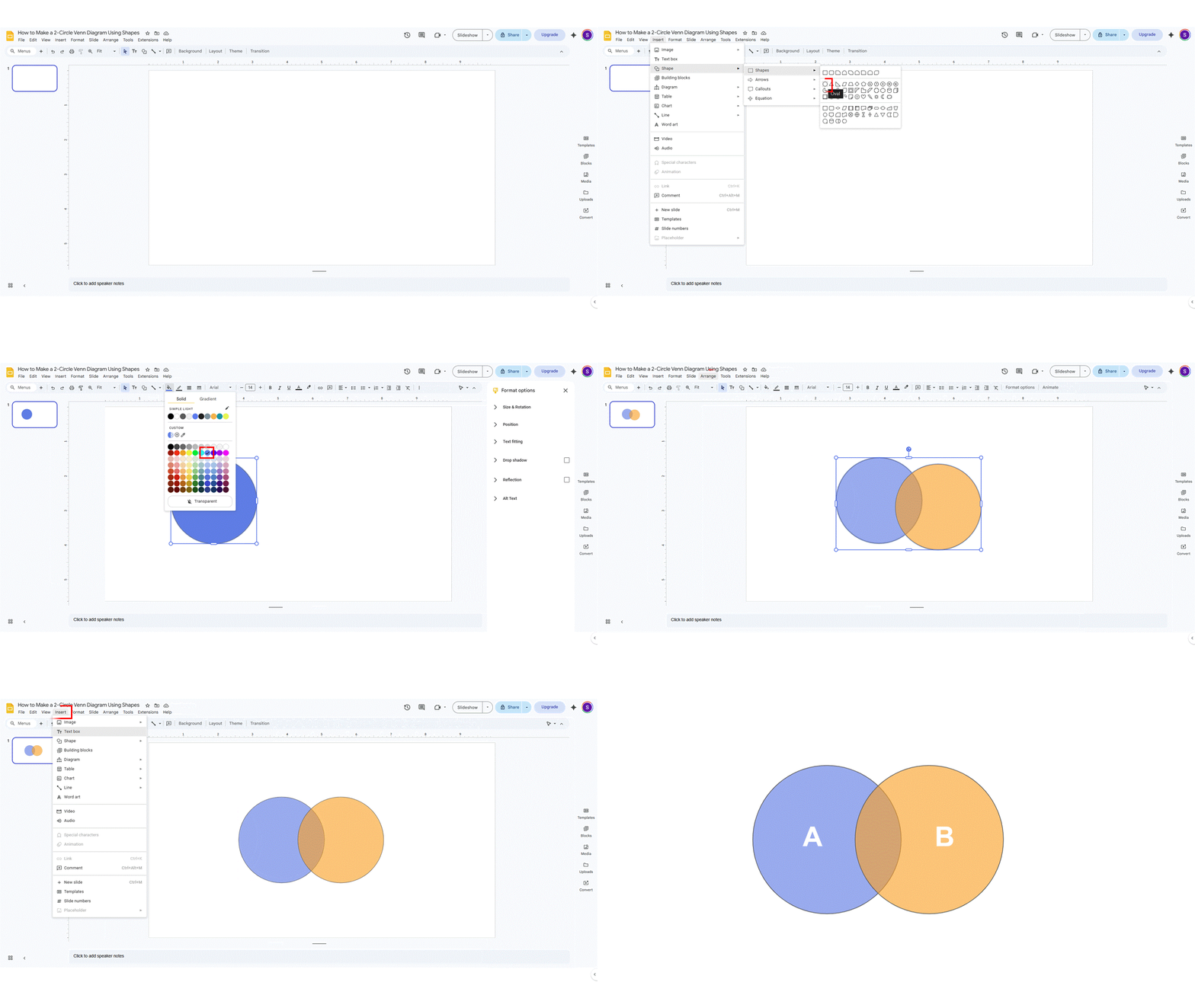
- Step 1: Open your presentation in Google Slides. Navigate to the slide where you want the diagram. Click Insert in the top menu bar.
- Step 2: In the dropdown, hover over Shape. From the sub-menu, select Shapes, then click the Oval tool — the circle icon in the shapes panel.
- Step 3: On your slide, hold Shift while clicking and dragging to draw a perfect circle. Holding Shift constrains proportions so you get a circle, not an oval.
- Step 4: With the circle selected, click the Fill color icon (paint bucket) in the toolbar. Click Custom. A transparency slider appears — drag it to around 50–60%. Without this transparency, the overlap area will be hidden behind the top circle.
- Step 5: Choose your circle’s color. A clear blue or teal works well as a starting base.
- Step 6: Right-click the circle and select Duplicate, or press Ctrl+D (Windows) / Cmd+D (Mac). This creates an identical copy positioned next to the original.
- Step 7: Drag the second circle to overlap the first by roughly 30–40%. Too much overlap crowds both labels; too little looks visually disconnected.
- Step 8: Select the second circle, open Fill color → Custom, assign a different color at the same ~50–60% transparency. You now see three distinct zones: left-only, blended overlap center, and right-only.
- Step 9: Click Insert → Text box. Click inside the left circle to add your first label. Repeat for the right circle. For the overlap zone, insert a text box over the intersection and type the shared trait.
- Step 10: Select all circles and text boxes. Go to Arrange → Group so the entire diagram moves as a single unit when you reposition it.
Tip: The 30–40% overlap rule comes from visual communication best practice — enough overlap to show connection, not so much that the exclusive zones lose visual clarity.
How to Make a 3-Circle Venn Diagram Using Shapes
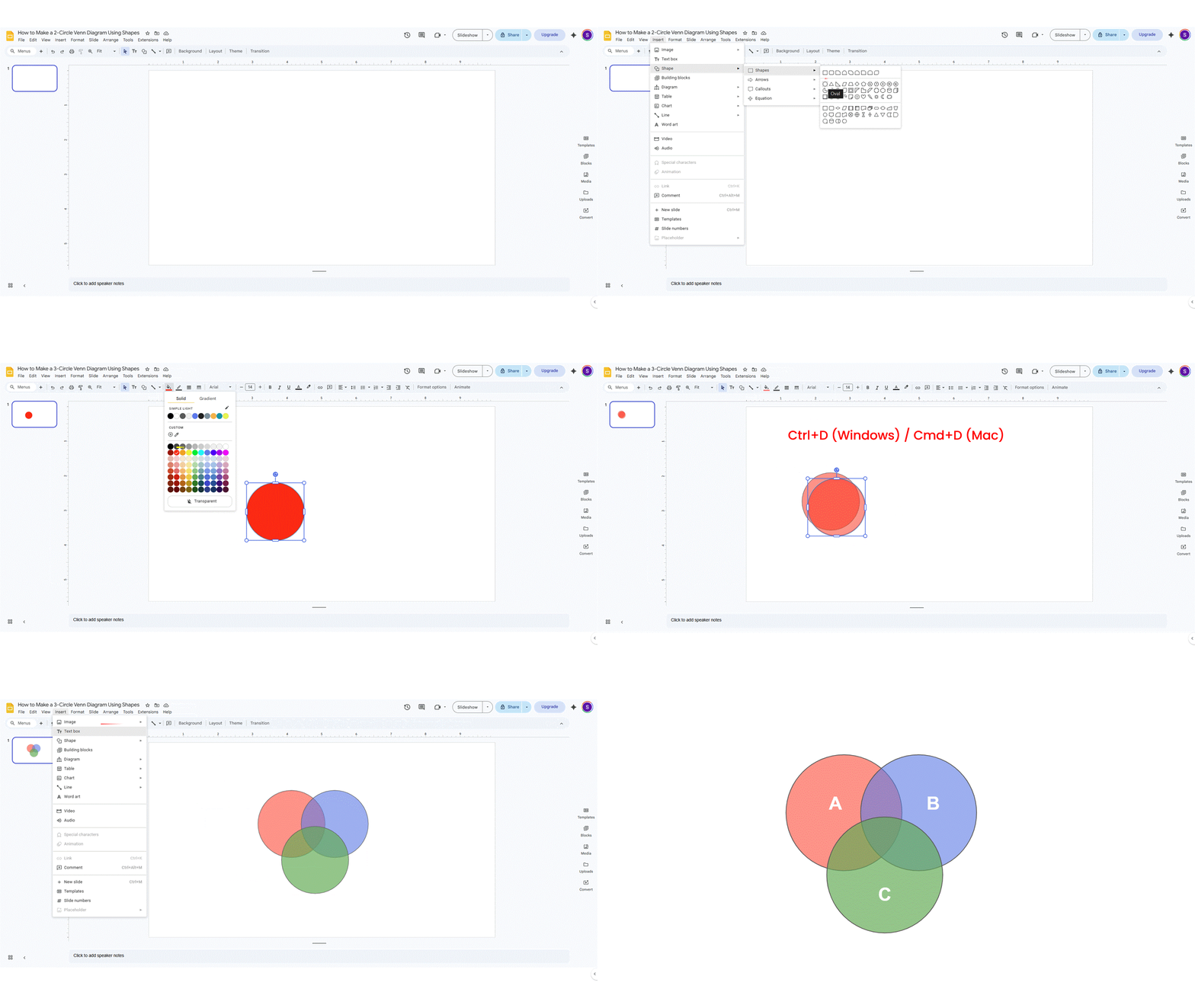
- Step 1: Draw your first circle using the Oval tool with Shift held down, exactly as described above.
- Step 2: Set its fill color and transparency to approximately 50%.
- Step 3: Press Ctrl+D (Windows) / Cmd+D (Mac) twice to create two more duplicates. You now have three circles.
- Step 4: Arrange the circles in a loose triangle: one at the top center, one at the bottom-left, one at the bottom-right. Each pair should overlap slightly, and all three should share a small central overlap zone.
- Step 5: Assign each circle a distinct color — red, blue, and green are easy to tell apart. Keep all transparencies at ~50% so all seven zones are visible: three individual areas, three pairwise overlaps, and one central overlap.
- Step 6: Go to Arrange → Align → Center horizontally to clean up initial positioning. Nudge each circle manually until all three overlap areas look balanced.
- Step 7: Add seven text boxes — one per unique zone. For the center overlap where all three circles meet, insert a text box directly over that shared area.
Pro Tips for the Shape Method
A few extras worth knowing when learning how to make a Venn diagram in Google Slides with the Shape method:
- Hold Shift while resizing to keep circles perfectly round at any scale
- Use Ctrl+D / Cmd+D to duplicate — places the copy in the exact same position, saving repositioning time. Need to duplicate slides in Google Slides instead? We have a full guide for that too.
- Use View → Show guides or Snap to guides for cleaner, more precise circle alignment
- Always Group all elements (Arrange → Group) before moving the diagram to another slide
METHOD 2: How to Add a Venn Diagram in Google Slides Using the Diagram Tool
The built-in Diagram tool is the most streamlined native way to create a Venn diagram in Google Slides. If you have ever searched for how to insert a Venn diagram in Google Slides without touching a single shape, this is exactly what you need — the whole process takes under a minute.
Step-by-Step: Using Insert → Diagram
- Step 1: Open your Google Slides presentation. Click Insert in the top menu bar.
- Step 2: From the dropdown, select Diagram. A panel slides open on the right side of the screen.
- Step 3: In the panel, click Relationships. This category holds pre-built diagram layouts, including the Venn style.
- Step 4: Browse the layout thumbnails displayed in the panel. Click the Venn-style layout — the one showing overlapping circles.
- Step 5: At the top of the panel, use the number selector to choose how many sets you need: 2 or 3 circles.
- Step 6: Select a color theme from the palette options. The chosen theme applies to all circles simultaneously.
- Step 7: Click the layout thumbnail. The diagram inserts directly onto your current slide — no drawing required.
- Step 8: To fine-tune individual circle colors, click any circle, then use the Fill color tool in the toolbar. Click Custom to manually adjust transparency.
- Step 9: Click on any placeholder text label inside the diagram and type your own content directly.
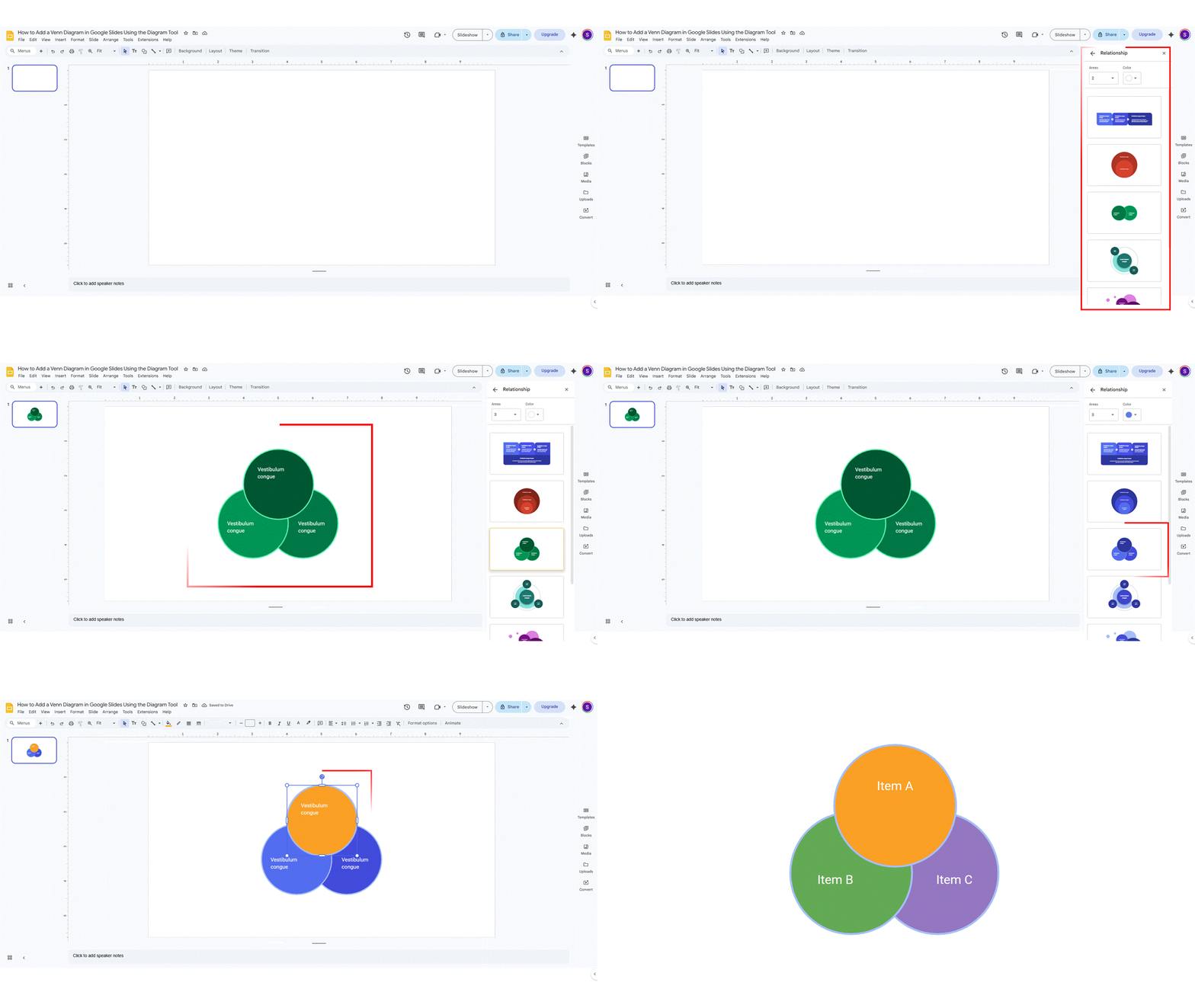
Tip: The inserted diagram is a grouped set of shapes, ready to label. If you need to edit individual elements independently, go to Arrange → Ungroup first — then re-group after editing.
METHOD 3: Use a Pre-Made Venn Diagram Template for Google Slides
Searching for a Venn diagram template you can trust? For a professional finish with minimal setup, a pre-made template is the fastest route. Multiple free sources offer well-designed templates you can paste straight into your deck.
How to Use a Downloaded Template
- Step 1: Visit SlideUpLift and download a Venn diagram template in .pptx format, or click “Use as Google Slides Theme” to open it directly in your Drive.
- Step 2: Open the file in Google Slides. It opens as a new presentation tab in your browser.
- Step 3: Click the Venn diagram on the slide to select it. Press Ctrl+C (Windows) / Cmd+C (Mac) to copy.
- Step 4: Switch to your main presentation and navigate to the target slide where you want the diagram to appear.
- Step 5: Press Ctrl+V (Windows) / Cmd+V (Mac) to paste. A dialog box will ask whether to keep the original theme or match destination formatting — choose based on your deck’s design.
- Step 6: Click each text label to update the content with your own. Use Fill color to swap circle colors to match your brand or presentation palette.

Method Comparison: Which One Should You Use?
Not sure which of the three approaches fits your situation? This comparison breaks down all three methods across the criteria that matter most.
| Feature | Shape Tool | Diagram Tool | Template |
|---|---|---|---|
| Speed | Slower | Fast | Fastest |
| Design Control | Full | Limited | Medium |
| 2-Circle Support | ✓ Yes | ✓ Yes | ✓ Yes (most) |
| 3-Circle Support | ✓ Yes | ✓ Yes | Depends on template |
| Custom Colors | Full control | Preset themes | Editable after paste |
| Works on Mobile | ✓ Yes | ✗ No | ✓ Yes (paste only) |
| Best For | Custom / branded | Quick drafts | Polished decks fast |
Bonus Option — Google Drawings
If you need a standalone Venn diagram outside of a slide deck, Google Drawings works as a lightweight alternative. Create the diagram there, then embed it in Slides via Insert → Image → Google Drive.
Rule of thumb: use the Shape method when precision or custom branding matters. Use the Diagram tool when you need a presentable result in under a minute. Use a template when the deck needs a designed look from the start.
Building a Venn Diagram in Google Slides on Mobile
The Google Slides mobile app lets you build a Venn diagram in Google Slides using the Shape method on both iPhone and Android. Note that the Insert → Diagram tool is not available on mobile — so the Shape approach is your only native option on a phone.
Tip: Verify this in the live Google Slides app before publishing. If Insert → Diagram is available on mobile, delete the sentence above AND remove the ‘Works on Mobile: No’ row from the comparison table.
Steps for iPhone and Android
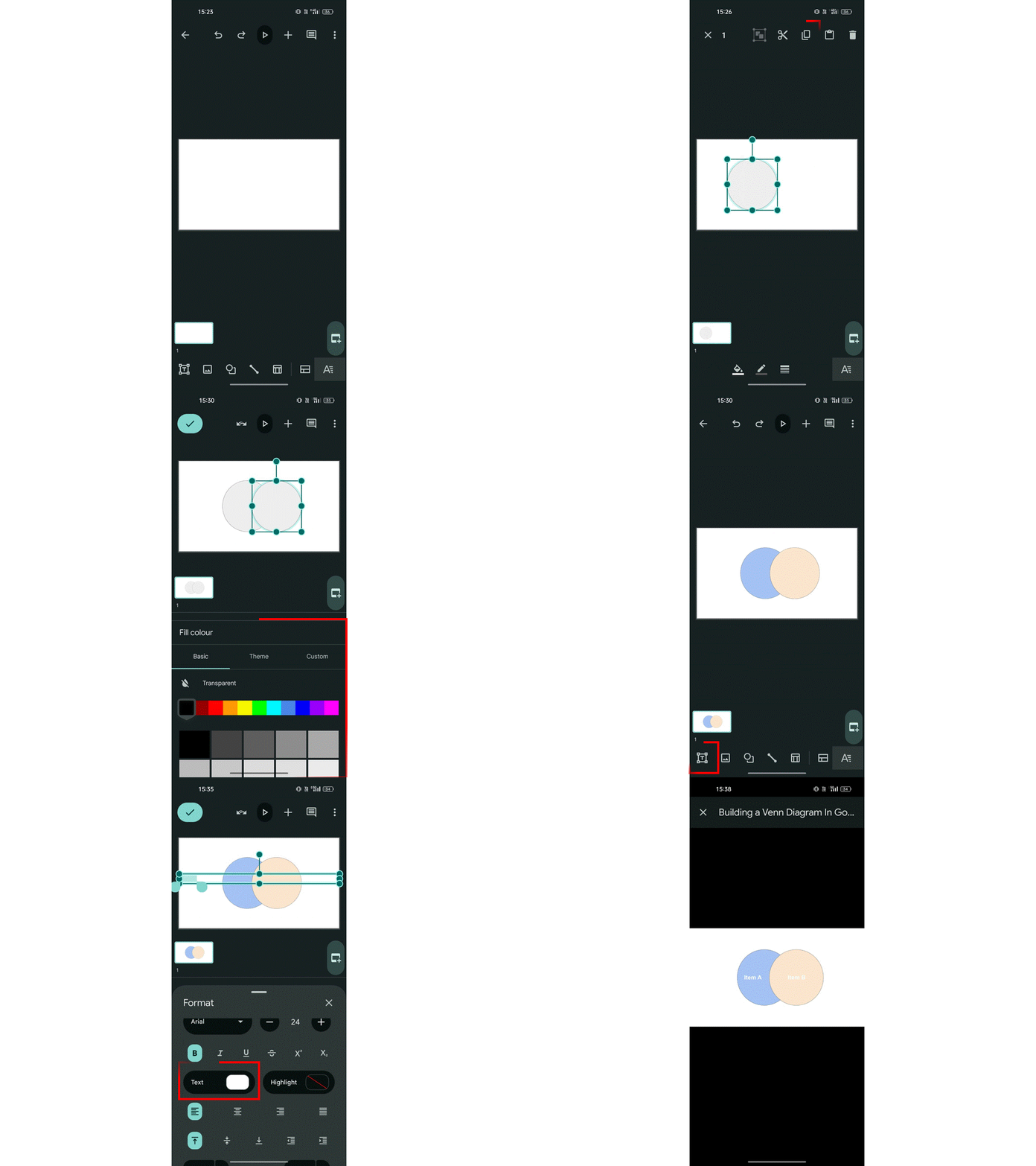
- Step 1: Open the Google Slides app. Tap your presentation, then tap the slide you want to edit.
- Step 2: Tap the + (Insert) icon at the top of the screen. Tap Shape from the menu that appears.
- Step 3: Select the Oval/Circle shape. Drag your finger on the slide to draw it — try to drag diagonally in equal proportions for a rounder result.
- Step 4: Tap the circle to select it. In the formatting menu, tap Fill color, choose a color, then tap Opacity and reduce it to around 50%.
- Step 5: Long-press the circle and tap Duplicate, then drag the copy to overlap the original circle.
- Step 6: Tap Insert → Text box to add labels inside each zone of the diagram.
Mobile Limitations to Know
- The Diagram tool (Insert → Diagram) is not available on the mobile app — use the Shape method instead
- Precise circle alignment is harder without a mouse — a stylus improves accuracy significantly
- The Group function may be limited on some mobile versions — complete final grouping on desktop
How to Export Your Venn Diagram from Google Slides
Export as PNG or JPEG — Best for Image Use
Go to File → Download → PNG image (.png.webp) for highest quality or JPEG image (.jpg.webp) for a smaller file size. Google Slides saves the current slide as a full image file. Use this for embedding the diagram in Word documents, websites, emails, or other presentations.
Export as PDF — Best for Printing
Go to File → Download → PDF Document (.pdf). The entire conversion of Google Slides to PDF — your Venn diagram slide is included. Ideal for printed handouts, client reports, or formal document attachments.
Export as PowerPoint (.pptx) — Best for Cross-App Compatibility
Go to File → Download → Microsoft PowerPoint (.pptx). All shapes, colors, and text labels carry over. Important: transparency values may render slightly differently when opened in PowerPoint — double-check after exporting and adjust if needed. If you regularly need to convert between PowerPoint and Google Slides, check out our step-by-step guide.
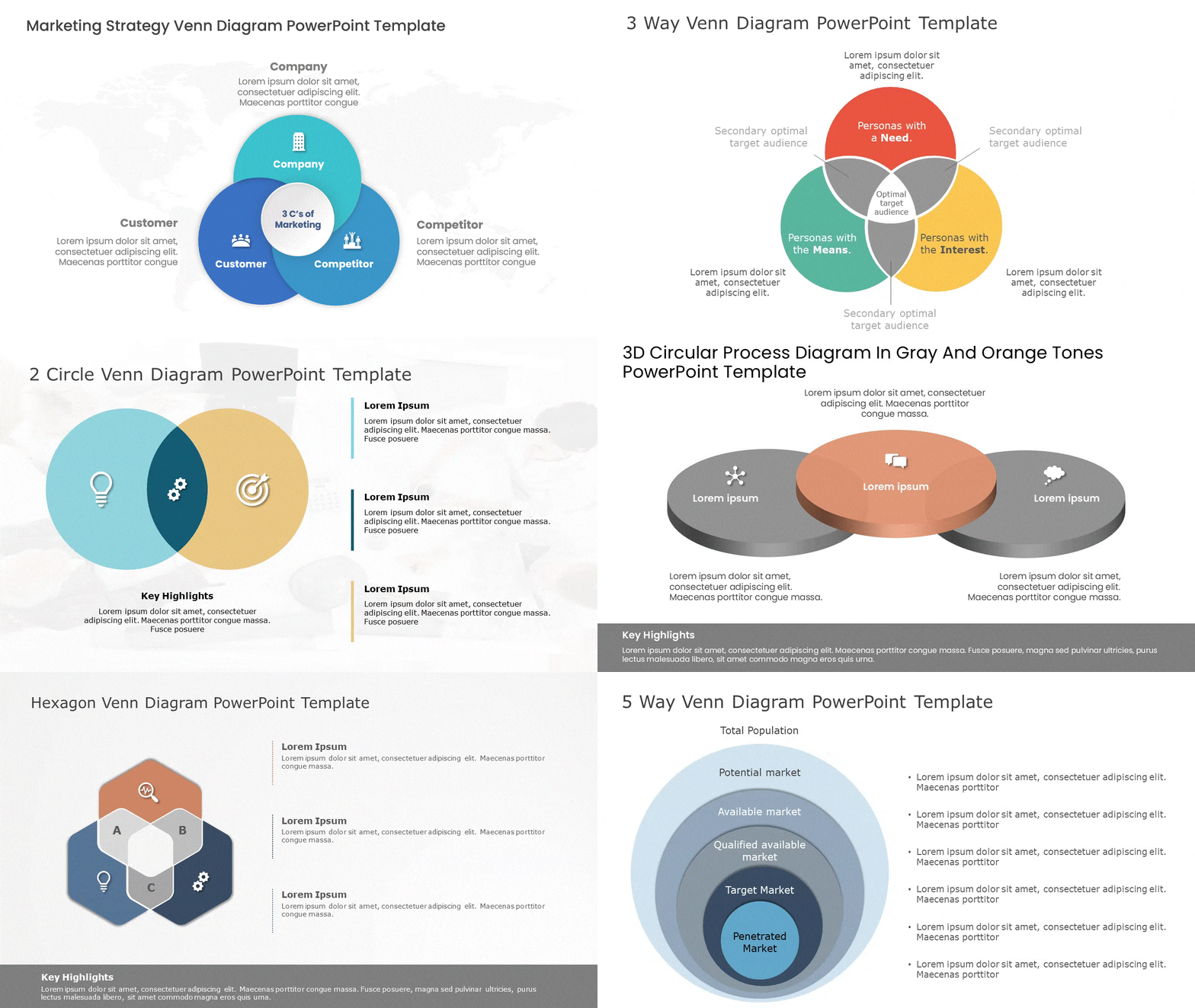
Save time and skip manual design with SlideUpLift’s ready-made Venn diagram templates. Fully customizable for Google Slides and PowerPoint—just edit and present.
Conclusion
You now have three working methods for building a Venn diagram in Google Slides: the Shape tool for precision and full design control, the built-in Diagram tool for speed, and a pre-made template when you need a polished finish fast.
Pick based on your time and need: use Insert → Diagram if you have under a minute, use shapes when the design needs to be exact, and grab a template when the deck needs to look professionally designed from the start. Once your diagram is ready, use the export options to take it into PDFs, image files, or PowerPoint for use anywhere beyond your presentation.
If you want your presentations to look polished beyond just the Venn diagram, SlideUpLift has 40,000+ professionally designed Google Slides templates covering every business use case — pitch decks, strategy slides, marketing reports, and more. All are fully editable and ready to use. Browse Google Slides Templates

FAQs
-
How to make a Venn diagram on Google Slides from scratch?
The Shape method is the go-to answer here. Go to Insert → Shape → Shapes → Oval. Hold Shift while drawing to create a perfect circle. Duplicate it (Ctrl+D / Cmd+D), position the copy to overlap the first circle by about 30–40%, set each circle to ~50% transparency using Fill color → Custom, choose different colors for each circle, and add text boxes to label each zone
-
Can I create a 3-circle Venn diagram in Google Slides?
Yes. Both the Shape tool and the built-in Diagram tool support 3-circle Venn diagrams. With shapes, draw three circles in a triangle arrangement so all three share a central overlap zone, and use ~50% transparency so all seven areas are visible. With the Diagram tool, go to Insert → Diagram → Relationships, select the Venn layout, and set the level count selector to 3.
-
How do I create a Venn diagram in Google Slides?
There are three ways to create a Venn diagram in Google Slides: draw it using the Shape tool, insert one via the built-in Diagram tool, or paste one in from a pre-made template. The Diagram tool (Insert → Diagram → Relationships) is the fastest option; the Shape tool gives you the most control over sizing, color, and layout.
-
What is the easiest way to make a Venn diagram in Google Slides?
The easiest approach is to use the built-in Diagram tool — no shapes to draw manually. Go to Insert → Diagram → Relationships, select the Venn-style layout, choose 2 or 3 circles, pick a color theme, and click to insert. The whole process takes under a minute.
-
How do I make the overlapping area of a Venn diagram transparent in Google Slides?
Click a circle to select it. Go to Fill color in the toolbar, then click Custom. A transparency slider appears — drag it to around 50–60%. Repeat for each circle. With both circles semi-transparent, the overlapping area becomes a visible blended color zone automatically, making the intersection clear without any extra steps.
-
Can I create a Venn diagram in Google Slides on my phone?
Yes, using the Shape method. Open the Google Slides app, tap + → Shape → Oval, draw your circle, set fill color and reduce opacity to ~50%, duplicate it, drag to overlap, and label each zone with text boxes. Note: the Insert → Diagram tool is not available on the mobile app — Shape is your only native option on iPhone or Android.
-
How do I export a Venn diagram from Google Slides as an image?
Navigate to the slide containing your diagram. Click File → Download → PNG image (.png) for the highest quality or JPEG image (.jpg) for a smaller file. Google Slides downloads the entire current slide as an image — the diagram is captured exactly as it appears on screen.
-
Can I copy a Venn diagram from PowerPoint into Google Slides?
Yes. Select and copy the diagram in PowerPoint (Ctrl+C), switch to Google Slides, and paste (Ctrl+V). A formatting dialog will appear — choose ‘Keep original theme’ or ‘Match destination formatting’ as needed. Most shapes, colors, and text transfer cleanly. Some transparency values or font styles may need minor adjustments after pasting.
-
Are there free Venn diagram templates for Google Slides?
Yes. SlideUpLift has a free Venn diagram template and 136+ premium Venn diagram templates for Google Slides — download any of them, copy the diagram into your deck, and swap the labels. SlideUpLift’s templates don’t require sign-up for basic downloads and are beginner-friendly to edit.
-
How do I add text to the intersection area of a Venn diagram in Google Slides?
Click Insert → Text box. Click directly in the overlapping area of the diagram and type your label. The text box floats independently above the shapes as its own layer — drag it to any position and resize as needed. Make sure the text box is not currently grouped with the circles before positioning it, then re-group everything afterward.
Table Of Content


Related posts from the same category

5 Aug, 2022 | SlideUpLift
How To Hyperlink In Google Slides Presentation?
A hyperlink is described as a word, phrase, or picture that, when clicked, directs the user to a pre-selected document, webpage, or even a portion within the Google Slides presentation

29 Dec, 2023 | SlideUpLift
How to Make Checkboxes in Google Slides?
Google Slides is one of the most widely used presentation tools today. It is used for creating simple text and picture presentations and complex presentations. You can create surveys and

30 Apr, 2026 | SlideUpLift
How to Add a Border in Google Slides (7 Easy Methods)
To add a border in Google Slides, insert a rectangle shape, set its fill to transparent, and customize the border color and weight from the toolbar. You can apply borders

23 Sep, 2022 | SlideUpLift
How To Add Drop Shadows In Google Slides
Google Slides provide effects like drop shadows, which is an effective feature for presentation design. They can assist in making a flat image, text, or object more interesting by making

24 Jan, 2024 | SlideUpLift
How To Insert A Fraction in Google Slides?
Google Slides is not just a versatile tool for conveying ideas and strategies but also numbers and complex data. Some numbers and data are part of advanced equations, including fractions.

1 Oct, 2025 | SlideUpLift
Insert Calendar In PowerPoint And Google Slides: Quick Guide For Smarter Planning.
Do you want your presentations to be more organized, attractive, and professional? Learning how to add a calendar in PowerPoint or Google Slides will take boring schedules and deadlines and

6 Jan, 2023 | SlideUpLift
How to Add Header and Footer in Google Slides?
Google Slides is a powerful presentation tool allowing users to create professional-looking presentations easily. One important aspect of any presentation is the header and footer, which can provide context and

12 Jun, 2025 | SlideUpLift
How to Make an Org Chart in Google Slides: A Step-by-Step Guide
Want to map out any type of organizational structure—whether it's a company, project team, or even a hierarchy? An org chart helps visualize relationships between roles, departments, or functions in

19 Mar, 2024 | SlideUpLift
How To Insert An Equation In Google Slides?
Google Slides is a fantastic online professional software for professionals across industries. If you are new to it, you must be wondering how to insert an equation in Google Slides.

29 Aug, 2023 | SlideUpLift
How to Use Word Art in Google Slides?
Google Slides has proven to be a dynamic platform. It enables you to easily create powerful presentations due to its seamless collaboration capabilities and variety of creative tools. Word Art