
 Flat 4


Curved Arrow PowerPoint: How to Make, Draw, and Customise Arrows Step by Step
Quick Answer: To make a curved arrow in PowerPoint, go to Insert > Shapes > Block Arrows, select a curved arrow shape, and drag to draw it on your slide. Use the yellow adjustment handles to bend the curve to your preference, then open the Shape Format tab to customise the colour, outline weight, and arrowhead style. The whole process takes under two minutes and works on PowerPoint 2016, 2019, 2021, and Microsoft 365 on both Windows and Mac.
Three methods are covered in this guide — built-in shapes (quickest), merged shapes (custom design), and SmartArt (for full diagrams) — each suited to a different level of complexity.
Introduction
Curved arrows in PowerPoint are one of the most practical visual tools available — they guide your audience through connected ideas, show process flow, and establish relationships between elements on a slide without cluttering the layout.
Whether you need to add a curved arrow in PowerPoint to a simple process flow or build a full cyclic diagram, knowing how to do it correctly gives your slides a polished, professional edge. This guide covers three reliable methods, from beginner-friendly built-in shapes to fully custom merged designs, along with tips for looping, labelling, and avoiding the most common mistakes.
Each curved arrow PowerPoint technique in this guide applies to PowerPoint 2016, 2019, 2021, and Microsoft 365 on both Windows and Mac.
Types of Arrows in PowerPoint
Before creating your arrow, it helps to know which type fits your use case. Every curved arrow serves a distinct visual purpose, and PowerPoint offers five main options:
- Curved Arrow — A single-direction arrow with a smooth bend. Best for showing sequential flow or guiding attention from one element to another.
- Block Arrow — A bold, filled arrow shape with a solid body. Used for emphatic directional cues or call-to-action pointers in infographic-style slides. For bolder, dimensional versions, see our guide on how to make a 3D arrow in PowerPoint.
- Double Arrow — An arrow with heads on both ends. Indicates a two-way relationship, comparison, or reversible connection between two items.
- Circular / Cyclic Arrow — A curved arrow that wraps around in a circle. Ideal for representing repeating processes, feedback loops, or continuous cycles.
- Arc Arrow — A thin, partial-curve arrow that covers part of a circle. Works well as a subtle connector or for showing rotation and progression without a full loop.
Each PowerPoint curved arrow type is available under Insert > Shapes > Block Arrows. Whether you’re adding one to an infographic slide or a process diagram, choosing the right type first saves you significant time on customisation later.
How to Make Curved Arrows in PowerPoint — 3 Methods
PowerPoint gives you three distinct ways to create curved arrows depending on the complexity and precision you need. All three are covered below.
Method 1: Using Built-in Curved Arrow Shapes (Quickest)
The most straightforward way to make a curved arrow in PowerPoint is through the built-in shape library — no design experience required. You can insert and customise one in under two minutes..
- Open your PowerPoint presentation and navigate to the Insert tab in the ribbon.
- Click Shapes. In the dropdown, scroll to the Block Arrows section.
- Select the curved arrow shape that fits your layout — single, double, or circular.
- Click and drag on your slide to draw the arrow. Hold Shift while dragging to constrain proportions.
- Use the yellow adjustment handles that appear on the shape to bend and extend the curve to your preference.
- Open the Shape Format tab to change colour (Shape Fill), border colour and weight (Shape Outline), and arrowhead style (Shape Outline > Arrows).
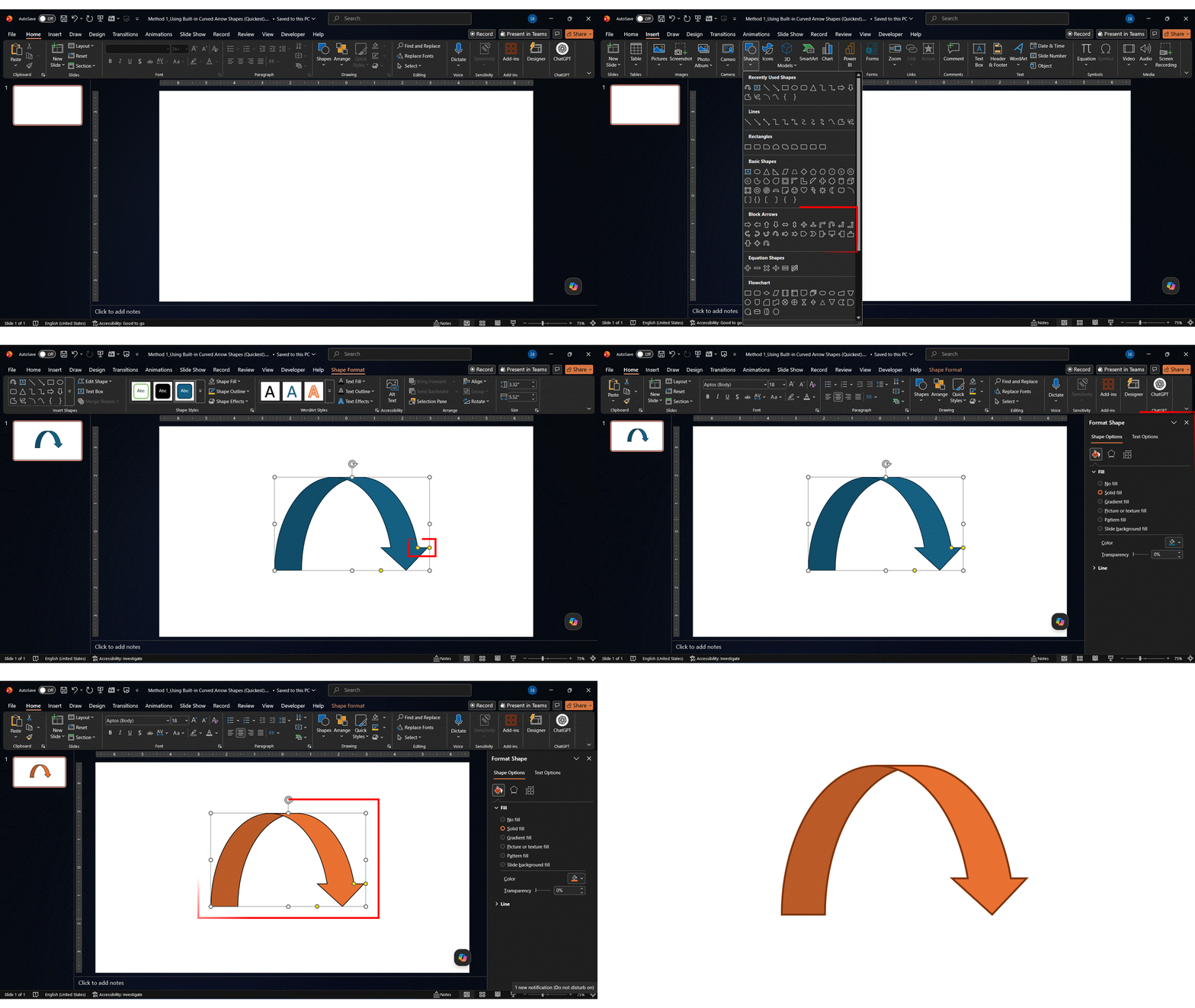
Pro Tip: To make a thin curved arrow, go to Shape Format > Shape Outline > Weight and select 1 pt or 1.5 pt. Reduce arrowhead size via Shape Outline > Arrows.
For a curved double arrow: choose the Double Arrow shape from Block Arrows, then apply the curved line style. To add a curved right arrow in PowerPoint, select the Curved Right Arrow from Block Arrows and use the yellow handle to control its angle and direction. For a circular arrow, select the Circular Arrow shape — you can control how much of the circle it covers using the yellow adjustment handle.
Pro Tip: On Windows, the quickest way to open the Shapes panel directly is to press Alt + N + SH, then navigate to Block Arrows.
On a Mac, go to Insert > Shapes from the top menu bar — the keyboard shortcut path differs slightly from Windows, but the Shape library is identical.
Method 2: Merging Shapes to Create a Custom Curved Arrow
This method shows how to create a curved arrow in PowerPoint with a fully custom shape — useful when the built-in options do not match the exact curve or thickness you need. By combining an arc with a triangle arrowhead, you get complete design control.
- Go to Insert > Shapes and select Arc from the Lines section — or choose Freeform Shape to draw along any completely custom path.
- Draw the arc on your slide by clicking and dragging. Use the yellow handles to bend it to the precise angle you need before adding the arrowhead.
- Go back to Insert > Shapes and select a small Triangle shape. This will be your arrowhead.
- Position and rotate the triangle so it sits precisely at one end of the arc, pointing in the intended direction.
- Select both shapes by holding Shift and clicking each one.
- In the Shape Format tab, click Merge Shapes > Union to combine them into a single object.
- Adjust the fill colour, outline, and size of the merged shape as needed.
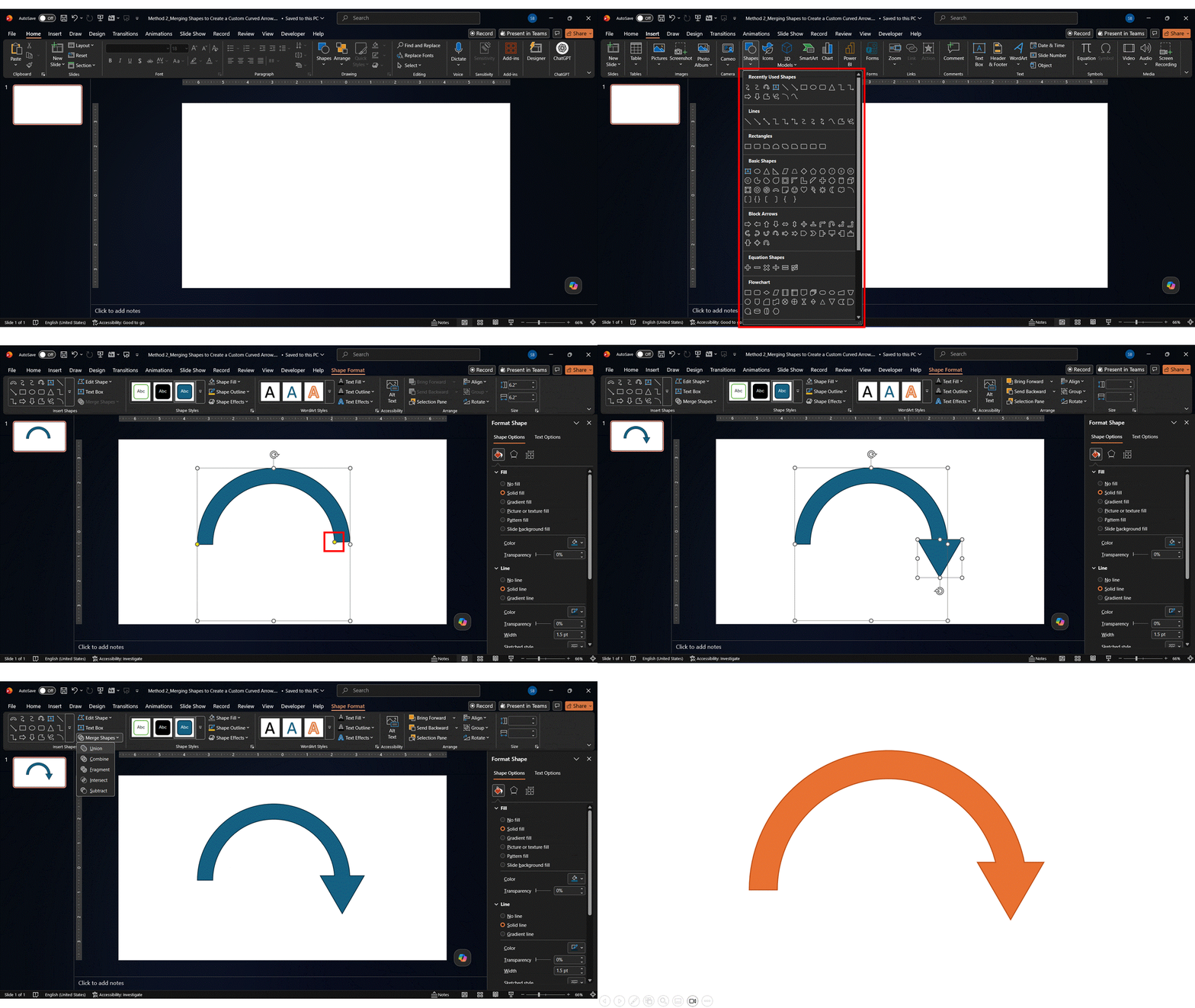
Pro Tip: Use Edit Points (right-click > Edit Points) after merging to fine-tune the curve at any anchor point. Keep the number of points to a minimum — fewer points produce a smooth, professional curve rather than a kinked, hand-drawn look.
Method 3: Using SmartArt Graphics for Curved Arrows
SmartArt is the ideal choice when your curved arrows are part of a larger process flow or cycle diagram. SmartArt creates a visually matched set of arrows automatically, saving significant design time.
- Go to Insert > SmartArt.
- In the Choose a SmartArt Graphic dialog, select Process or Cycle from the left panel.
- Browse the layouts and choose one that uses curved arrows — such as Continuous Arrow Process or Basic Cycle.
- Click OK to insert the SmartArt.
- Replace the placeholder text with your content.
- Use the SmartArt Design tab to change colour schemes and styles, and the Format tab to adjust individual shape sizes or layouts.
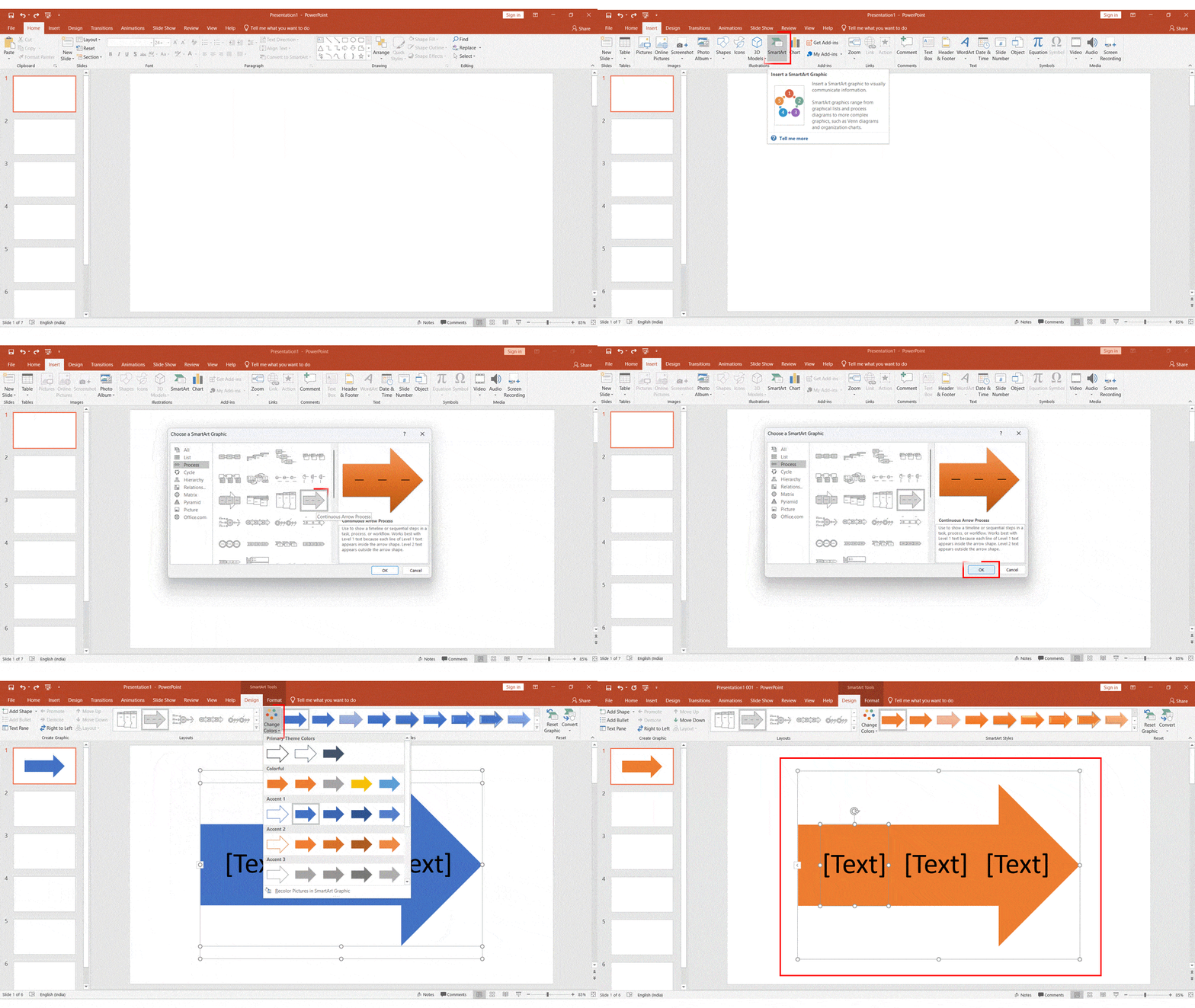
Pro Tip: For cyclic processes, use the Cycle category rather than Process. You can also start with a curved arrow PowerPoint template from the SmartArt Cycle and Process categories for an instantly styled, professional diagram.
If you’re building a full process diagram rather than a single arrow, our step-by-step guide on how to make a flowchart in PowerPoint covers the wider workflow.
How to Create a Loop with PowerPoint Arrows?
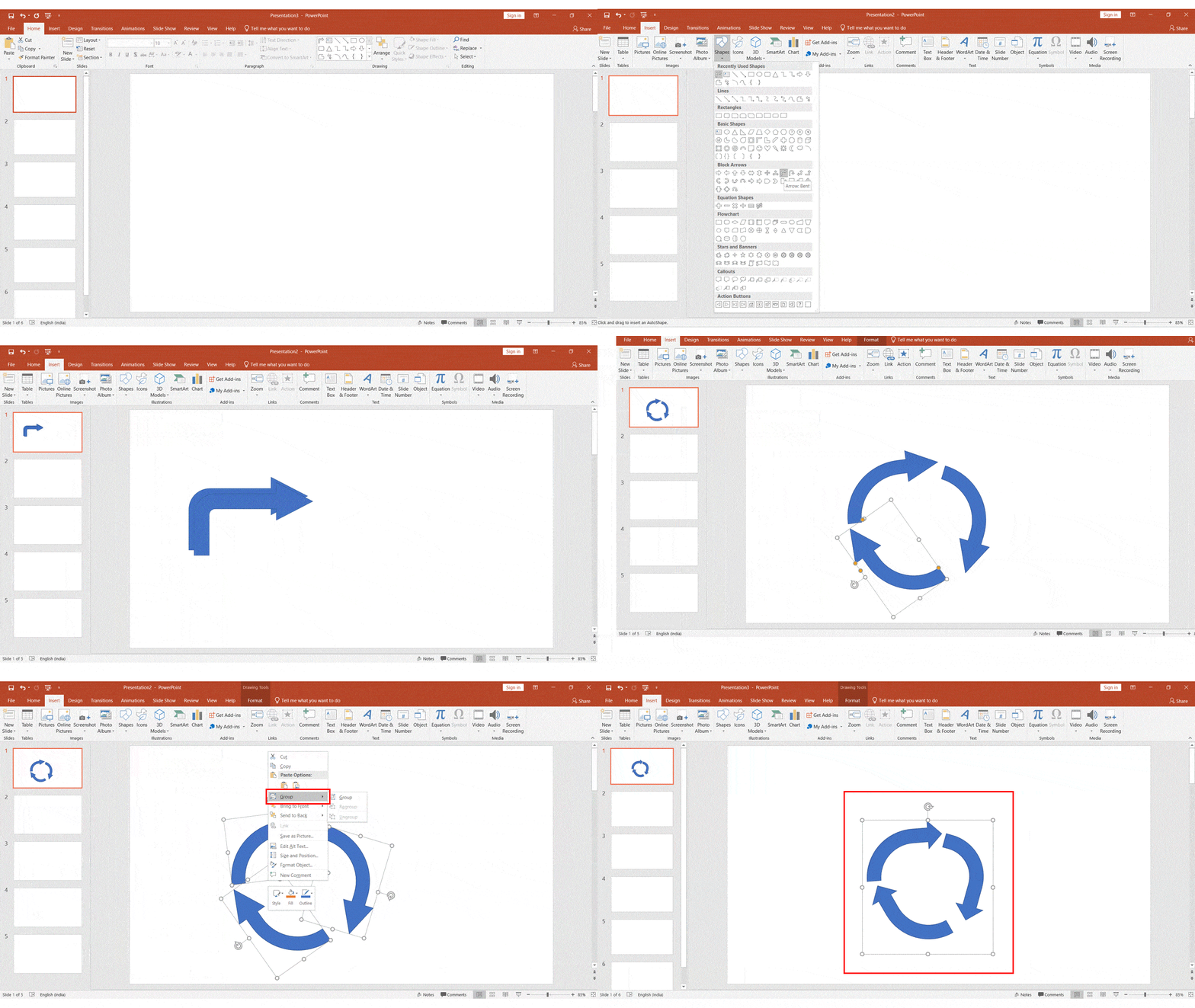
A loop is a sequence of curved arrows that connects end-to-end, forming a complete cycle. Here’s how to build a curved-arrow loop from scratch using built-in shapes:
- Create your first curved arrow using Method 1 above.
- Select it and press Ctrl + D to duplicate. Position the duplicate directly beside the original.
- Use the yellow adjustment handles to rotate and resize the duplicate so it curves in the opposite direction, forming the second segment of the loop.
- Repeat the duplication and rotation until all segments connect and the loop closes.
- Select all arrows, right-click, and choose Group to lock them as one object for easier repositioning.
Pro Tip: Use View > Guides and View > Gridlines to snap arrows into precise alignment as you build the loop.
How to Label Arrow Loops in PowerPoint?
Adding text to a PowerPoint curved arrow loop helps your audience follow the sequence without ambiguity. Every arrow loop benefits from concise, well-positioned labels — especially when the flow represents a multi-step process.
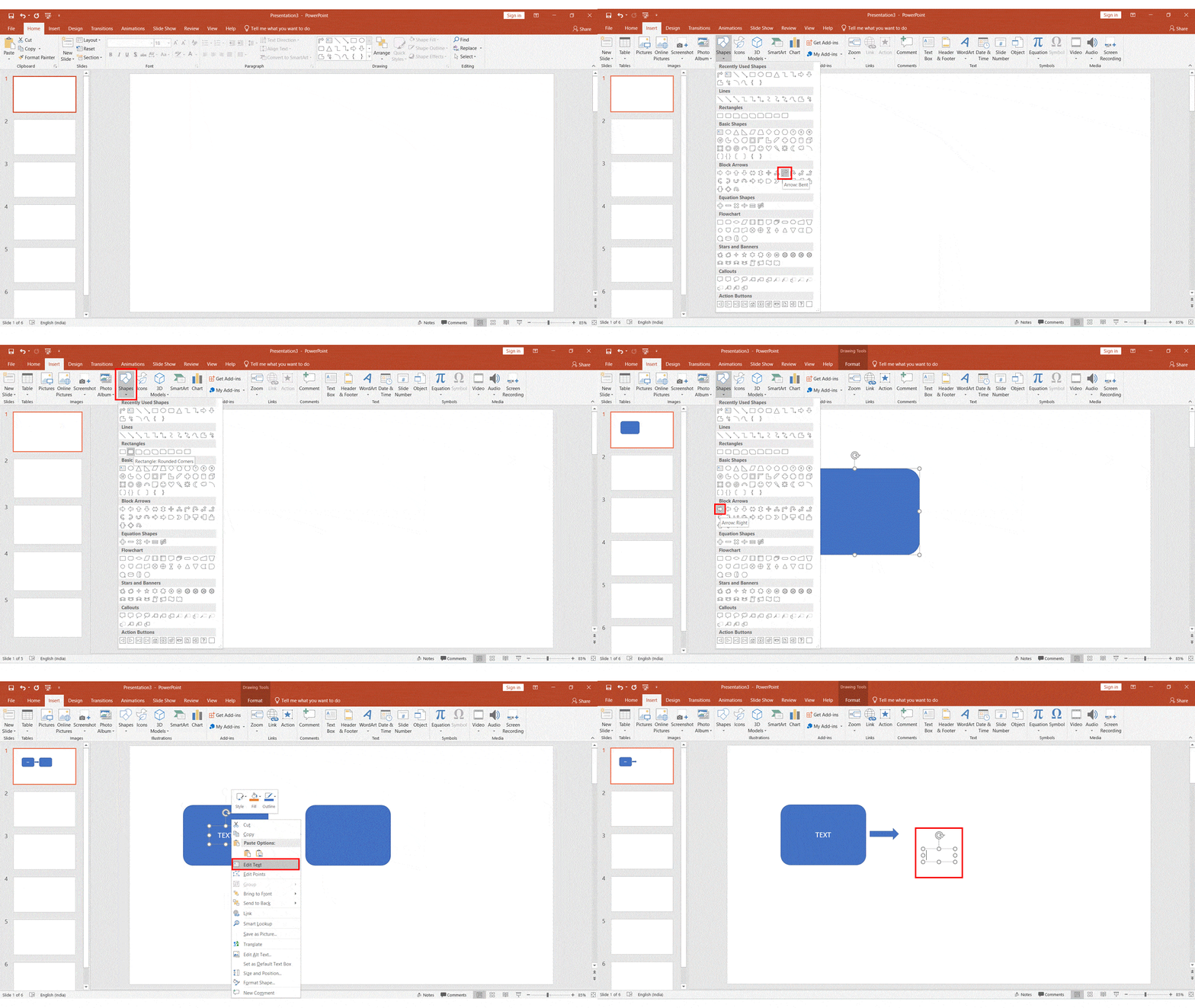
- Adjust the length of each arrow segment slightly using the yellow handles to create visual space in the centre of the loop.
- Go to Insert > Shapes and choose a text-friendly shape — a rectangle with rounded corners works well.
- Draw the label shape inside or near each arrow segment.
- Type your label text and format it to match your slide theme (font, colour, size).
- Use Insert > Text Box as an alternative if you want label text without a background shape.
Pro Tip: Keep label text concise — one to three words per label. Anything longer competes with the arrows visually. To wrap a label around a curve itself, see our guide on how to curve text in PowerPoint.
Common Mistakes to Avoid When Using Arrows in PowerPoint
Arrows add clarity when used well — but these six mistakes consistently undermine that clarity:
| Mistake | Why It Hurts | Fix |
| Too many arrows | Overwhelms the audience and dilutes focus | Use only arrows that are essential to guide the viewer |
| Arrows without a clear start/end | Confuses flow and narrative direction | Every arrow must have a defined source and destination |
| Over-styled arrows (thick, colourful, shadowed) | Distracts from the actual message | Use clean, simple arrows that match your slide theme |
| Wrong arrow type | Straight arrows, where curved ones fit better, look jarring | Match arrow style to the concept — curved for flow, straight for direct links |
| Inconsistent direction | Breaks the logical sequence for the viewer | Maintain a consistent direction; change only to show a loop or reversal |
| Poor alignment | Makes slides look unpolished and unprofessional | Use PowerPoint’s alignment grid and guides to position arrows precisely |
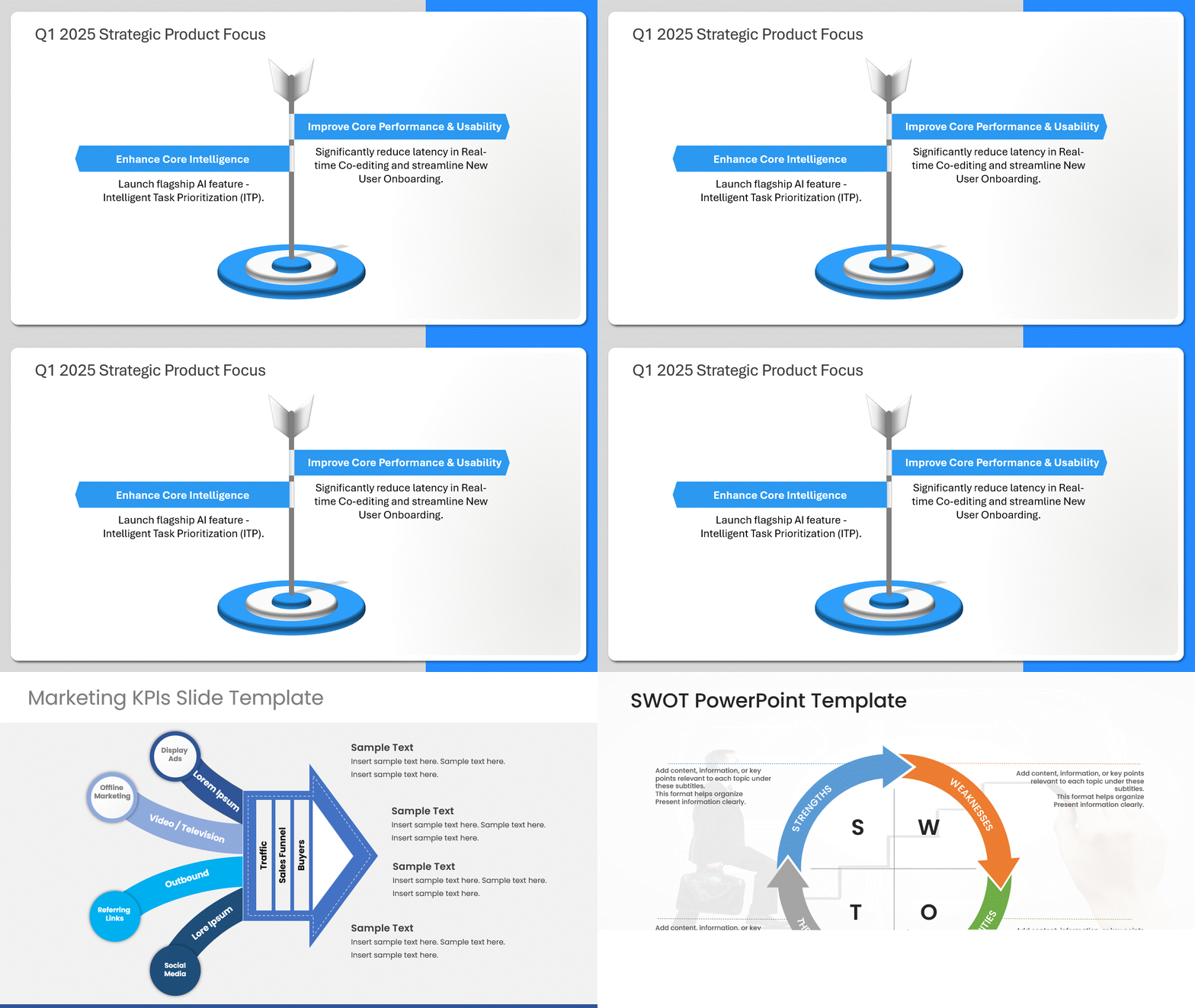
While creating curved arrows manually is useful, using professionally designed arrow templates can save time and ensure a more polished look. Ready-to-use arrow PowerPoint Templates help you focus on your message while maintaining visual consistency throughout your presentation.
Conclusion
Curved arrows in PowerPoint are far more than decorative shapes — they are the connective tissue that makes a slide layout readable and intentional. When placed correctly, they guide the viewer’s eye, establish sequence, and communicate relationships that text alone cannot convey as efficiently.
The three methods covered in this guide — built-in shapes, merged shapes, and SmartArt — give you full control over your curved arrow PowerPoint designs, whether you need a quick single curved arrow in PowerPoint or a polished multi-step cycle diagram. Apply the formatting tips, avoid the common mistakes, and your arrows will strengthen rather than clutter your slides.
Start with the built-in shapes for speed. Graduate to merged shapes or SmartArt as your layouts grow in complexity. And always keep your arrows purposeful, consistent, and aligned with the visual style of your presentation.
FAQs
-
How do I create a curved arrow in PowerPoint?
Go to Insert > Shapes > Block Arrows and select a curved arrow shape. Click and drag on the slide to draw it, then use the yellow adjustment handles to change the curvature. This is the standard method, and it needs no third-party tools. Use the Shape Format tab to adjust colour, outline weight, and arrowhead style. Works on PowerPoint 2016, 2019, 2021, and Microsoft 365.
-
Can I animate a curved arrow in PowerPoint?
Yes. Select the arrow, go to Animations > Add Animation, and choose effects like Wipe, Grow/Shrink, or Draw. The Wipe effect is especially effective as it makes the arrow appear to draw itself across the slide, guiding the audience’s eye along its path. For a full walkthrough, see our guide on adding animations in PowerPoint.
-
How do I make a circular arrow in PowerPoint?
Go to Insert > Shapes > Block Arrows and look for the Circular Arrow options. Select the design and drag it onto your slide. Use the yellow handles to control how much of the circle the arrow covers, and adjust the ring thickness via Shape Format > Shape Outline > Weight.
-
How do I change the colour or thickness of a curved arrow?
Click the arrow to select it, then open the Shape Format tab. Use Shape Fill to change the interior colour and Shape Outline to change the border colour and weight. Right-click and choose Format Shape for more granular controls, including transparency and gradient fills.
-
Can I edit the direction or bend of an existing curved arrow?
Yes. Select the arrow and drag the yellow adjustment handles to change the bend. For finer control, right-click the arrow and choose Edit Points — this lets you move individual anchor points to reshape the curve precisely.
-
What is the difference between straight and curved arrows in PowerPoint?
Straight arrows show direct, linear connections between two points — ideal for flowcharts and simple cause-and-effect relationships. Curved arrows are better for showing flow, sequences, processes, or transitions where a softer visual path is more appropriate. Curved arrows also integrate better into circular or cyclical layouts.
-
Where can I find free curved arrow templates for PowerPoint?
Several platforms offer free curved arrow templates you can download, including SlideUpLift, SlidesCarnival, and Slidesgo. These templates include pre-built arrow diagrams you can drop into your presentation, customise, and use immediately — saving design time while maintaining a professional look.
Table Of Content





Related posts from the same category
17 Feb, 2020 | SlideUpLift
PowerPoint Arrows: How to Make an Arrow Diagram in PowerPoint | Step-by-Step Tutorial
Quick Answer — How to Insert Arrow in PowerPoint To insert arrow in PowerPoint and build a diagram: Go to Insert > Shapes and select a Rectangle. Duplicate it (Ctrl+D)

6 Apr, 2026 | SlideUpLift
How to Make an Interactive Quiz in PowerPoint (No Add-ins Required)
Quick Answer You can build a fully interactive quiz in PowerPoint using only the built-in Action and Hyperlink features — no add-ins or plugins required. Create three slide types (question,

3 Feb, 2023 | SlideUpLift
How To Make A Graph In PowerPoint?
Do you need help communicating data effectively in your presentations? Data visualization is an essential tool in today's world as it helps represent complex data sets in a simple and

22 Dec, 2020 | SlideUpLift
How to make a poster in PowerPoint | PowerPoint Tutorial
Most of the time, we use PowerPoint to create presentations, but did you know you could use PowerPoint to build other elements such as posters? It is quite handy software

7 Feb, 2020 | SlideUpLift
How To Make A Filmstrip Effect In PowerPoint | PowerPoint Tutorial
Learn how to make a cool filmstrip effect. A PowerPoint Timeline Template need not be boring. This tutorial explains step-by-step instructions to create a cool Filmstrip timeline template in minutes.
![How To Broadcast a PowerPoint Presentation Online [6 Working Methods]](https://slideuplift.com/wp-content/uploads/2020/04/Broadcast-Presentation-Online-1.jpg "How To Broadcast a PowerPoint Presentation Online [6 Working Methods]")
27 Feb, 2026 | SlideUpLift
How To Broadcast a PowerPoint Presentation Online [6 Working Methods]
If you have been looking for a way to broadcast a PowerPoint presentation online to a remote audience, you have probably run into tutorials that tell you to click Slide

4 Dec, 2019 | SlideUpLift
How to Do Hanging Indent on PowerPoint: 5 Easy Methods (Windows & Mac)
Whether you're formatting an APA reference list on a slide, polishing multi-line bullet points, or creating a clean agenda, knowing how to do a hanging indent in PowerPoint is one

8 Sep, 2022 | SlideUpLift
How to Add Background Music in PowerPoint: The Complete Guide (All Versions)
You've spent hours building the perfect presentation — your slides are polished, your data is solid, your design is on point. But something still feels flat. That missing ingredient? Background

26 Dec, 2022 | SlideUpLift
How to make a table in PowerPoint?
Tables are an essential element of any presentation, as they allow you to organize and present data in a clear and concise manner. Whether you're creating a business presentation, a

30 Dec, 2022 | SlideUpLift
How To Make A Table Of Contents In PowerPoint?
Are you tired of flipping through multiple slides or using the "Find" function to locate specific content in your PowerPoint presentations? A Table of Contents can help solve this problem