

 Flat 1


How To Make A Flow Chart in PowerPoint Presentation?
To make a flowchart in PowerPoint, go to Insert → SmartArt → Process, select a layout, click OK, fill in your steps, and apply a color scheme under SmartArt Design. Imagine standing in front of an audience with a brilliant idea but struggling to get it across. The words are rolling off your tongue, yet the concept remains a mystery to everyone present. That is exactly where creating a flow chart in PowerPoint comes to your rescue.
These visual storyboards help you explain complicated processes, shed light on decision points, and guide your audience through your idea — no matter how complex it is. Whether you need a simple flow chart PPT for a team meeting or a detailed process diagram for a client presentation, PowerPoint has every tool you need.
If you have ever asked yourself how to create a flowchart in PowerPoint, how to make flowchart in PowerPoint without it looking cluttered, or how to make a flowchart PowerPoint that actually impresses your audience, you are not alone. Making clear, professional flowcharts in PowerPoint is easier said than done. That is what this guide is here to solve.
Quick Answer: How to Make a Flowchart in PowerPoint
- Step 1: Open your presentation and go to Insert → SmartArt
- Step 2: Select Process from the left panel
- Step 3: Choose a layout and click OK
- Step 4: Click each shape and type your step
- Step 5: Go to SmartArt Design → Change Colors to apply a color scheme
- Step 6: Save your file
For complex flowcharts with decision diamonds, use Insert → Shapes instead. For the fastest results, start with a ready-made PowerPoint flowchart template.
What Is A Flowchart?
A flowchart is a visual representation of a process or system that uses symbols and arrows to show the flow of information or the sequence of steps needed to complete a task.
Flowcharts in PowerPoint typically consist of shapes such as rectangles, ovals, and diamonds, each representing a specific type of action or decision. Arrows connect these shapes to show the direction and order of the process.
They are widely used in business documentation, project management, software development, and training presentations — because a well-designed flow chart in PowerPoint makes complex workflows instantly understandable.
When Should You Use a Flowchart?
Not every process needs a flow chart in PPT, but when used in the right context, they are extremely powerful. Here are three situations where a flowchart adds the most value:
- When a process has multiple decision points, if your workflow includes yes/no branches or conditional steps, a flowchart communicates those choices far better than plain text.
- When onboarding or training team members, a PPT flow chart reduces the learning curve by giving new team members a clear visual map of how a process works from start to finish.
- When presenting a complex system to a non-technical audience, A well-designed flowchart on PowerPoint removes ambiguity and ensures everyone in the room is aligned, regardless of their background.
How To Make A Flowchart In PowerPoint
You can create a flow chart in PowerPoint using any one of three methods:
- Using SmartArt — Best for quick creation with a clean, professional layout
- Using Shapes — Best for full creative control and custom designs
- Using Pre-Built Templates — Best for saving time with a polished, ready-to-edit design
Before choosing a method, plan your flowchart first. Think about its purpose, the number of steps, the decision points, and how much customization you need. A clear plan saves significant time when you create flow chart in PowerPoint.
Method 1: How To Make A Flow Chart In PowerPoint Using SmartArt
SmartArt is the fastest built-in method for creating a flowchart in PowerPoint. It automatically organizes your content into a visually consistent layout, ideal when you need something professional without spending too much time on design.
Best for: Quick creation, standard linear processes, team presentations
Follow These Steps:
- Open your PowerPoint presentation and navigate to the slide where you want to make flowchart in PowerPoint.
- Go to Insert → SmartArt → Process and select a layout that matches your requirements.
- Click OK to insert the flow chart in PowerPoint onto your slide.
- Click on each shape and type your content directly, or use the Text Pane to enter text more quickly.
- Resize the entire flowchart by dragging the anchor points, or click an individual shape to resize independently.
- To change colors, go to SmartArt Design → Change Colors and select a color scheme that aligns with your brand.
- Review all content for accuracy and save your presentation.
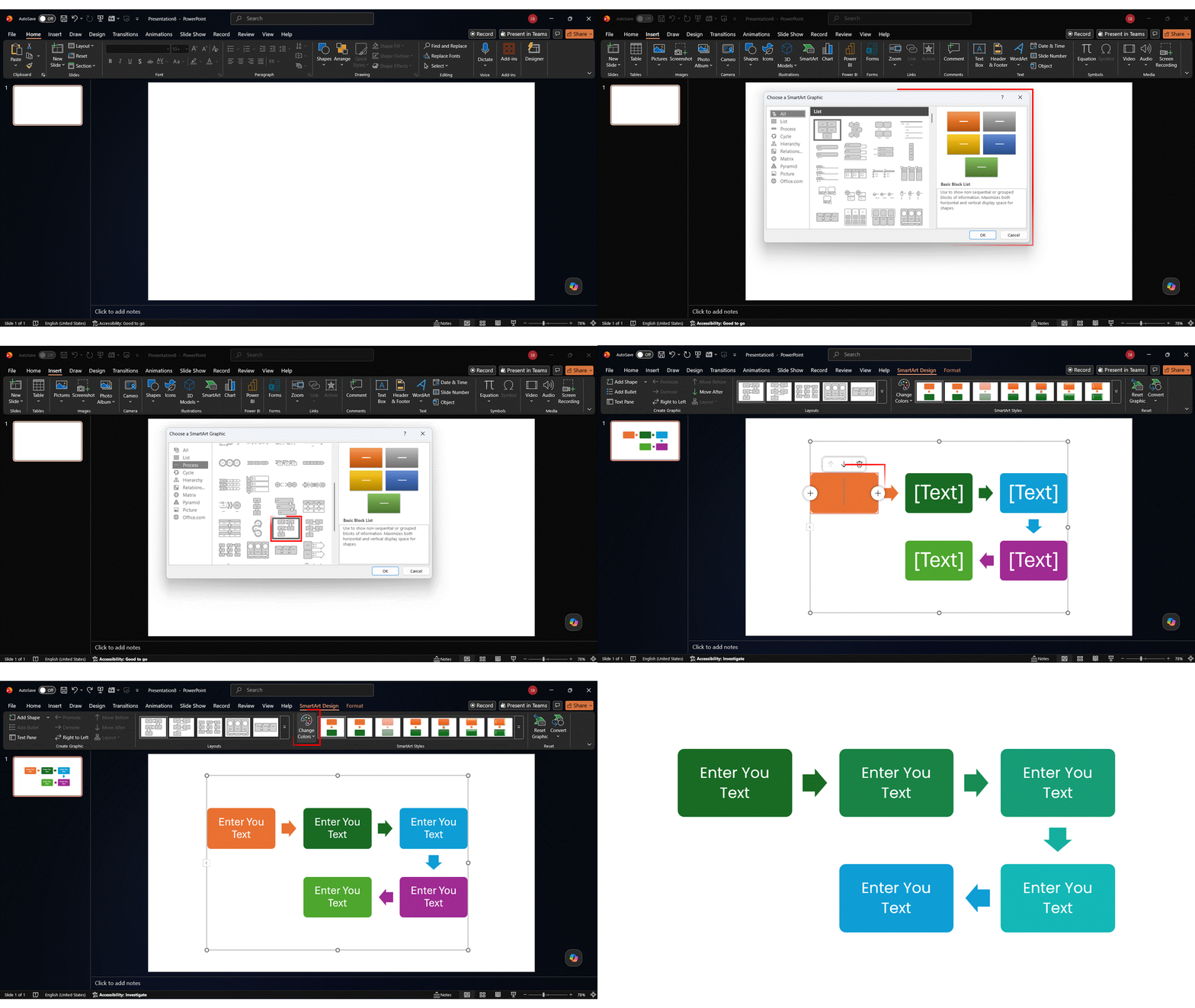
Pro Tip: Under the Format tab, you can edit individual shapes, change font styles, and apply effects to make your flowchart PowerPoint slide look more polished. Right-click any shape and select Add Shape Before, Add Shape After, or Delete Shape to adjust the layout. You can also browse our SmartArt PowerPoint templates for ready-made layouts that go beyond the default options.
Note: SmartArt works best for simple, linear processes. If your flow chart powerpoint needs specific symbols, such as decision diamonds mixed with process rectangles, use the Shapes method for full control.
Method 2: How To Create A Flow Chart In PowerPoint Using Shapes
Building a flow chart in PowerPoint using the shape library gives you complete creative freedom. You can use any combination of flowchart-specific symbols, adjust every element individually, and design a layout that perfectly fits your content and brand. This is the recommended approach if you want to know how to draw flowcharts in PowerPoint with complex decision logic, how to draw a flowchart in PowerPoint that matches a specific brand template, or how to create flow chart in PowerPoint with non-standard symbols.
Best for: Complex flowcharts, decision trees, custom-branded designs
Follow These Steps:
- Go to Insert → Shapes. Under the Flowchart section, you will find process boxes, decision diamonds, terminators, and more.
- Select the shape that matches the step you want to represent, then click and drag it onto your slide.
- Double-click the shape to enter edit mode and type your content inside it.
- Continue adding shapes for each step. To move a shape in small increments, hold Ctrl and press the arrow keys.
- Arrange the shapes in the correct sequence. Click and drag shapes freely to reposition them.
- Go to Insert → Shapes → Lines and select an arrow style. Click on the edge of one shape and drag to the edge of another to draw the flow chart in PowerPoint with connected steps.
- Review the entire diagram to confirm the logic and sequence are correct, then save your file.
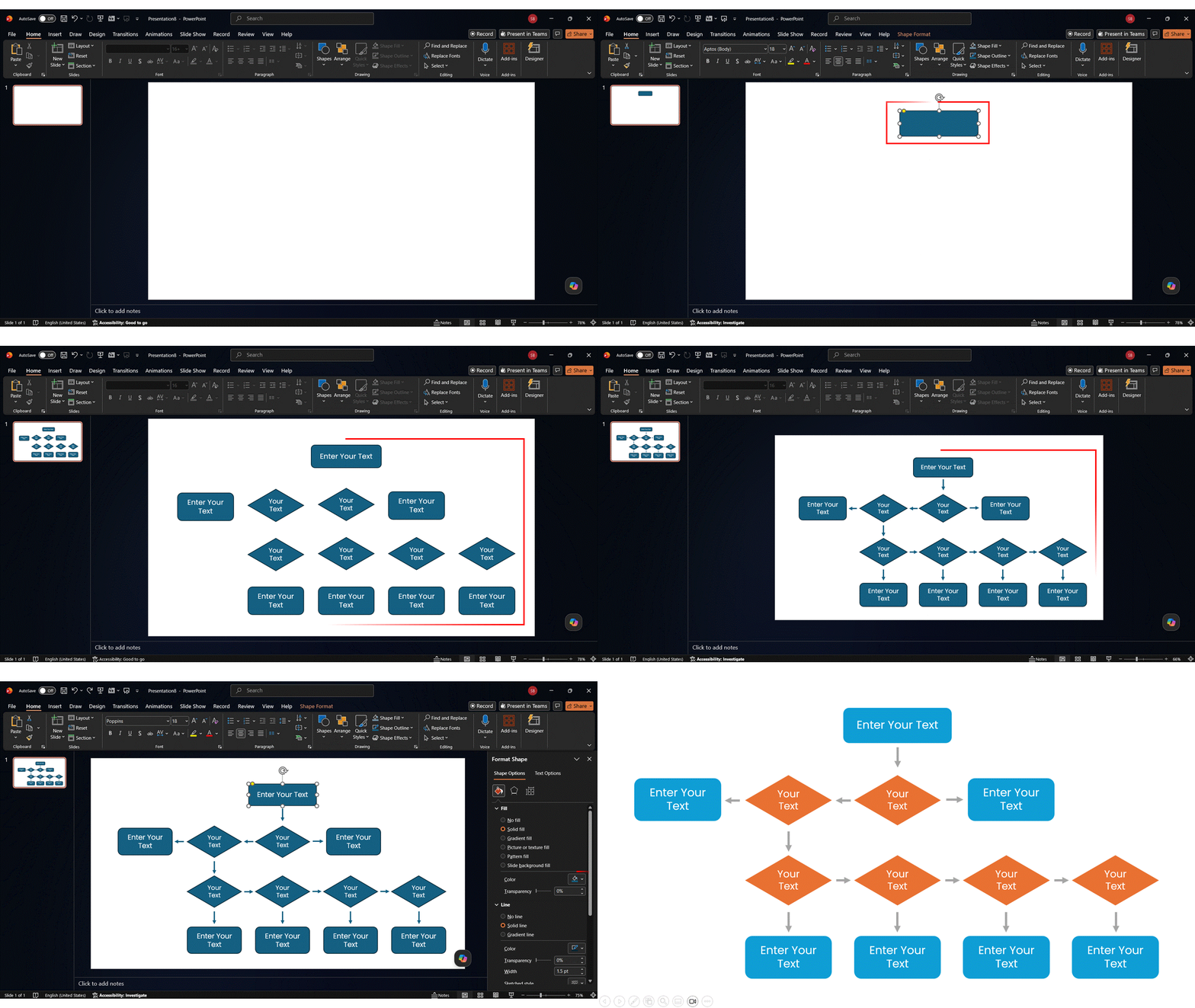
Pro Tip: To align shapes evenly, select all of them, then go to Format → Arrange → Align → Distribute Horizontally or Distribute Vertically. This instantly improves the visual clarity of your flow chart PPT and makes the diagram look professionally designed.
Method 3: How To Build A Flowchart In PowerPoint Using Pre-Built Templates
Manually selecting every shape and arrow is time-consuming — especially for larger diagrams. A PowerPoint flowchart template solves this by giving you a professionally designed starting point. Whether you need a sample flow chart in PowerPoint to show a simple process or a sample process flow chart in PowerPoint for a technical workflow, templates let you skip the setup entirely.
Best for: Busy professionals, client presentations, branded deliverables
Follow These Steps:
- Visit SlideUpLift’s flowchart templates library or browse Microsoft’s built-in gallery to find a flow chart in PowerPoint template that suits your needs.
- Download the PowerPoint flowchart template and open it in PowerPoint.
- Replace the placeholder text with your own content.
- Customize colors, fonts, and background images to match your brand.
- Add or remove shapes to fit the number of steps in your process.
- Review the finished slide and save the file.

Pro Tip: Look for animated PowerPoint flowchart templates if you want to reveal each step one at a time during your presentation. This keeps your audience focused and prevents information overload.
SmartArt vs. Shapes vs. Templates: Which Method Should You Use?
Use SmartArt to quickly create a flowchart in PowerPoint for standard processes. Use Shapes when your flow chart in PowerPoint requires complex branching or specific symbols. Use Templates when you need a polished flow chart powerpoint with minimal effort. The table below helps you choose at a glance.
| Feature | SmartArt | Shapes (Manual) | Pre-Built Templates |
| Speed | Fast | Slow | Fastest |
| Design Flexibility | Limited | Full Control | Moderate |
| Customization | Predefined layouts | Unlimited | High |
| Best For | Simple linear flows | Complex designs | Professional presentations |
| Skill Required | Beginner | Intermediate | Beginner |
| Shape Variety | Pre-selected only | All flowchart symbols | Varies by template |
| Branding Control | Limited | Complete | High |
Tips for Making A Good Flow Chart In PowerPoint
Keep It Consistent
Use the same shape styles, font sizes, and line weights throughout your flowchart powerpoint. Inconsistency makes the diagram harder to follow and signals a lack of attention to detail.
Choose a Purposeful Color Scheme
Use different colors to distinguish process types. Blue for standard steps, yellow for decision points, and green for start and end terminators works well for most flow charts in PowerPoint.
Limit Text Inside Shapes
Each shape should contain no more than one or two short lines. If you want to know how to make a good flow chart in PowerPoint, keeping shapes uncluttered is one of the most impactful changes you can make.
Use Animations Strategically
Go to Animations → Add Animation → Appear and set each shape to trigger On Click. This works especially well for a flow chart PPT where you want to guide the audience through each step at your own pace. To learn about all animation options in detail, read our complete guide to adding animation in PowerPoint.
Review and Get Feedback
Walk through the flowchart with someone unfamiliar with the process. If they can follow the logic without explanation, your flow chart PowerPoint is presentation-ready.
Types of PowerPoint Flowcharts
Choosing the right flowchart type ensures your diagram communicates effectively. Here are the main types of flowcharts in PowerPoint and when to use each.
1. Standard Flowchart
The standard flowchart is the most widely used type of flow chart in PowerPoint. It illustrates a linear sequence of steps from start to finish and is ideal for SOPs, onboarding workflows, and simple approval processes.
Best used for: SOPs, customer service workflows, approval chains
2. Swimlane Flowchart
A swimlane flowchart divides the diagram into horizontal or vertical lanes, each representing a different team or department. This is one of the most effective PowerPoint flowchart formats for cross-functional workflows where ownership and handoffs need to be clearly shown. Download a ready-made swimlane flowchart template to skip the manual setup entirely.
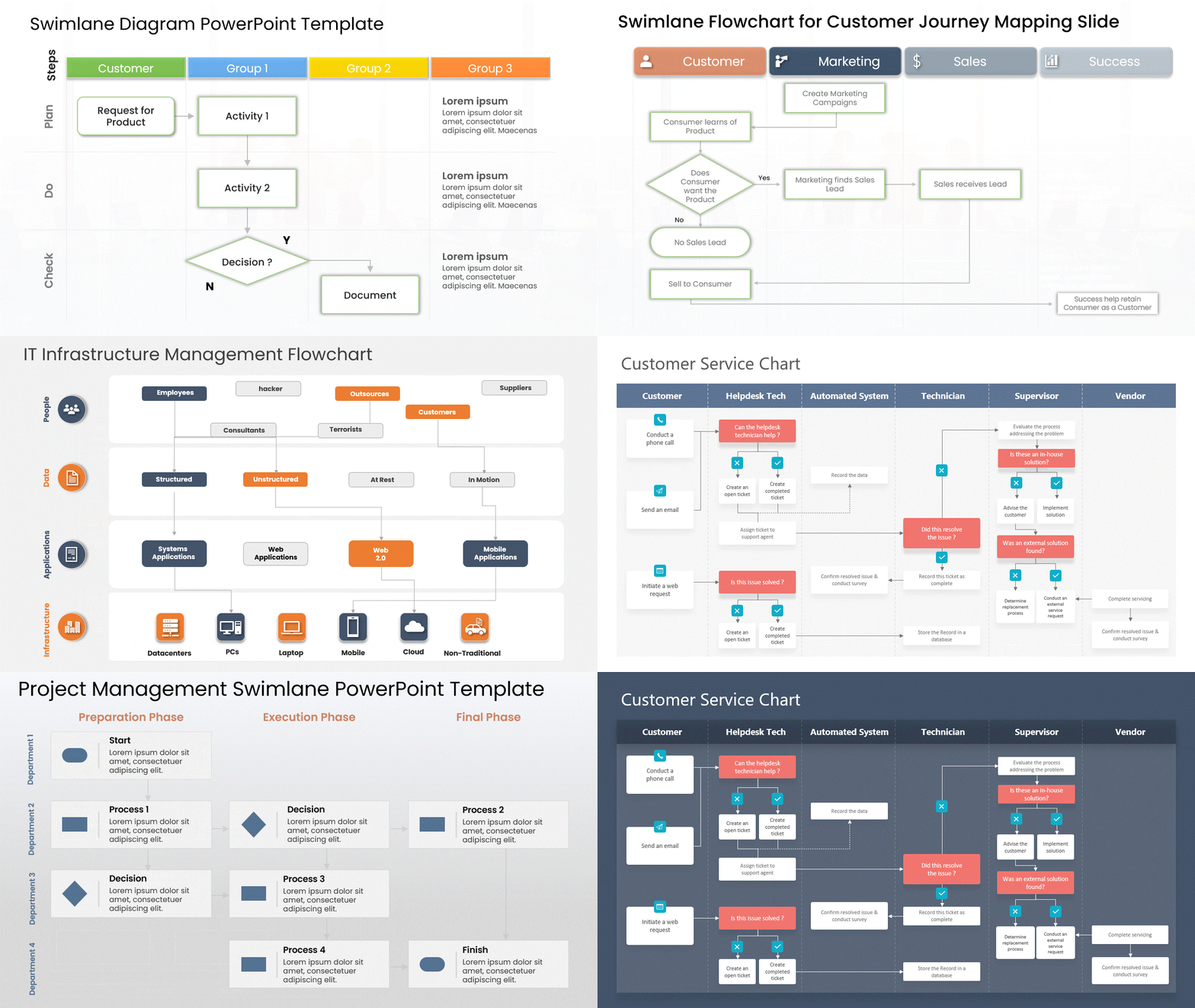
Best used for: Cross-functional projects, HR processes, multi-department workflows
3. Workflow Diagram
A workflow diagram focuses on the interconnection between tasks rather than a strict linear sequence. Unlike a standard flow chart for PPT, workflow diagrams often show parallel processes running simultaneously. If your workflow has timelines and milestones, a PowerPoint roadmap may be a better fit than a standard flowchart. If it involves branching paths or merging steps instead, our direction & flow PowerPoint templates capture that movement clearly.
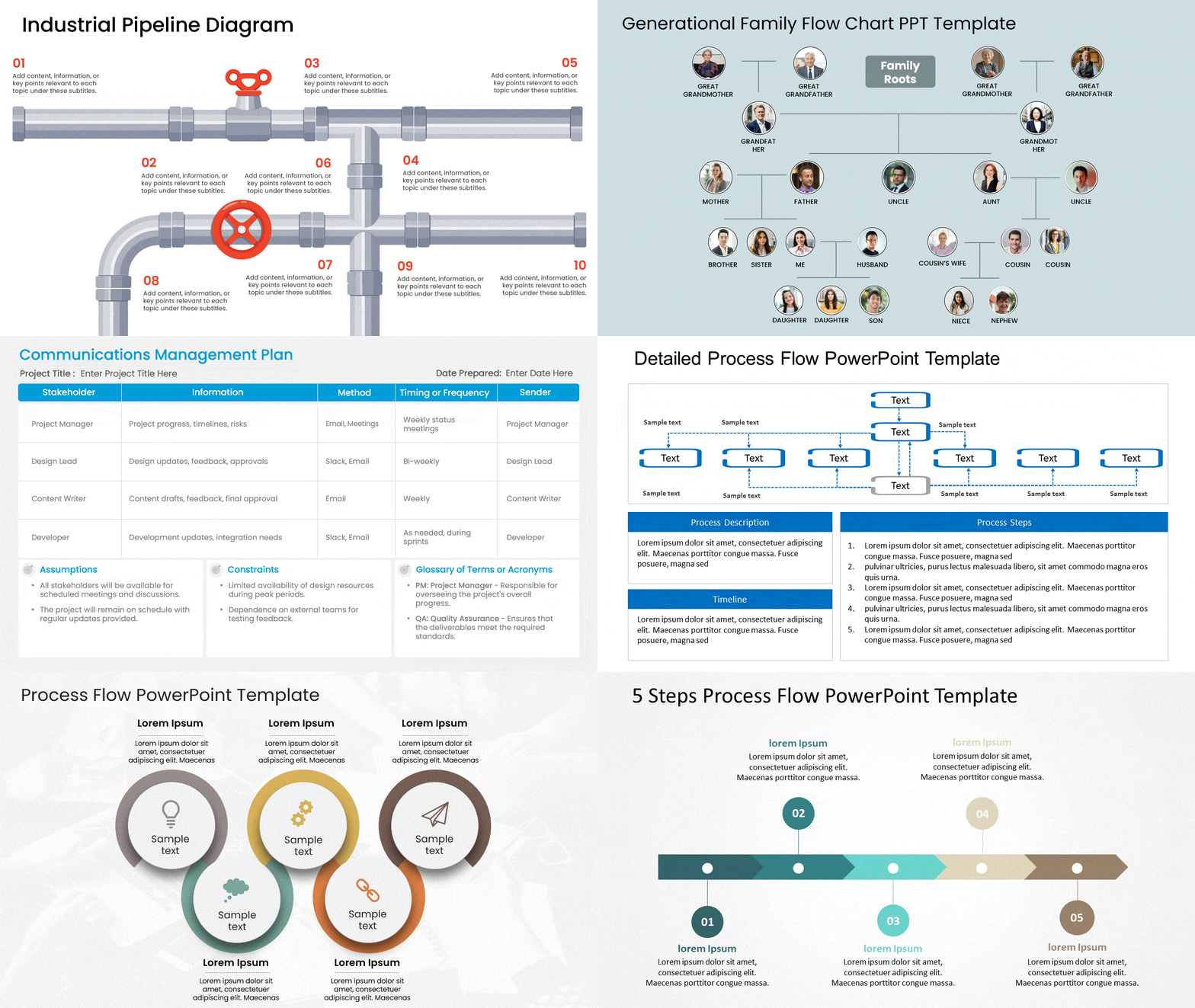
Best used for: Project management, content pipelines, IT service workflows
4. Process Flow Diagram
A process flow diagram provides a highly detailed visualization of complex technical or operational processes. If you need to know how to make a process flow chart in PowerPoint for engineering or manufacturing contexts, this is the format to use. Browse our process flow PowerPoint templates for engineering and operations use cases.
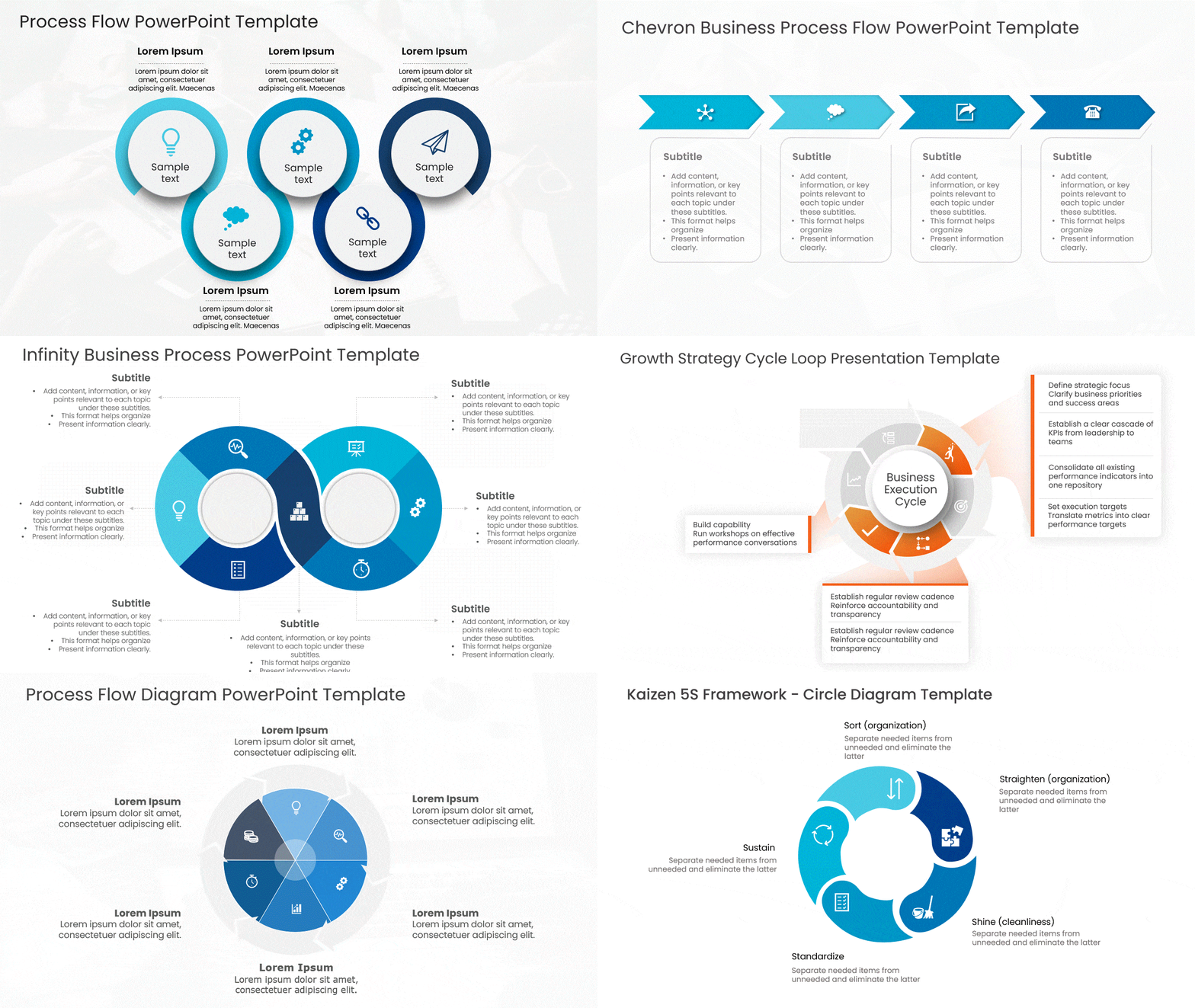
Best used for: Manufacturing, technical systems, quality control documentation
5. Circular Flow Chart
A circular flowchart represents cyclical or repeating processes where there is no clear start or end point. If you need to know how to make a circular flow chart in PowerPoint, the Shapes method works best — draw a circle of process boxes and connect them with curved arrows to show the continuous loop.
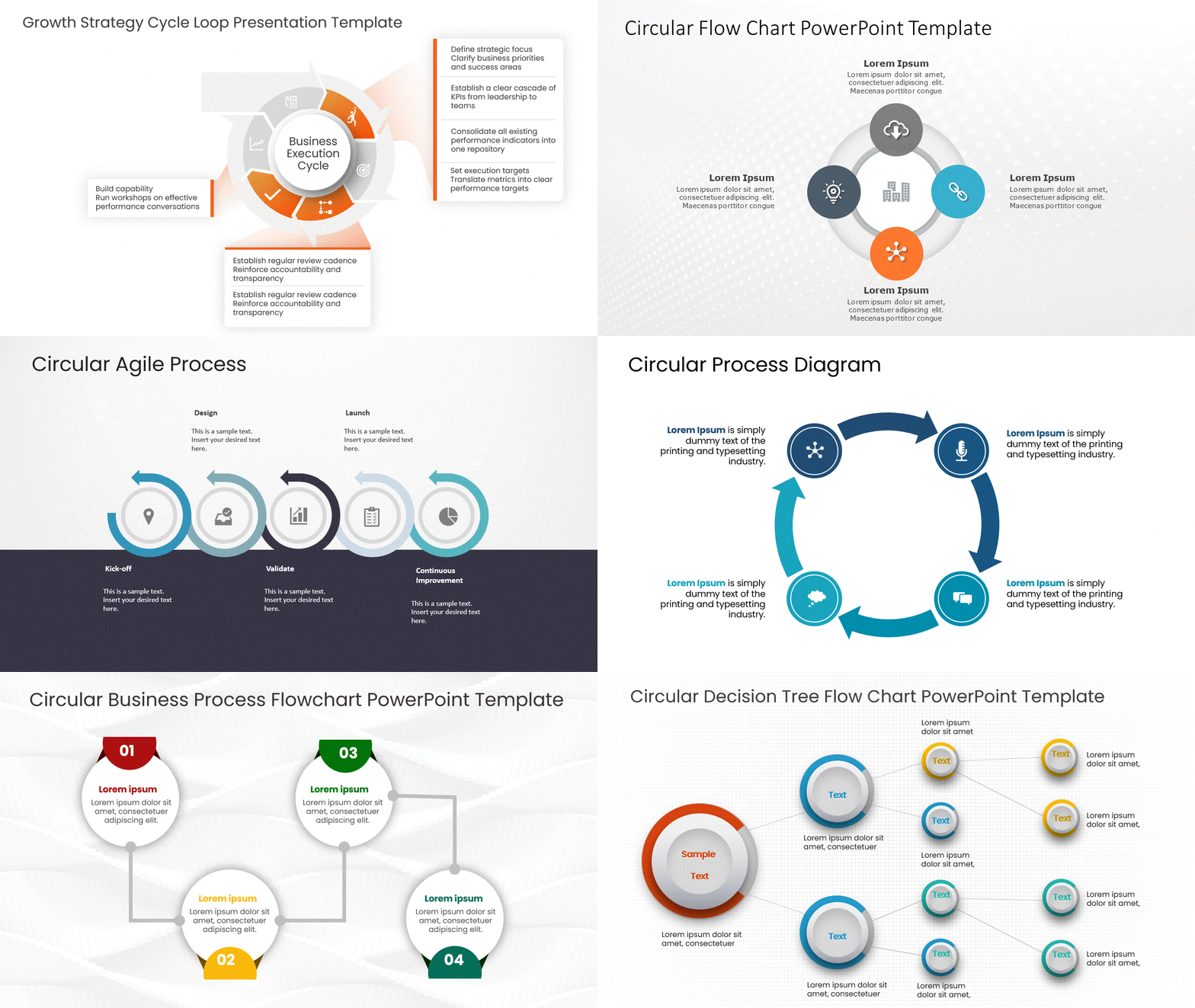
Best used for: Business cycles, feedback loops, recurring operational processes
Flowchart Symbols and Their Functions
Understanding standard flowchart symbols ensures your diagram is universally readable. All symbols below are available under Insert → Shapes → Flowchart in PowerPoint.
| Symbol | Shape | Function |
| Terminator | Oval | Marks the start or end of a process |
| Process | Rectangle | Represents an action or step |
| Decision | Diamond | Shows a yes/no decision point |
| Arrow | Line with arrowhead | Indicates the direction of flow |
| Input / Output | Parallelogram | Represents data input or output |
| Document | Rectangle with wavy bottom | Represents a document generated in the process |
| Database | Cylinder | Represents stored data or a database query |
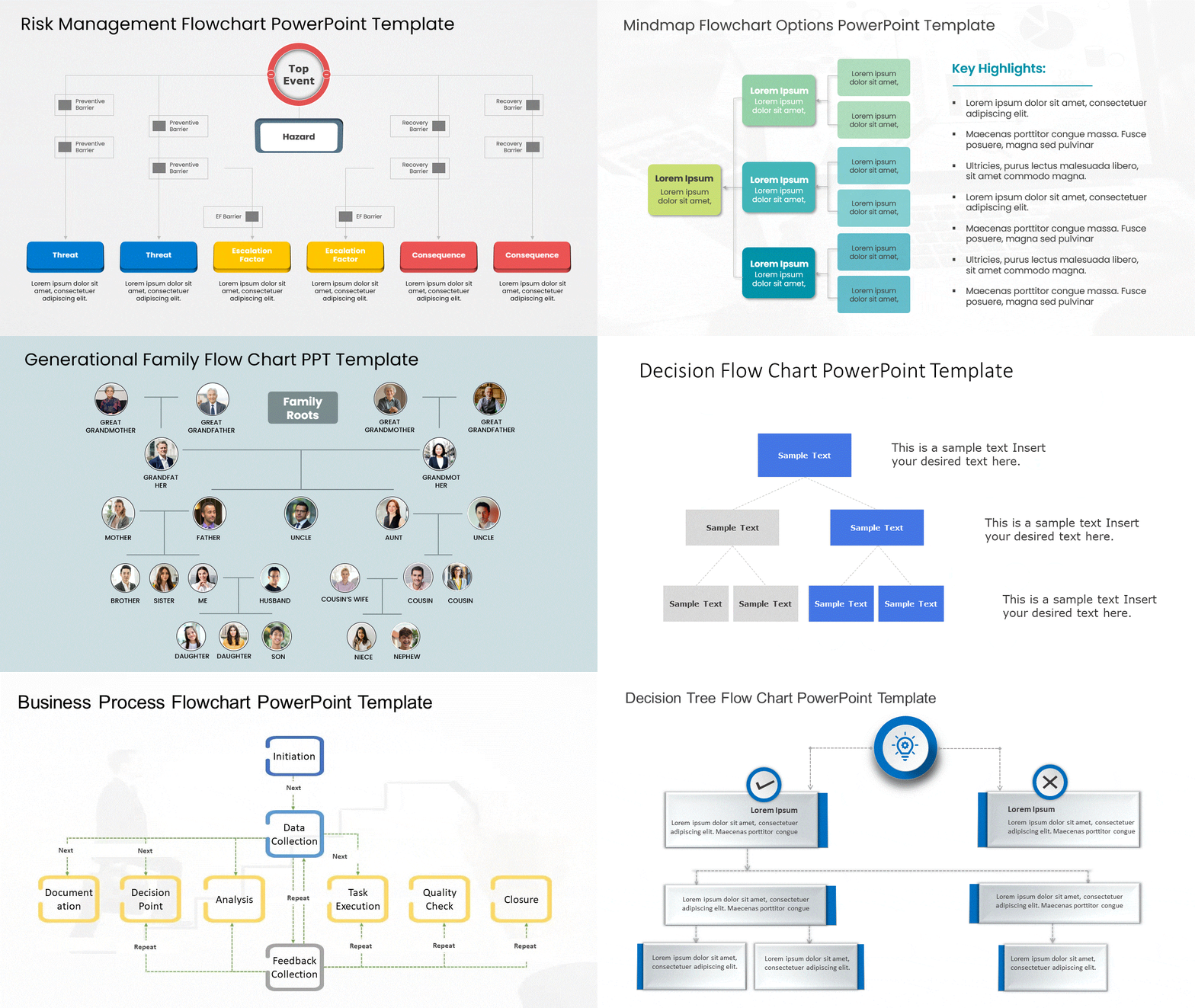
Save time and build polished presentations faster using customizable Flowchart PowerPoint Templates. Turn complex processes into simple and visually appealing diagrams.
Final Thoughts
Now that you know how to make a flow chart in PowerPoint using SmartArt, Shapes, and pre-built templates, you have everything you need to present complex processes with clarity. Whether you are making flowcharts in PowerPoint for a quick team sync or building a detailed process flow diagram for a client, the right method depends on your timeline and design goals. The most effective flow charts in PowerPoint are not the most elaborate ones. They are the ones your audience can follow without any additional explanation. Keep them clear, keep them consistent, and let the diagram do the heavy lifting. If you need a flowchart for Google Slides instead, read our guide on how to make a flowchart in Google Slides.
{ “@context”: “https://schema.org”, “@type”: “HowTo”, “name”: “How to Make a Flowchart in PowerPoint”, “description”: “Step-by-step guide to creating a flowchart in PowerPoint using SmartArt.”, “step”: [ { “@type”: “HowToStep”, “position”: 1, “name”: “Open SmartArt”, “text”: “Go to Insert then SmartArt in your PowerPoint ribbon.” }, { “@type”: “HowToStep”, “position”: 2, “name”: “Select Process”, “text”: “In the SmartArt dialog, select Process from the left panel.” }, { “@type”: “HowToStep”, “position”: 3, “name”: “Choose a layout”, “text”: “Click the layout that matches your process and click OK.” }, { “@type”: “HowToStep”, “position”: 4, “name”: “Add your content”, “text”: “Click each shape and type your step, or use the Text Pane.” }, { “@type”: “HowToStep”, “position”: 5, “name”: “Style the flowchart”, “text”: “Go to SmartArt Design then Change Colors and select a color scheme.” }, { “@type”: “HowToStep”, “position”: 6, “name”: “Save your file”, “text”: “Review all steps for accuracy and save your PowerPoint presentation.” } ] }FAQs
-
How do you make a flowchart in PowerPoint?
Go to Insert → SmartArt → Process, select a layout, and click OK. Add your content to each shape and style it under SmartArt Design → Change Colors. To manually create a flow chart in PowerPoint, use Insert → Shapes → Flowchart and connect shapes with arrows.
-
How do I create a flowchart in PowerPoint using Shapes?
Go to Insert → Shapes, select shapes from the Flowchart section, and drag them onto your slide. Add text by double-clicking each shape. Connect shapes using Insert → Shapes → Lines. This is the best method when you need to create flowchart in PowerPoint with complex logic or specific symbols.
-
How do you create a flowchart in PowerPoint quickly?
The quickest way to create a flowchart in PowerPoint is SmartArt: go to Insert → SmartArt → Process, pick a layout, and fill in your steps. Alternatively, download a PowerPoint flowchart template to skip the design work and start editing content immediately.
-
How do I align and space shapes evenly in a flowchart in PowerPoint?
Select all shapes, go to Format → Arrange → Align, and choose Distribute Horizontally or Distribute Vertically. This ensures equal spacing between every shape in your flowchart in PowerPoint without any manual guesswork.
-
How do you draw a flowchart in PowerPoint?
Go to Insert → Shapes → Flowchart, select the shapes you need, and drag them onto your slide. Connect them with arrows from Insert → Shapes → Lines. This is exactly how to draw flowchart in PowerPoint from scratch, giving you full control over every symbol and connector.
-
How do I make a flowchart in PowerPoint step by step?
Plan your process steps first. Go to Insert → SmartArt → Process for a ready-made layout, or Insert → Shapes to build manually. Add your content, connect shapes with arrows, apply a color scheme, and save. These are the core steps for how to make flow chart in PPT from start to finish. For the visual approach, the Shapes method is the best way to understand how to make flow chart in PowerPoint with full control.
-
How do I connect shapes with arrows in a flowchart PowerPoint?
Go to Insert → Shapes → Lines, choose an arrow style, and hover over a shape until green connection points appear. Click and drag from one point to another to link the shapes. The connector stays attached even when you move shapes in your flowchart PowerPoint.
-
How do I make a swimlane flowchart in PowerPoint?
Draw horizontal or vertical rectangles for each lane and label them with a text box. Insert flowchart shapes within each lane and connect them with arrows to show handoffs. To save time, download a PowerPoint flowchart template designed for swimlanes and replace the placeholder content.
-
Can I create a flowchart in PowerPoint Online?
Yes. PowerPoint Online supports flowchart creation via Insert → SmartArt and Insert → Shapes. Core tools work the same as the desktop version. For a simple flowchart in PowerPoint, the web version is fully capable. Advanced animation features may require the desktop app.
-
What are the best practices for presenting a flow chart in PowerPoint?
Use animations to reveal each step one at a time rather than showing the full diagram at once. Keep shape text short and scannable, use color to distinguish process steps from decision points, and practice walking through the flow verbally before your presentation so you can confidently guide your audience from start to finish.
Table Of Content


Related posts from the same category
![How To Make A Flow Chart In Google Slides [Step-by-Step Guide]](https://slideuplift.com/wp-content/uploads/2021/11/How-to-make-a-flowchart-in-google-slides.jpg "How To Make A Flow Chart In Google Slides [Step-by-Step Guide]")
19 Apr, 2024 | SlideUpLift
How To Make A Flow Chart In Google Slides [Step-by-Step Guide]
If you have been manually sketching process flows or copying shapes one by one, there is a faster way. Google Slides has everything you need to build a clean, professional

3 Feb, 2023 | SlideUpLift
How To Make A Graph In PowerPoint?
Do you need help communicating data effectively in your presentations? Data visualization is an essential tool in today's world as it helps represent complex data sets in a simple and
![How to Make an Org Chart in PowerPoint: Step-by-Step Guide [+ Templates]](https://slideuplift.com/wp-content/uploads/2021/01/How-to-create-an-org-chart-in-powerpoint.jpg "How to Make an Org Chart in PowerPoint: Step-by-Step Guide [+ Templates]")
13 Jun, 2025 | SlideUpLift
How to Make an Org Chart in PowerPoint: Step-by-Step Guide [+ Templates]
Without a clear org chart, even small teams feel messy. People start asking: “Who’s responsible for what?” Whether you are a manager, HR professional, or team lead, explaining the team

14 Aug, 2025 | SlideUpLift
Curved Arrow PowerPoint: How to Make, Draw, and Customise Arrows Step by Step
Quick Answer: To make a curved arrow in PowerPoint, go to Insert > Shapes > Block Arrows, select a curved arrow shape, and drag to draw it on your slide.

26 Dec, 2022 | SlideUpLift
How to make a table in PowerPoint?
Tables are an essential element of any presentation, as they allow you to organize and present data in a clear and concise manner. Whether you're creating a business presentation, a

30 Dec, 2022 | SlideUpLift
How To Make A Table Of Contents In PowerPoint?
Are you tired of flipping through multiple slides or using the "Find" function to locate specific content in your PowerPoint presentations? A Table of Contents can help solve this problem
![How To Broadcast a PowerPoint Presentation Online [6 Working Methods]](https://slideuplift.com/wp-content/uploads/2020/04/Broadcast-Presentation-Online-1.jpg "How To Broadcast a PowerPoint Presentation Online [6 Working Methods]")
27 Feb, 2026 | SlideUpLift
How To Broadcast a PowerPoint Presentation Online [6 Working Methods]
If you have been looking for a way to broadcast a PowerPoint presentation online to a remote audience, you have probably run into tutorials that tell you to click Slide

17 Feb, 2020 | SlideUpLift
PowerPoint Arrows: How to Make an Arrow Diagram in PowerPoint | Step-by-Step Tutorial
Quick Answer — How to Insert Arrow in PowerPoint To insert arrow in PowerPoint and build a diagram: Go to Insert > Shapes and select a Rectangle. Duplicate it (Ctrl+D)

6 Apr, 2026 | SlideUpLift
How to Make an Interactive Quiz in PowerPoint (No Add-ins Required)
Quick Answer You can build a fully interactive quiz in PowerPoint using only the built-in Action and Hyperlink features — no add-ins or plugins required. Create three slide types (question,
![How To Create Puzzle Pieces In PowerPoint [+Templates]](https://slideuplift.com/wp-content/uploads/2022/10/How-To-Create-Puzzle-Piece-In-PPT.jpg "How To Create Puzzle Pieces In PowerPoint [+Templates]")
11 Sep, 2024 | SlideUpLift
How To Create Puzzle Pieces In PowerPoint [+Templates]
The jigsaw puzzle is the perfect design element that you can use for your strategy presentations; it helps with the storytelling aspect of your presentation by showing how the pieces