
 Flat 4


How to Convert PPT to Video: Complete Guide for 2026
This guide shows how to convert PPT to video using PowerPoint and other tools with simple, step-by-step methods. It covers formats, quality settings, narration, animations, and fixes for common export issues. Perfect for creating professional videos for YouTube, clients, or online sharing.
Introduction
You’ve built a great presentation—but now comes the real challenge: getting people to actually watch it. The problem is, not everyone has PowerPoint installed, and not every platform supports PPTX files. Sending a raw presentation deck to a client can create unnecessary friction and risk. Converting your presentation into a video instantly solves these issues, making it accessible, easy to share, and professional across all devices.
To convert PPT to video, open your presentation in PowerPoint, go to File > Export > Create a Video, choose MP4 as the format and 1080p as the quality, then click Create Video. This method works on both Windows and Mac and preserves most animations, transitions, and narration.
In this guide, you’ll learn how to convert PPT to video using built-in tools, explore both free and paid software options with honest comparisons, understand how to add narration and music while fixing sync issues, and discover troubleshooting tips that most guides completely overlook.
Why Convert PowerPoint to Video?
- Not Everyone Has PowerPoint Installed: Sending a PPTX file to a client is a gamble. They may not have Microsoft Office installed—one of the key limitations discussed in our Advantages and Disadvantages of Microsoft PowerPoint. A video plays on any device without any software requirements.
- Videos Hold Attention Better: Slides get skimmed. A video with narration gets watched from start to finish. That difference matters when your message needs to land clearly.
- Easier to Distribute: Upload to YouTube, LinkedIn, or a learning management system. Share via a single link. No plugins, no compatibility issues, no version problems.
- Protect Your Work: A video is far harder to edit or copy than a PPTX file. For high-value presentations, converting to video is a sensible safeguard.
How to Convert PPT to Video Using PowerPoint’s Built-In Tool
No extra software is needed. This method works on both Windows and Mac.
Step-by-Step Guide — Windows
- Open your presentation. Make sure all slides, animations, and timings are fully finalised first.
- Click File > Export. Find ‘File’ in the top-left corner and select ‘Export’ from the left sidebar.
- Select ‘Create a Video’. This option appears just below ‘Create PDF/XPS Document’.
- Choose your video quality. A dropdown gives you four resolution options (see the table below).
- Set your timing and narration preference using one of the three options described above.
- Set seconds per slide. The default is 5 seconds — adjust this to match your actual content pace.
- Click ‘Create Video’. Choose a file name and save location, then click Save. PowerPoint begins rendering.
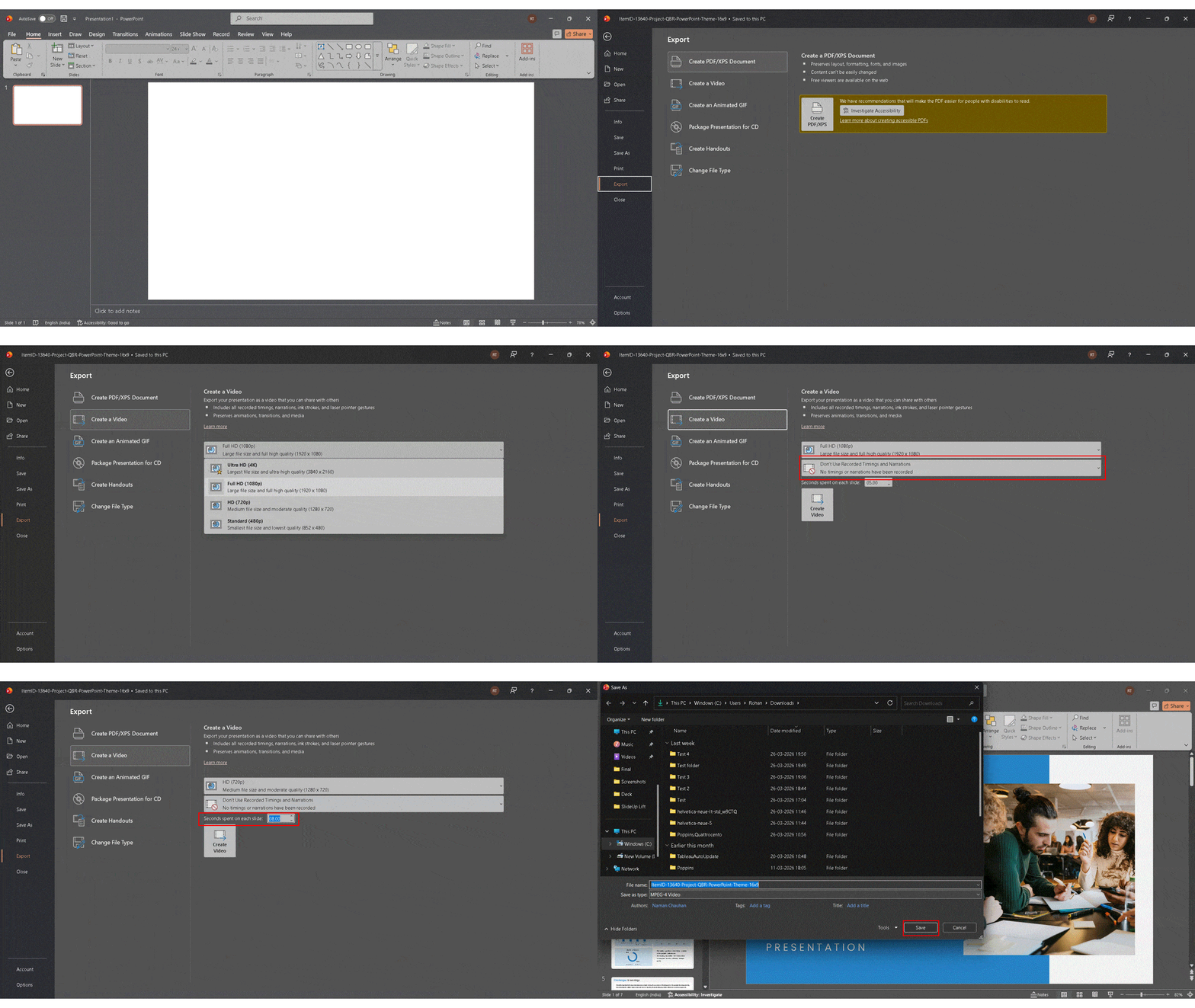
Timing and narration options explained:
- Don’t use recorded timings — displays each slide for a fixed default duration.
- Use recorded timings and narrations — play your custom-recorded audio and advance slides on your recorded cues.
- Record timings and narrations — opens the recorder so you can record narration now.
Tip: PowerPoint exports as WMV by default on Windows. Always switch the format to MP4 for maximum compatibility.
Note: Large files with complex animations can take several minutes to render. Do not close PowerPoint during the export.
Step-by-Step Guide — Mac
- Open your presentation in PowerPoint for Mac.
- Go to File > Export.
- In the File Format dropdown, select MP4.
- Set quality, timing, and narration — the same options as Windows.
- Click Export. Your video saves to the chosen location.
Note: Mac defaults to MOV format. Switch to MP4 for universal compatibility across all platforms and devices.
Windows vs Mac: Key Differences
| Feature | Windows | Mac |
|---|---|---|
| Default export format | WMV | MOV |
| MP4 available | Yes | Yes |
| Narration recording | Yes | Yes |
| 4K export | PowerPoint 365 only | PowerPoint 365 only |
| Recommended format | MP4 | MP4 |
Video Quality Options Explained
Choosing the wrong quality setting wastes render time and creates distribution problems. Here is what each option actually means.
Which Resolution Should You Choose?
| Quality | Resolution | When to Use |
|---|---|---|
| Ultra HD (4K) | 3840 x 2160 | Keynotes and 4K conference screens only |
| Full HD (1080p) | 1920 x 1080 | YouTube, LinkedIn, client sharing — recommended for most uses |
| HD (720p) | 1280 x 720 | Internal sharing and email |
| Standard (480p) | 852 x 480 | Quick previews and low-bandwidth situations |
Which File Format Should You Use?
| Format | Compatibility | Use It When… |
|---|---|---|
| MP4 | Universal — all platforms | Always. This is your default choice. |
| WMV | Windows only | Sharing within a Windows-only internal network |
| MOV | Apple devices | Mac-to-Mac sharing only |
The rule is straightforward: always export as MP4. You will never encounter a compatibility problem.
5 Ways to Reduce File Size Without Losing Quality
- Use HD (720p) instead of 1080p when maximum sharpness is not critical.
- Compress post-export using HandBrake (free) or Clideo (browser-based).
- Delete unused slides before starting the export.
- Compress embedded video clips before inserting them into your deck.
- Use flat, solid slide backgrounds. Gradients and textures increase file size noticeably.
How to Add Narration Before Exporting
A narrated video is more effective than a silent slide deck. Here is how to record and sync narration correctly.
Recording Narration Slide by Slide
- Go to Slideshow > Record Slide Show in the top menu.
- Choose ‘From Beginning’ or ‘From Current Slide’.
- The recording interface opens, and your microphone activates automatically.
- Click the red record button to start speaking.
- Advance slides manually as you narrate each one.
- Click Stop when you have finished the last slide.
- When exporting, select ‘Use Recorded Timings and Narrations’.
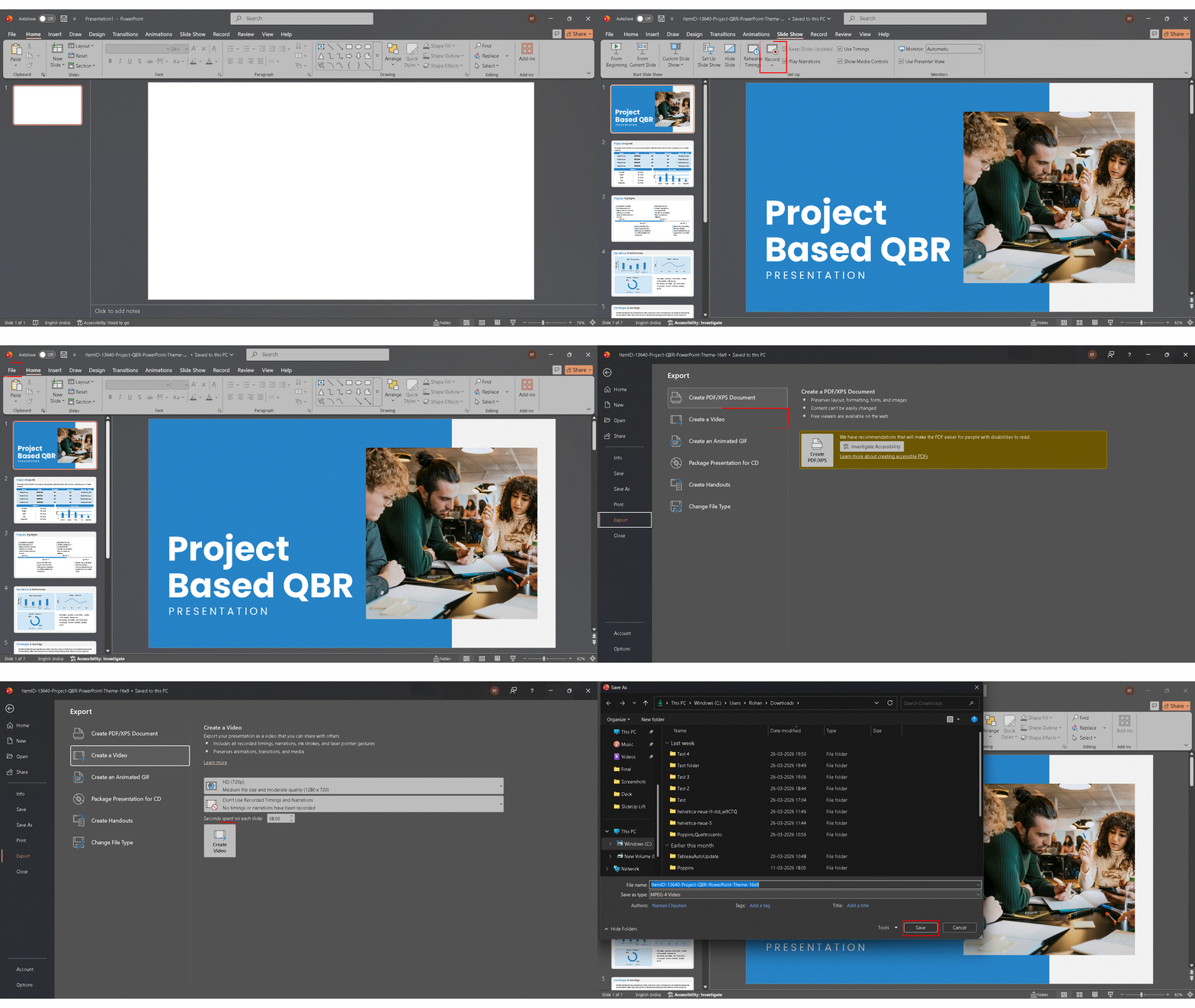
Tip: You can re-record individual slides without redoing the whole deck. Right-click a slide in the recording panel, select Clear, then re-record that slide only.
Adding Background Music
- Navigate to your first slide.
- Go to Insert > Audio > Audio on My PC (Windows) or Audio from File (Mac).
- Select your music file. MP3 or WAV format is recommended.
- In the Audio toolbar, click ‘Play in Background’.
- Enable ‘Loop until Stopped’ if the music should continue throughout the presentation.
- Export as normal. The music will be embedded in the final video.
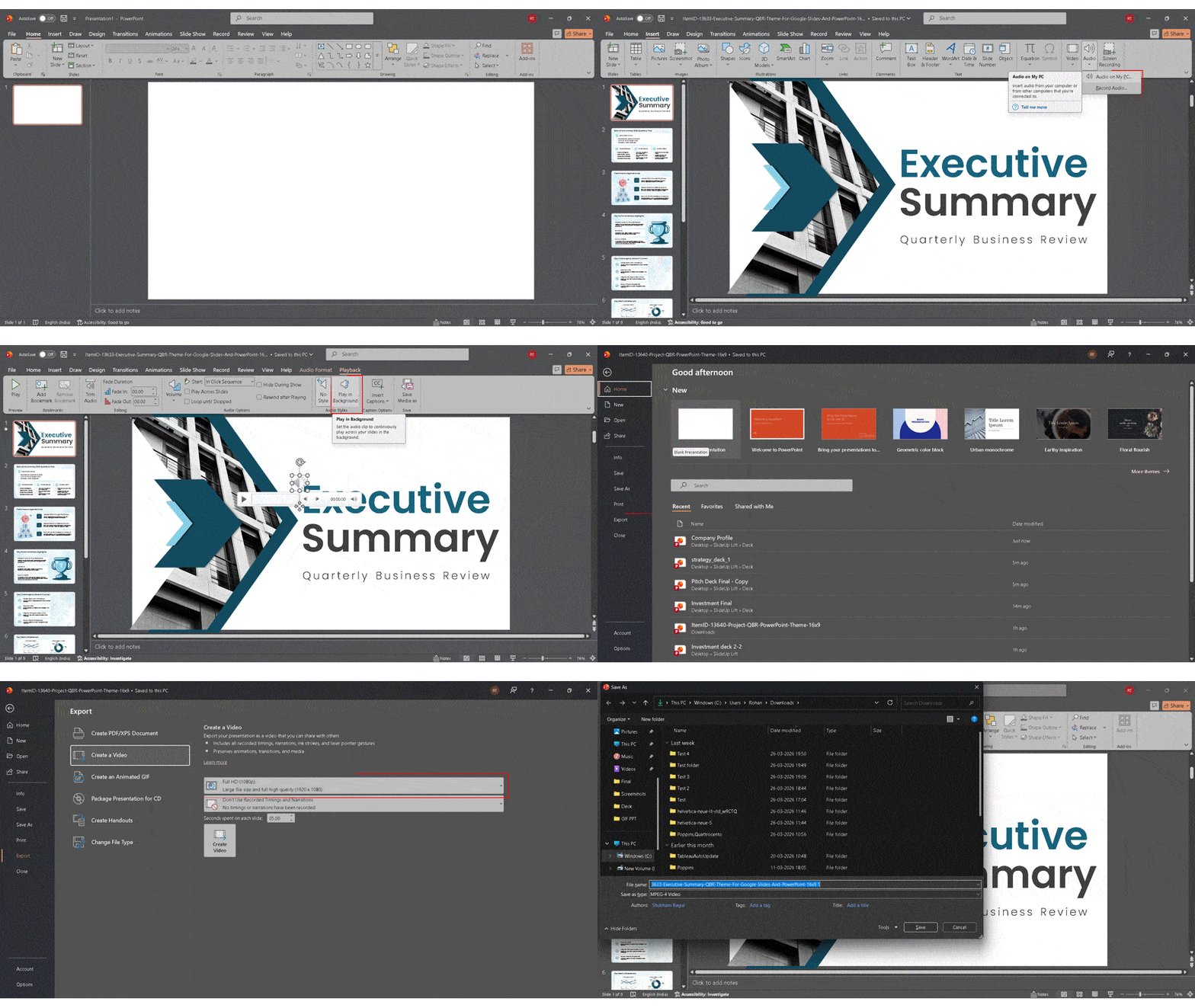
Warning: Use royalty-free music if you are uploading to YouTube. Pixabay Audio and Free Music Archive are reliable free sources.
Syncing Audio With Animations
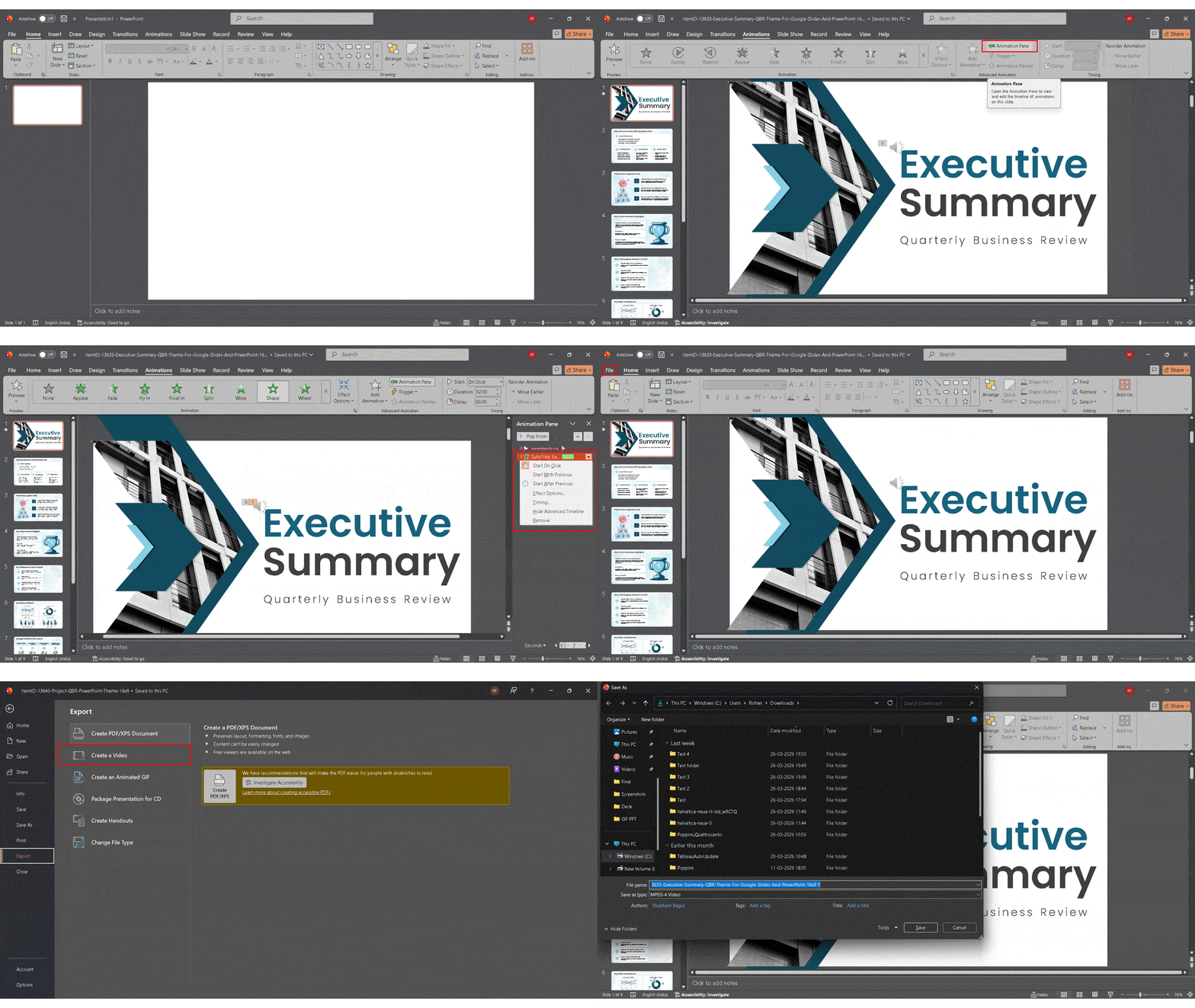
- Open the Animation Pane via the Animations tab.
- Right-click each animation and select Timing.
- Set animations to ‘After Previous’ so they follow narration naturally.
- Preview the full slideshow before exporting to catch sync issues early.
Alternative Methods to Convert PPT to Video
Free Online PPT to Video Converter Tools
If you do not have PowerPoint or you need additional features such as captions, AI voiceover, or branding, online tools are a practical alternative.
Canva
Import a PPTX file and rebuild it inside Canva’s editor. Add animations, transitions, and record a voiceover directly in the browser. Export as MP4.
- Free plan: Available
- Best for: Marketing teams and social media content
Clipchamp (by Microsoft)
A free browser-based editor built by Microsoft. Import your exported PPT video and enhance it with text overlays, trims, and audio adjustments.
- Free plan: Available (Microsoft account required)
- Best for: Windows users who want a free post-processing tool
Veed.io
Upload your presentation or exported video. Add automatic subtitles, AI voiceover, and branding elements. Export in MP4.
- Free plan: Up to 250 MB uploads
- Best for: Adding subtitles and making content accessible
Kapwing
A solid free online video editor with PPTX support. Add music, text overlays, and resize for different platforms.
- Free plan: Available with a watermark
- Best for: Quick social media edits
Method Comparison — Built-In vs Online Tools
| Feature | PowerPoint | Canva | Clipchamp | Veed.io |
|---|---|---|---|---|
| Cost | Free (with PPT licence) | Free / Paid | Free | Free / Paid |
| Animations preserved | Yes — fully | Partial | No | No |
| Narration recording | Yes | Yes | Yes | Yes |
| Auto subtitles | No | No | Yes | Yes |
| AI voiceover | No | No | Limited | Yes |
| Max export quality | 4K | 1080p | 1080p | 1080p |
| Works without PPT installed | No | Yes | Yes | Yes |
Best PPT to Video Converter Software (Paid and Free)
For users who need a dedicated desktop solution beyond PowerPoint’s built-in export, the following tools are the top choices.
| Tool | Best For | Pricing | Animations Preserved | Standout Feature |
|---|---|---|---|---|
| iSpring Suite | eLearning, LMS publishing | Paid (free trial available) | Yes — fully | Preserves quizzes and branching scenarios |
| Camtasia | Tutorial creators, trainers | One-time purchase or subscription | Yes — via screen record | Built-in screen recorder and editor; supports callouts, zoom effects, and chapter markers |
| Wondershare Filmora | Marketing and social media videos | Free (watermark) / Paid | Via PPT export | Large template library with cinematic transitions and effects |
| Movavi Video Suite | Non-technical users | Paid (trial available) | Via PPT export | Simple interface with clean output quality |
Note: Camtasia preserves animations via screen recording during playback, not natively from the PPTX. Filmora and Movavi operate on the exported video file, so animations are reflected only if already captured in the PPT export.
Let AI Create a Video From Your PowerPoint
AI tools have significantly expanded what is possible when converting presentations to video. The following tools go beyond simple export and can add avatar presenters, automatic narration, and animated scenes.
Top AI PPT to Video Tools in 2026
| Tool | What It Does | Best For |
|---|---|---|
| Synthesia | Adds an AI avatar presenter to your slides | Corporate training, product demos |
| Lumen5 | Converts text and slides into animated video scenes | Marketing content |
| Beautiful.ai | AI-designed slides with built-in video export | Pitch decks, investor presentations |
| Veed.io AI | AI voiceover and auto-subtitles on your video export | Accessibility, multilingual content |
| Tome | AI presentation builder with direct video export | Fast content creation |
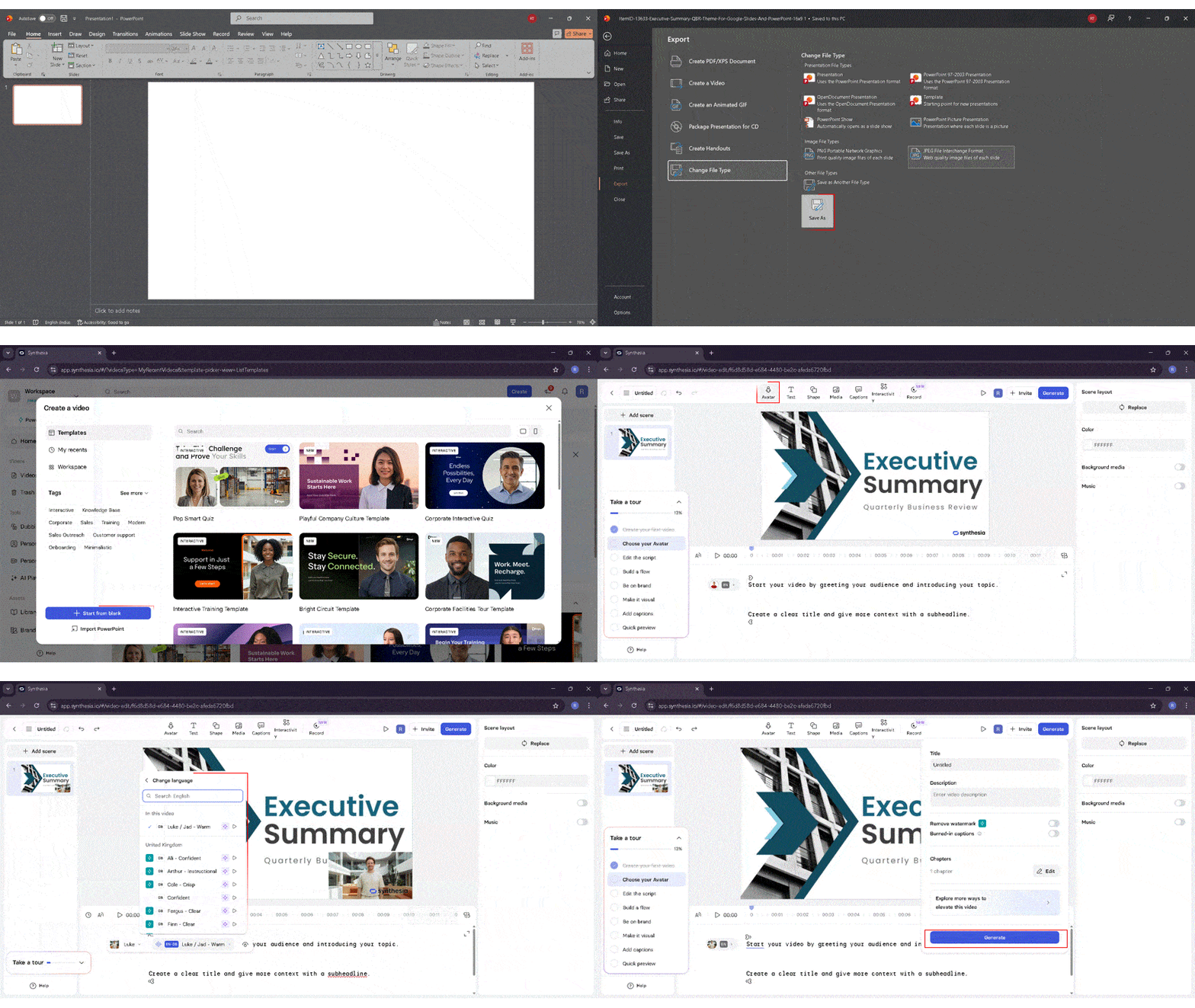
Step-by-Step: Using Synthesia With Your Slides
- In PowerPoint, go to File > Export > Export to JPEG or PNG and save all slide images.
- Sign up at Synthesia.io and create a new project.
- Upload your slide images as scene backgrounds, one image per scene.
- Choose an AI avatar from Synthesia’s library.
- Select a language and type your script for each slide.
- Click ‘Generate Video’. Synthesia renders your full presentation video.
Note: No camera or microphone is required. The AI avatar narrates every slide using the script you provide.
AI Voiceover Tools (Without an Avatar)
| Tool | Languages | Free Plan | Best For |
|---|---|---|---|
| Murf.ai | 120+ | Limited | Professional voiceovers |
| ElevenLabs | 29+ | Limited | Ultra-realistic voices |
| Play.ht | 900+ voices | Limited | Bulk narration projects |
Troubleshooting Common Export Issues
Even with a reliable workflow, export problems occur. Here are the most common issues and how to fix them.
Problem: Animations Not Playing in the Exported Video
Why it happens: 3D animations and Morph transitions do not export cleanly, particularly in older formats. Some custom animations do not translate to video at all.
How to fix it:
- Export as MP4 instead of WMV. MP4 handles animations more reliably.
- Update PowerPoint to its latest version before exporting.
- Replace 3D or Morph animations with standard Fade or Wipe transitions.
- Test by exporting just one problematic slide first to isolate the issue.
Problem: Audio Out of Sync With Slides
Why it happens: Slide timings do not match the recorded narration. This commonly occurs after editing slides following a narration recording session.
How to fix it:
- Go to Slideshow > Rehearse Timings and re-record the affected slides.
- During export, confirm that ‘Use Recorded Timings and Narrations’ is selected.
- Avoid adding or deleting slides after recording narration — it shifts all subsequent timings.
Problem: Black Screen or Blank Slides in the Video
Why it happens: Morph transitions, broken embedded video links, or corrupted media files are the most common causes.
How to fix it:
- Remove or replace all Morph transitions. They are the most common cause.
- Re-embed any video files that were linked rather than embedded.
- Export a test version at lower quality to identify which slide is causing the problem.
Problem: Export Is Taking Too Long or Getting Stuck
Why it happens: High export quality settings, complex animations, and embedded HD video clips all significantly increase render time.
How to fix it:
- Close all other applications before starting the export.
- Drop quality from 4K to Full HD (1080p).
- Compress or replace large embedded video clips before re-exporting.
- Split your deck into two halves, export separately, then merge the MP4 files. You can also merge PowerPoint presentations beforehand to simplify the process.
Pro Tip: For a faster solution, use our Merge PPT tool to combine multiple decks in seconds before converting them into a video.
Best Practices Before You Convert
A brief check before exporting can save hours of re-rendering. Work through the following checklist before every export.
Pre-Export Checklist
- All animations and transitions are finalised.
- Per-slide timings are customised — do not rely on the default 5-second setting.
- Narration is recorded, reviewed, and confirmed as synced.
- Fonts are embedded: File > Options > Save > Embed fonts in file.
- All images are at 150 ppi resolution or higher.
- Embedded videos are re-linked and confirmed as playing correctly.
- A full slideshow preview has been watched from start to finish.
- The file has been saved as .PPTX (not the older .PPT format) before exporting.
Which Animations Are Safe to Export?
Before you add animations to PowerPoint, it’s important to know which effects export smoothly and which ones can break in video format.
| Animation Type | Export Safety | Notes |
|---|---|---|
| Fade, Appear | Safe | Always exports cleanly |
| Wipe, Fly In | Safe | Reliable across all export formats |
| Zoom, Bounce, Spin | Use with caution | May lag at lower quality settings |
| Morph (between objects) | Avoid | Frequently causes black screen on export |
| 3D Rotate | Avoid | Degrades heavily in MP4 format |
| Embedded GIFs | Avoid | Rarely plays correctly in exported video |
Font and Image Tips for Clean Video Output
- Embed fonts every time: File > Options > Save > Embed fonts in file.
- Use PNG files for logos, icons, and graphics — they are sharper than JPEGs at small sizes.
- Keep slide images at 1920 x 1080 px minimum for crisp HD output.
- Avoid Google Fonts unless they are installed locally — they can fall back to a generic system font.
How to Share Your Presentation Video
Uploading to YouTube
- Export your video as MP4 at 1080p minimum.
- Go to YouTube Studio and click the Upload button (camera icon, top right).
- Add a descriptive title that includes your main keyword naturally.
- Write a description with timestamps for each major section.
- Set a custom thumbnail using a slide with a bold, readable headline.
- Choose visibility: Public, Unlisted, or Private.
- Add chapters using timestamps in the description for longer videos.
Tip: YouTube recommends MP4 with H.264 encoding. PowerPoint’s default MP4 export already meets this specification.
Sharing on LinkedIn, Teams, and Email
| Platform | File Size Limit | Recommended Format | Max Quality |
|---|---|---|---|
| 5 GB | MP4 | 1080p | |
| Microsoft Teams | 250 MB | MP4 | 1080p |
| Gmail (attachment) | 25 MB | MP4 | Compress first |
| Gmail (Drive link) | No limit | MP4 | Any |
| Outlook | 20 MB | Share via OneDrive instead | Any |
Tip: For any file over 25 MB, share via a link using Google Drive, OneDrive, or Dropbox rather than attaching directly.
Embedding in LMS Platforms
| LMS Platform | Upload Method | Best Format |
|---|---|---|
| Moodle | File resource or H5P | MP4 |
| Canvas | Media tool or Canvas Studio | MP4 |
| Teachable | Lesson video upload | MP4 or MOV |
| Thinkific | Lesson video section | MP4 |
Note: Most LMS platforms transcode your video after upload. Always upload at 1080p or higher to get the best quality after their transcoding process.
Want to create better videos from your presentations? Start with professionally designed slides using our ready-to-use PowerPoint templates. Explore SlideUpLift templates to save time and make your presentations look polished and impactful.

Upgrade your slides with the latest PowerPoint templates for polished, modern presentations
Conclusion
Converting your presentation into a video is one of the simplest ways to make your content more accessible, engaging, and easy to share across platforms. Whether you use PowerPoint’s built-in export or explore advanced tools, the key is to optimise your slides, timings, and audio before exporting. Choosing the right format, quality, and animations ensures a smooth, professional output without playback issues. With the right approach, you can turn any PPT into a polished video that delivers your message clearly and effectively.
FAQs
-
How can I convert PPT to video without losing animations?
Use PowerPoint’s built-in ‘Create a Video’ feature and export as MP4. Nearly all animations and transitions export correctly. The only exceptions are Morph and 3D animations — replace those with Fade or Wipe before exporting.
-
What is the best free option for converting PPT to video?
If you already have PowerPoint, the built-in export tool costs nothing extra. For a browser-based option, Canva and Clipchamp both offer solid free plans. Veed.io is the best free choice if you need automatic subtitles.
-
How do I convert PPT to video on a Mac?
Open your presentation in PowerPoint for Mac, go to File > Export, change the File Format from MOV to MP4, set your quality and timing options, then click Export. The process takes under two minutes.
-
What is the best PPT to video converter software for eLearning?
iSpring Suite is the industry standard for eLearning. It preserves animations, quizzes, and branching scenarios fully. For video-focused training content, Camtasia is the stronger choice. Both handle LMS publishing well.
-
Is there a tool that converts video back into slides?
Yes. Canva and Adobe Express can convert video frames into slide decks. Microsoft Copilot in PowerPoint 365 can generate slides from a video summary or transcript. This is particularly useful for repurposing webinar recordings into shareable decks.
-
What video quality setting should I use?
Full HD (1080p) is the right choice for most uses, including YouTube, LinkedIn, client sharing, and LMS platforms. Use Ultra HD (4K) only for large-screen keynote presentations. Use HD (720p) for quick email shares where file size matters.
-
Why is my PPT export taking so long?
Three factors slow export most significantly: 4K quality settings, complex animations, and embedded HD video clips. Dropping to 1080p, closing background applications, and compressing embedded videos typically cuts render time by half.
-
Does PowerPoint preserve slide transitions when exporting to video?
Yes. Standard transitions such as Fade, Push, Cover, and Wipe all export cleanly. Morph transitions can occasionally cause problems. If you use Morph frequently, test a single slide export first before committing to a full render.
-
Which tool is right for my specific use case?
For a quick, no-frills export: use PowerPoint’s built-in tool. For subtitles and online access: use Veed.io. For eLearning content: use iSpring Suite. For marketing or social media videos: use Canva or Filmora. For an AI avatar presenter: use Synthesia.




Related posts from the same category

7 Jun, 2023 | SlideUpLift
How To Convert Keynote To PowerPoint?
Numerous applications are available for Mac users that do similar work to the corresponding Microsoft programs. To ensure the recipient can open the file you transmit while sharing documents with
11 Jan, 2024 | SlideUpLift
AI Is Coming To Presentations To Help Convert Word To PowerPoint
Artificial Intelligence is transforming nearly every facet of life and business - and business communication is no exception. Given the massive footprint and routine usage of PowerPoint presentations, Microsoft has
![How To Broadcast a PowerPoint Presentation Online [6 Working Methods]](https://slideuplift.com/wp-content/uploads/2020/04/Broadcast-Presentation-Online-1.jpg "How To Broadcast a PowerPoint Presentation Online [6 Working Methods]")
27 Feb, 2026 | SlideUpLift
How To Broadcast a PowerPoint Presentation Online [6 Working Methods]
If you have been looking for a way to broadcast a PowerPoint presentation online to a remote audience, you have probably run into tutorials that tell you to click Slide

28 Dec, 2020 | SlideUpLift
How To Screen Record Using PowerPoint Screen Recording | How To Record Your Screen | PowerPoint Tutorial
A lot of us use different desktop screen recorder tools and Softwares to record screens. But did you know there is a better and easy way to capture the screen?
14 Aug, 2025 | SlideUpLift
Curved Arrow PowerPoint: How to Make, Draw, and Customise Arrows Step by Step
Quick Answer: To make a curved arrow in PowerPoint, go to Insert > Shapes > Block Arrows, select a curved arrow shape, and drag to draw it on your slide.
6 Apr, 2026 | SlideUpLift
How to Make an Interactive Quiz in PowerPoint (No Add-ins Required)
Quick Answer You can build a fully interactive quiz in PowerPoint using only the built-in Action and Hyperlink features — no add-ins or plugins required. Create three slide types (question,
10 Feb, 2026 | SlideUpLift
How To Convert Google Slides Into PDF: Quick & Easy Guide
This guide explains how to convert Google Slides into a PDF quickly and without formatting issues. It covers saving slides with or without speaker notes and methods for desktop and
19 Oct, 2023 | SlideUpLift
How to Convert Canva to Google Slides Presentation?
The fastest way to convert a Canva presentation to Google Slides is to download the Canva deck as a PowerPoint (.pptx) file and then open that file in Google Slides.

13 Mar, 2026 | SlideUpLift
How to Play Video in PowerPoint Across Single and Multiple Slides
This blog explains how to play a single video across multiple slides in PowerPoint using simple animation and playback settings. It walks through the step-by-step process of inserting the video,

7 Dec, 2022 | SlideUpLift
How To Create Neumorphic PowerPoint Presentation To Dazzle Your Audience?
Neumorphic designs are a relatively recent design style that was first used in the User Interface design of gadgets in the previous decade. The perfect and straightforward design is unexpectedly