

 Flat 1


How to Make an Interactive Quiz in PowerPoint (No Add-ins Required)
Quick Answer
You can build a fully interactive quiz in PowerPoint using only the built-in Action and Hyperlink features — no add-ins or plugins required. Create three slide types (question, correct answer, wrong answer), link each answer shape to the right feedback slide, add navigation buttons, and test in Slide Show mode. The entire system works offline on both Windows and Mac.
This guide covers the complete native method, plus quiz types, advanced tricks like timers and scoring, and free templates for education and corporate training.
How a PowerPoint Quiz Works
Understand the logic first. It makes building much faster.
The Slide-Linking System Explained
A quiz in PowerPoint runs entirely on hyperlinks between slides. Here is the simple flow:
- Click the correct answer → go to a “Well done!” slide
- Click a wrong answer → go to an “Incorrect!” slide
- Click “Try Again” → return to the same question slide
- Click “Next Question” → advance to the next question
That is the whole system. Three slide types. Linked together. Done.
What You Need Before You Start
Plan these things before opening PowerPoint:
- Total number of questions
- Answer format (multiple choice, true/false, image-based)
- Will you allow retry attempts?
- Do you need a score slide at the end?
Quick slide count guide: Each question needs at least 3 slides. A 10-question quiz = roughly 30+ slides. Plan your structure first — it saves hours of relinking later.
Why Make a Quiz in PowerPoint?
Adding a quiz to PowerPoint turns a passive presentation into an active experience. People engage. They pay attention. They actually remember your content.
The Case for PowerPoint Over Dedicated Tools
PowerPoint is already installed on most devices. That is a massive advantage. Here is why a PowerPoint quiz makes sense over alternatives:
- No extra cost. You already own it.
- Full design control. Match your exact brand style.
- Works offline. No Wi-Fi needed during your session.
- Lives inside your existing deck. No app switching.
- Zero setup for the audience. They just click.
For fast, polished, no-fuss quizzes — PowerPoint wins every time. Learning how to make a PowerPoint quiz also saves money. No subscriptions required.
When to Use a PowerPoint Quiz vs. a Platform
Not every situation calls for a native quiz in PowerPoint. Use the table below to decide.
| Scenario | Best Tool |
| Classroom review or lesson recap | PowerPoint or ClassPoint |
| HR compliance or onboarding training | iSpring or Articulate |
| Live audience polling with real-time data | Mentimeter or Poll Everywhere |
| Remote self-paced e-learning | Microsoft Forms + PowerPoint |
| Quick team icebreaker or trivia | PowerPoint quiz game |
| Formal scored assessment with reporting | iSpring Suite |
Use PowerPoint when simplicity matters. Use a dedicated platform when you need data, scoring, or scale.
How to Make an Interactive Quiz in PowerPoint — Step-by-Step
This is the complete native method. No add-ins required. Every interactive quiz uses the same three slide types, linked together. Here is exactly how.
How to make an interactive quiz in PowerPoint — 4 steps
- Create three slide types: question, correct answer, wrong answer
- Hyperlink each answer shape to its matching feedback slide (Insert → Action)
- Add “Next Question” and “Try Again” navigation buttons on feedback slides
- Test every path in Slide Show mode (F5)
Step 1 — Design Your Three Core Slide Types
Before your first question slide, a well-designed title slide sets the tone and tells participants what to expect — here’s how to create a strong title slide in PowerPoint.
Slide Type 1 — The Question Slide
This slide contains:
- Your question at the top is in bold
- Four answer options as clickable shapes or text boxes
- A clean, consistent layout (use Slide Master to lock it — go to View → Slide Master, create a custom layout with your question and answer placeholders, then close Slide Master. Every new question slide will follow this layout automatically.)
Keep the question under two lines. Use fonts at 28pt or larger. The audience needs to read it fast.
Slide Type 2 — The Correct Answer Slide
This slide appears when someone selects the right answer. Include:
- A “Correct!” or “Well done!” message
- A brief explanation of why it is right (optional, but great for learning)
- A “Next Question” button
Use green as the primary color. It signals success instantly.
Slide Type 3 — The Wrong Answer Slide
This slide appears when someone picks an incorrect option. Include:
- A calm “Not quite!” or “Incorrect” message
- The correct answer revealed (recommended for learning quizzes)
- A “Try Again” button — links back to the question
- A “Next Question” button — skips ahead
Keep the tone encouraging. Avoid harsh visuals or alarming red colors.
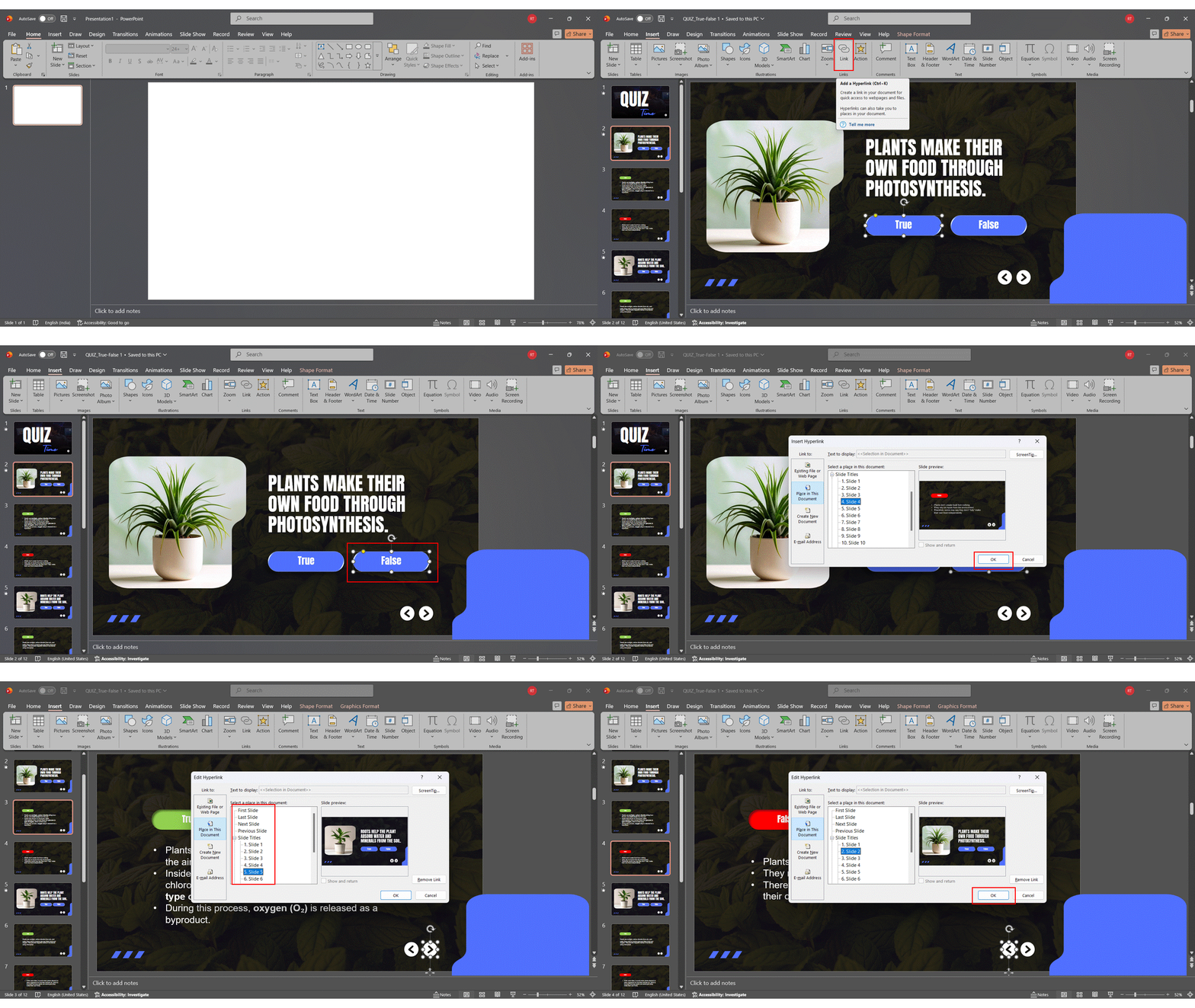
Step 2 — Set Up Hyperlinks on Answer Options
This is the critical step. This is what makes your quiz interactive.
Linking the correct answer:
- Select the correct answer shape on the question slide
- Go to Insert → Action
- Select “Hyperlink to” from the dialog
- Choose “Slide…” from the dropdown menu
- Select the Correct Answer slide number
- Click OK
Linking the wrong answers:
Repeat those exact steps for each incorrect answer option. Link each one to your Wrong Answer Slide. Do this for every answer shape on every question slide.
Pro tip: Name your shapes using the Selection Pane (Home → Select → Selection Pane). It makes finding and linking shapes significantly faster.
Step 3 — Link the Navigation Buttons
Your feedback slides need working navigation buttons, too.
On the Correct Answer Slide:
- Select the “Next Question” button
- Insert → Action → Hyperlink to → Slide → choose next question slide → OK
On the Wrong Answer Slide:
- Select “Try Again” → link it to the current question slide
- Select “Next Question” → link it to the next question slide
Repeat this for every question block in the deck. It is the same process each time.
Step 4 — Test Everything in Slide Show Mode
Never skip this step. Hyperlinks only activate in Slide Show mode. Press F5 to start from slide 1. Click through every possible path. Before sharing, confirm:
- Every correct answer leads to the right feedback slide
- Every wrong answer triggers the incorrect feedback slide
- All “Try Again” buttons return to the correct question
- All “Next Question” buttons advance properly
One broken link destroys the user experience. Test everything first.
Design Tips for a Visually Engaging Quiz
Good design removes friction. These practices work.
Keep One Consistent Layout Per Question Type
Lock your question slide layout in the Slide Master. Every question slide should look identical. Only the text changes. Consistency lets your audience focus on content.
Use Color Intentionally
- Green = correct answer feedback slides only
- Red or amber = incorrect answer feedback slides only
- Neutral tones = all question slides
Never use green or red on question slides. It accidentally signals the answer.
Use High-Contrast Fonts
Use at least 28pt for answer options. Use 36pt or larger for the question text itself. Dark text on light backgrounds works best for projectors.
Limit Text Per Slide
A question should be readable in three seconds. If it takes longer, cut it. One question. Four options. Nothing else on the slide.
Use Icons and Visuals to Reduce Text Load
Replace long written descriptions with simple icons or relevant images. Visuals cut reading time. They also make your quiz feel designed — not just assembled.
If you do want movement between your question and feedback slides, keep transitions minimal and consistent — here’s how to add transitions in PowerPoint without disrupting the quiz flow.
Tip: For accessible quizzes, don’t rely on color alone to indicate correct or incorrect — add text labels like ‘Correct’ or ‘Try Again’ alongside color changes. Use alt text on all answer shapes (right-click → Edit Alt Text) so screen readers can identify each option. Keep animations simple; complex motion sequences can be disorienting for some users.
How to Make Different Quiz Types in PowerPoint
The same hyperlink system works across multiple quiz formats. Here is how to adapt it.
Multiple Choice Quiz (Most Common)
This is the classic setup. Four options, one correct answer. Best practices:
- Keep all four options similar in length
- Avoid obviously wrong or absurd distractors
- Use green/red color coding on feedback slides only
- Limit each option to one line if possible
This format works for training reviews, trivia nights, and classroom assessments.

True/False Quiz
Simpler structure. Only two options per question. Setup:
- Question at the top
- “True” and “False” as two large, bold, clickable shapes
- Link each to the appropriate feedback slide
The easiest PowerPoint quiz to build. Great for icebreakers and quick knowledge checks.

Question and Answer Quiz Game
This is a hosted quiz game format. The presenter controls the reveal. How it works:
- Display the question on screen
- Invite verbal responses from the audience
- Click to reveal the answer using an animation
No hyperlinks needed — just an Appear animation on the answer. Perfect for team trivia events.

Fill-in-the-Blank Quiz
Use animations to reveal the missing word:
- Type the blank answer in a text box on the question slide
- Set it to Appear on click in the Animations pane
- Add a small “Click to reveal” prompt so users know what to do
Works well for language quizzes, vocabulary tests, and recall-based training.
Image-Based Quiz
Replace text answer options with images. Use the exact same hyperlink method. Great for:
- Product identification training
- Geography or map quizzes
- Visual brand and logo recognition

Advanced Quiz Features in PowerPoint
Once the basics are in place, these features add real depth.
How to Add a Countdown Timer
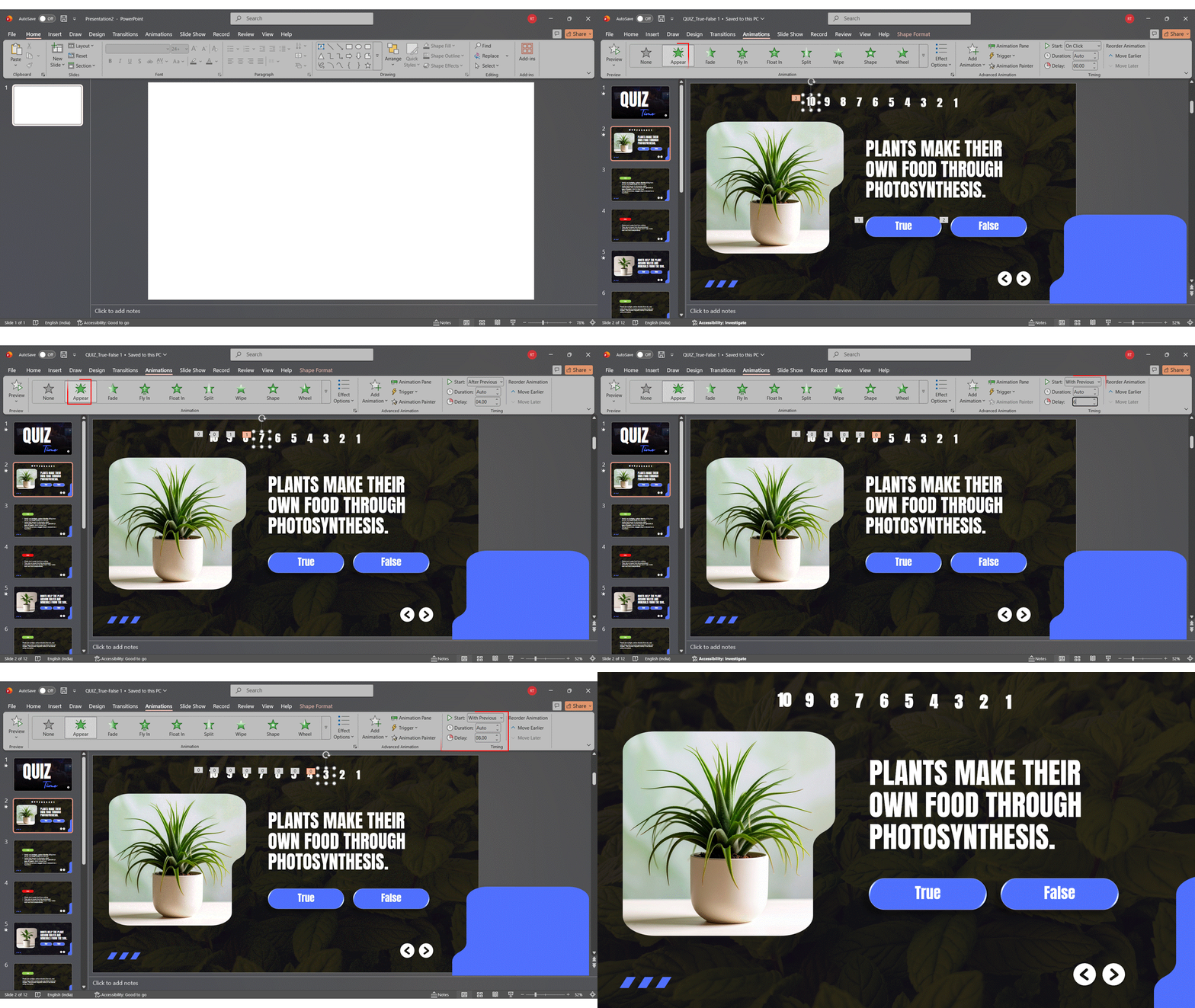
PowerPoint has no built-in quiz timer. But you can simulate one cleanly using the animation method:
- Add text boxes numbered 10 through 1 on the question slide
- Apply the Appear animation to each number
- Set each to trigger After Previous, with a 1-second delay
- Numbers count down automatically in Slide Show mode
It is a manual workaround — but it works. For a real built-in timer, use ClassPoint.
If you’re new to the Animations pane, this guide on how to add animations in PowerPoint walks you through every option before you start building the timer
How to Create a Quiz in PowerPoint with a Score
Native PowerPoint cannot calculate scores. But you have three practical options:
| Method | How It Works |
| Option 1 — Manual tally | The presenter tallies results verbally at the end. |
| Option 2 — Microsoft Forms | Embed a Forms quiz link on a slide. Forms handles scoring automatically. In Forms, toggle ‘Make this a quiz’ under Settings. Assign point values to each question. When participants submit, Forms auto-calculates their total score and displays results instantly. Export all responses to Excel for reporting. |
| Option 3 — Add-in | ClassPoint or iSpring offer true auto-scoring inside PowerPoint. Best for scale. |
How to Add Sound Effects
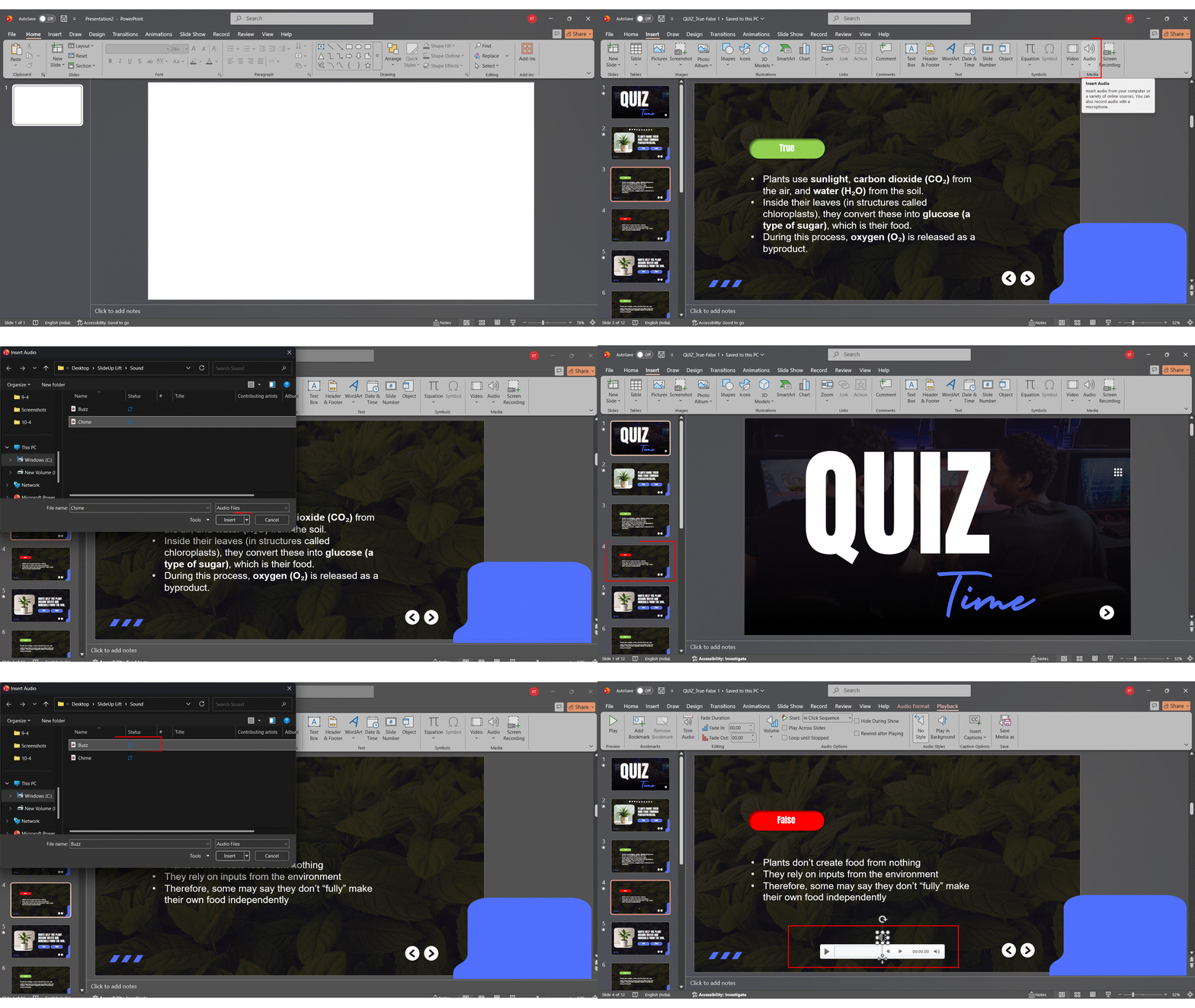
Sound makes your quiz feel alive. Steps:
- Go to Insert → Audio → Audio on My PC
- Select a chime file for correct answers, a buzz for incorrect
- Set Start: Automatically in the Playback tab
- Place the audio object on the matching feedback slide
You can also assign sounds directly inside the Action Settings dialog. Look for the “Play sound” dropdown. If you want ambient music playing throughout the quiz rather than per-slide sound cues, see how to add background music in PowerPoint for the full setup.
How to Use Triggers and Animations
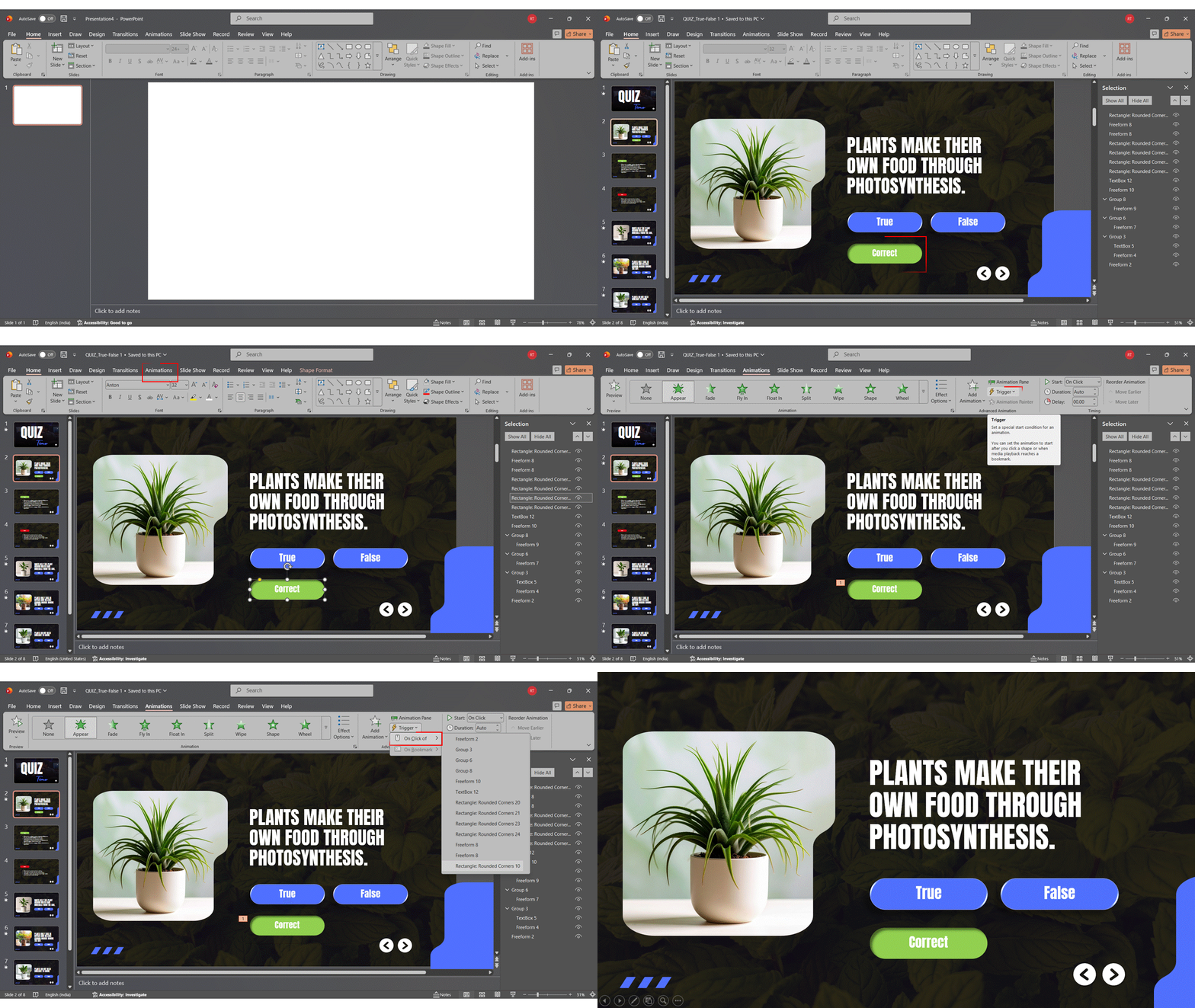
Triggers let you show feedback on the same slide — no navigation required. Example setup:
- Add a hidden “Correct!” text box to your question slide
- Set its animation to Appear
- Set the trigger: “On click of [correct answer shape].”
The user clicks the right option — “Correct!” appears instantly on the same slide. No clunky slide transitions needed.
Using PowerPoint Add-ins to Level Up Your Quiz
The native method covers most use cases. These add-ins extend what is possible inside PowerPoint.
ClassPoint — Best for Live Classroom Quizzes
ClassPoint is a free PowerPoint add-in. It adds a live quiz layer directly to your slides. What ClassPoint adds:
- Real-time student responses from any browser or device
- Live leaderboard visible to the whole room
- Auto-grading — no slide setup required
- Per-question countdown timer
- AI quiz generation from your existing slide content
For classrooms, ClassPoint gives you the most capable interactive quiz experience.
iSpring QuizMaker — Best for Formal Assessments
iSpring adds a professional quiz builder tab inside PowerPoint. Key features:
- 14 question types (drag-and-drop, matching, fill-in)
- Automatic pass/fail scoring with customizable thresholds
- SCORM export for LMS integration
- Full response analytics and reporting
Best for compliance training, HR onboarding, and corporate e-learning.
Poll Everywhere — Best for Audience Participation
Participants respond via their smartphones. Results appear live on your slide in real time. Great for large venues, hybrid events, and scenarios where every participant has a phone.
When to Stick with Native PowerPoint
Adding a quiz to PowerPoint natively remains the best choice when:
- You need it built quickly with zero setup time
- The room has no reliable internet connection
- The quiz is a one-time event or for internal use only
- Your audience won’t have separate devices to respond from
The native method handles 80% of real-world use cases. Start there. Only add tools when you hit a real limitation.
Sharing and Presenting Your PowerPoint Quiz
How to Present a Quiz in Person
Use Slide Show mode (F5 or Presenter View). Connect to a projector or large display. For self-paced use, give each participant their own laptop or tablet. Share the file via USB or local network.
How to Share for Self-Paced Completion
Save your file as .PPSX format. This opens directly in Slide Show mode. Participants cannot edit or reorder slides. Share via:
- OneDrive or SharePoint link
- Email attachment (for small files)
- Company intranet or training portal
For live remote sessions where participants join from different devices, you can also broadcast your PowerPoint quiz directly online without needing a third-party platform.
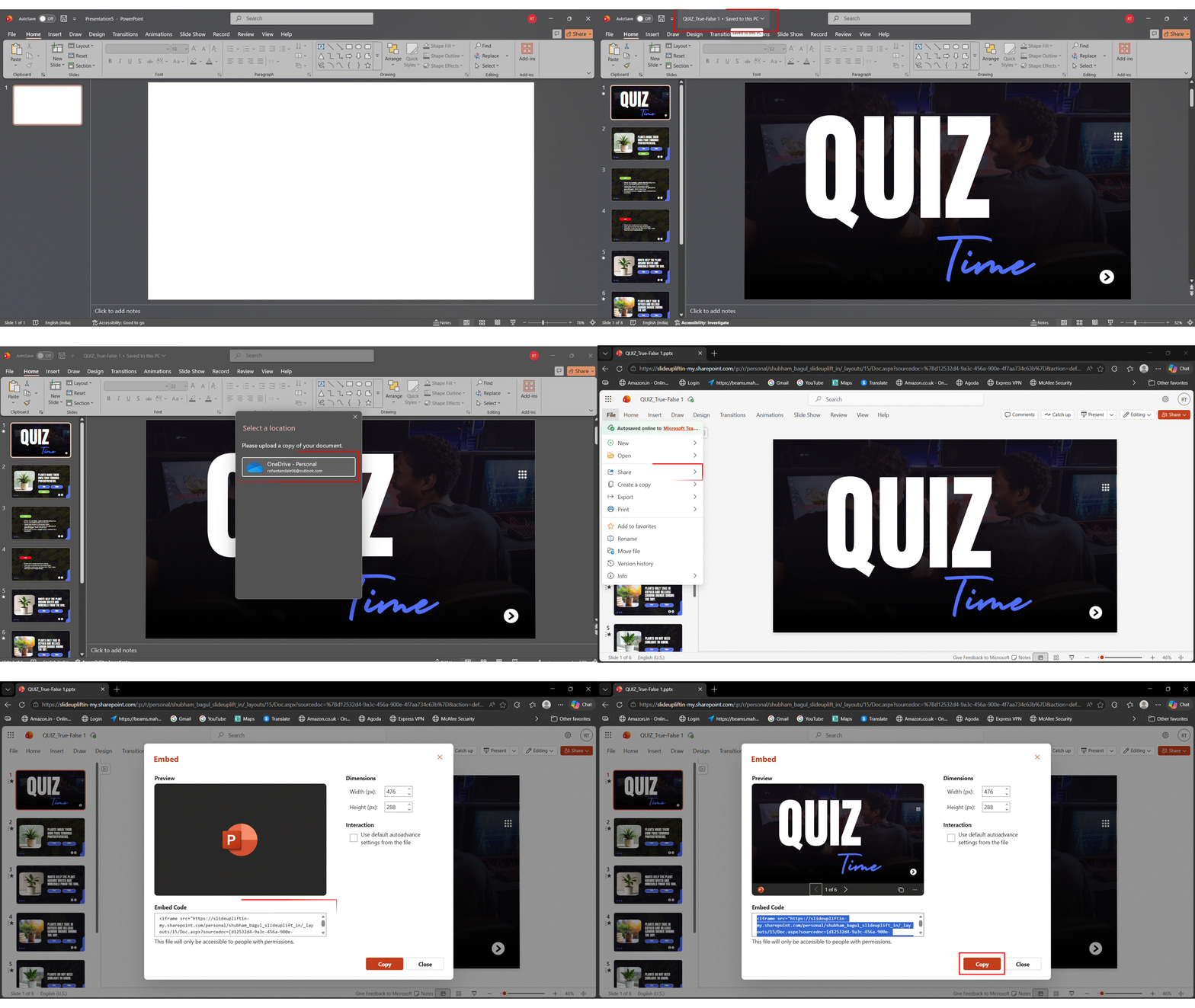
How to Embed a PowerPoint Quiz Online
- Upload your file to OneDrive
- Click Share → Embed
- Copy the generated iframe code
- Paste it into your website, blog, or LMS page
Users complete the quiz in a browser. No PowerPoint installation needed.
How to Insert a Microsoft Forms Quiz
This is the best way to create quiz from PPT with real answer collection.
- Build your quiz at forms.office.com
- Copy the shareable link
- In PowerPoint, go to Insert → Link
- Paste the link onto a button on your slide
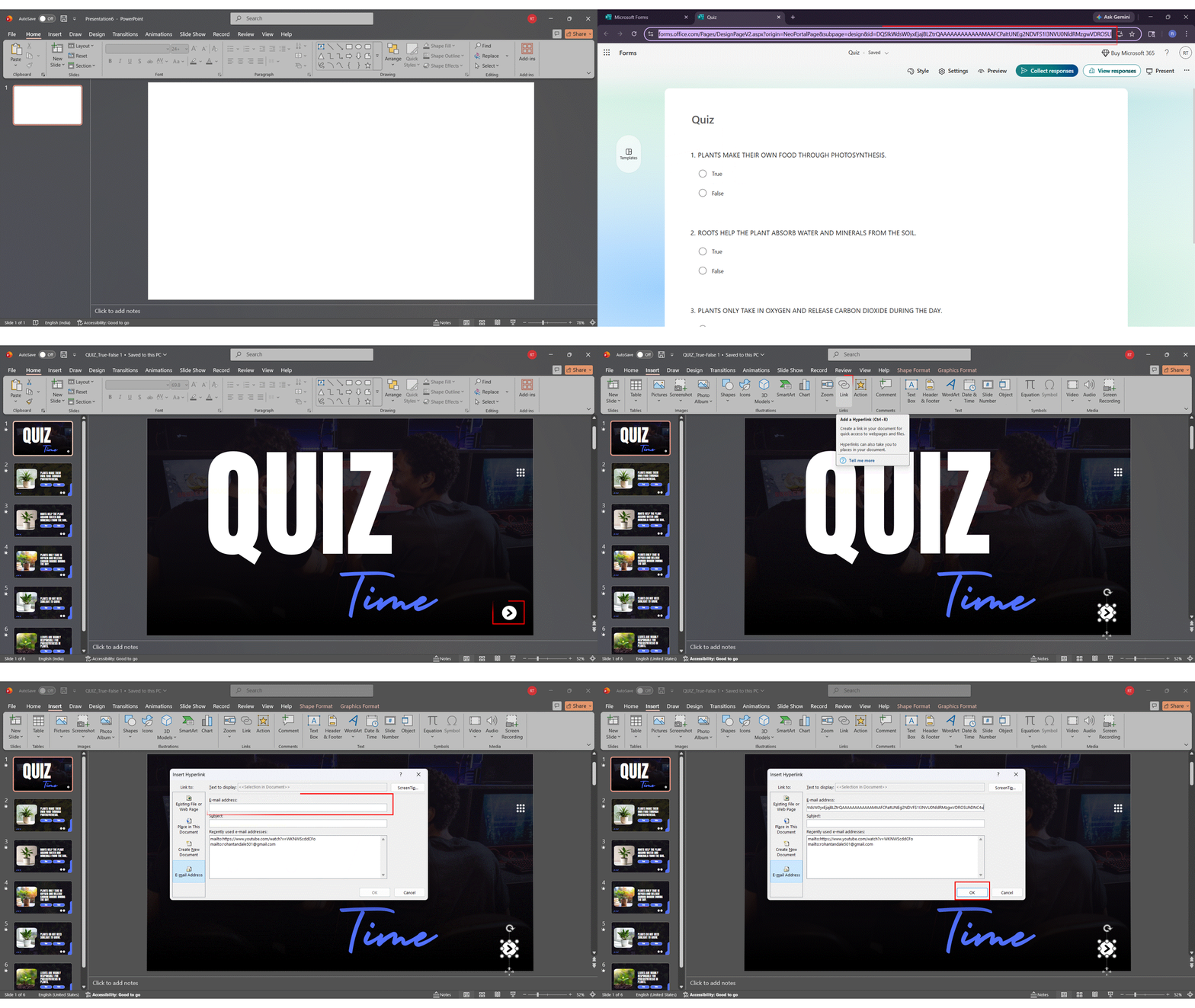
If you have Microsoft 365, you can also insert Forms directly: go to Insert → Forms on the ribbon. This embeds the quiz right on the slide without needing to copy a link. Microsoft Forms handles scoring, data storage, and exports. PowerPoint provides the presentation shell around it.
Troubleshooting Common PowerPoint Quiz Problems
Hyperlinks Not Working in Slide Show Mode
This is the most common issue. Check these in order:
- Not in Slide Show mode? Links only activate there — not in the editing view.
- Added or deleted slides after linking? Slide numbers shift and links break. Re-verify every link.
- File in Protected View? Click “Enable Editing” first. Protected View blocks all interactive features.
- Used Insert → Action? Confirm the target slide number is correct in the Action dialog.
Animation Triggers Firing Out of Order
Open the Animation Pane (Animations → Animation Pane). Review the full trigger sequence. Verify each trigger is attached to the correct object, not a neighbouring shape with a similar name.
Audio Not Playing After Sharing
Audio can become unlinked when a file is moved or emailed. Fix: When inserting audio, always choose Embed rather than Link to File. Embedded audio is stored inside the .PPTX file and travels with it.
Quiz Not Working on Mac or Older PowerPoint Versions
- Use Insert → Hyperlink instead of Action if the Action dialog behaves unexpectedly on Mac
- Avoid trigger-based animations on pre-2019 builds
- Test on the exact device your audience will use before the session
Conclusion
Building an interactive quiz in PowerPoint is far simpler than most people expect. Start with the native hyperlink method — three slide types, two linked buttons per question, tested in Slide Show mode — and you will have a working quiz ready to share.
Once the foundation is solid, you can layer in polish: sound effects for right and wrong answers, a countdown timer animation per question, Microsoft Forms for automatic score collection, or ClassPoint for live classroom engagement. Use one of the free templates above to skip the design work entirely. Replace the text, test every path, and share with confidence. Start with one question and build from there.
FAQs
-
Can you create a quiz in PowerPoint without any add-ins?
Yes. PowerPoint’s built-in Action and Hyperlink tools handle everything. The native method works on both Windows and Mac — no downloads required.
-
How to create a quiz in PowerPoint with a score?
Native PowerPoint cannot auto-calculate scores. For automatic scoring, embed a Microsoft Forms quiz link on a slide, or use ClassPoint or iSpring as a PowerPoint add-in.
-
How many questions can a PowerPoint quiz have?
There is no technical limit. Practically, quizzes with over 20 questions become difficult to manage with manual hyperlinks. Use an add-in like ClassPoint beyond that scale.
-
How to make a quiz in PPT that works completely offline?
Use the native hyperlink method and save as .PPTX or .PPSX. The quiz runs entirely offline. No internet connection needed during the session.
-
What is the difference between a Hyperlink and an Action in PowerPoint?
Both navigate between slides. Action (Insert → Action) gives more trigger options — mouse click vs. hover. For quizzes, Action gives more precise control.
-
Is a PowerPoint quiz SCORM-compliant?
No. For SCORM compliance, use iSpring Suite or Articulate 360. Most LMS platforms require SCORM format.
-
How do I stop participants from skipping directly to answer slides?
Enable Kiosk Mode: Slide Show → Set Up Show → Browsed at a Kiosk. This disables all keyboard navigation. Users can only click your linked buttons.
-
Can I randomize question order in a PowerPoint quiz?
Not natively. Randomization requires a VBA macro or a dedicated tool like iSpring. For most presentations, a fixed order works perfectly well.
-
How to make a quiz in PowerPoint suitable for online classes?
Save as PPSX and share via OneDrive for self-paced completion. For live sessions, use ClassPoint (works inside Zoom and Teams). For response collection, embed a Microsoft Forms quiz link on a slide.
-
How do I create a quiz from PPT slides I already have?
Add question slides after your existing content. Use Insert → Action to link each answer. Or use ClassPoint — it turns any existing slide into an interactive question in seconds.
Table Of Content


Related posts from the same category
14 Aug, 2025 | SlideUpLift
How to Make a Curved Arrow in PowerPoint? A Detailed Guide
Think of your presentation as a journey. On a slide, you have the ideas stacked up, but there is no way you are understanding what is connected to the next.
17 Feb, 2020 | SlideUpLift
How to make 3D Arrow Diagram in PowerPoint | PowerPoint Tutorial
This PowerPoint article contains a stepwise tutorial to create 3D Arrows in PowerPoint. Also learn- What do Arrow PPT's represent? How to create an Arrow template in PowerPoint Examples of
27 Feb, 2026 | SlideUpLift
How To Broadcast a PowerPoint Presentation Online [6 Working Methods]
If you have been looking for a way to broadcast a PowerPoint presentation online to a remote audience, you have probably run into tutorials that tell you to click Slide

3 Feb, 2023 | SlideUpLift
How To Make A Graph In PowerPoint?
Do you need help communicating data effectively in your presentations? Data visualization is an essential tool in today's world as it helps represent complex data sets in a simple and

4 Oct, 2019 | SlideUpLift
How to insert 3D models in PowerPoint
Imagine giving a product presentation in front of your clients and you feel the need to showcase the product prototype without actually having it there with you. Also, you may

22 Dec, 2020 | SlideUpLift
How to make a poster in PowerPoint | PowerPoint Tutorial
Most of the time, we use PowerPoint to create presentations, but did you know you could use PowerPoint to build other elements such as posters? It is quite handy software

7 Feb, 2020 | SlideUpLift
How To Make A Filmstrip Effect In PowerPoint | PowerPoint Tutorial
Learn how to make a cool filmstrip effect. A PowerPoint Timeline Template need not be boring. This tutorial explains step-by-step instructions to create a cool Filmstrip timeline template in minutes.

20 Mar, 2026 | SlideUpLift
How to Add Annotations in PowerPoint: The Complete Step-by-Step Guide
This blog explains how to add real-time annotations in PowerPoint presentations using tools like the pen, highlighter, and laser pointer to make slides more interactive and engaging. It provides step-by-step

26 Dec, 2022 | SlideUpLift
How to make a table in PowerPoint?
Tables are an essential element of any presentation, as they allow you to organize and present data in a clear and concise manner. Whether you're creating a business presentation, a

4 Dec, 2019 | SlideUpLift
How to Do Hanging Indent on PowerPoint: 5 Easy Methods (Windows & Mac)
Whether you're formatting an APA reference list on a slide, polishing multi-line bullet points, or creating a clean agenda, knowing how to do a hanging indent in PowerPoint is one