
 Flat 4


How to Add a Video to Google Slides Step by Step (2026)
Embedding a video in your presentation takes just a few clicks through the Insert menu — but getting it to actually play for your audience requires knowing a few rules that most guides skip. The wrong sharing permission, an unsupported file format, or an unprocessed file will produce a blank screen at the worst possible moment.
Knowing how to add a video to Google Slides correctly — not just technically but in a way that works reliably for every viewer — is the difference between a polished presentation and an awkward one. This guide covers every method: YouTube, Google Drive, uploading from your computer, and adding video on mobile, including iPhone, Android, and iPad.
All steps have been verified against the current web version of Google Slides (April 2026).
Quick Answer: How to Add a Video to Google Slides
- Go to Insert → Video.
- Choose YouTube, By URL, or Google Drive.
- Select your video and click Select.
- Open Format Options to set autoplay, trim start/end times, or mute audio.
Why Add Videos to Your Google Slides Presentations?
Videos do three things static slides cannot: they show instead of tell, hold attention through sound and motion, and leave a lasting impression. According to TechSmith’s Value of Visuals report, two out of three employees do their work better when they learn through visuals instead of text alone — and absorb content 7% faster with video. A 90-second product demo, a customer testimonial, or a short explainer clip communicates what five text-heavy slides struggle to convey.
What You Need to Know Before You Start
There are a few non-obvious rules to know about how to add a video in Google Slides correctly. Skipping any of them is the most common reason videos fail live.
Google Slides Supports Two Primary Video Sources
- YouTube (public or unlisted videos only)
- Google Drive (files uploaded to your own Drive account)
You can also embed public Vimeo videos using the By URL method (Insert → Video → By URL). TikTok, Dropbox, and local drive files are not supported directly — route those through Google Drive first.
Supported File Formats for Google Drive Uploads
- MP4 — recommended, most universally compatible
- MOV — Apple QuickTime format
- WebM — open web format
WMV, MKV, and AVI are not supported. Convert to MP4 before uploading — and if you plan to pair your video with narration, check our guide on how to add audio to Google Slides.
File Size Limit
There is no official file size limit for videos embedded in Google Slides, since videos stream from YouTube or Google Drive rather than being stored inside the presentation file. However, keeping files under 100–200 MB is a practical recommendation — larger files take longer for Drive to process and are more likely to buffer on slower networks during your presentation. If your file exceeds that range, compress it before uploading.
An Active Internet Connection Is Required
Google Slides streams videos rather than storing them inside the file. A stable internet connection is required for playback, including during your presentation. There is no true offline video playback in Google Slides. If you need to present without internet, download and play the video separately using your device’s media player and switch to it manually during the presentation.
Google Drive Permissions — The Most Overlooked Step
Critical: If you embed a video from Google Drive, every viewer needs access to that Drive file. If the file is set to Restricted, your audience will see a blank video player even though it works when you test it. Always set Drive videos to “Anyone with the link” before embedding.
YouTube Video Restrictions
A YouTube video cannot be embedded in Google Slides if it is:
- Set to Private (must be Public or Unlisted)
- Age-restricted (may fail for part of your audience)
- Region-locked (may not play for viewers in certain countries)
- Deleted or removed after you embedded it
How to Add a YouTube Video to Google Slides Using Search
YouTube is the easiest way to add a video on Google Slides because videos stream directly and do not increase your file size. Use this method when you know the topic but do not have a URL ready.
- Open your presentation and go to the slide where you want the video.
- Click Insert → Video. The Insert Video dialog opens.
- The dialog defaults to the Search tab. Type keywords or the video title and press Enter.
- Browse the results and click the video you want.
- Click Select (the blue button at the bottom right).
- The video appears on your slide. Drag it to reposition; drag corner handles to resize.
Keyboard shortcut: Press Alt+I+V (Windows/ChromeOS) or Ctrl+Option+I+V (Mac) to open the Insert Video dialog instantly.
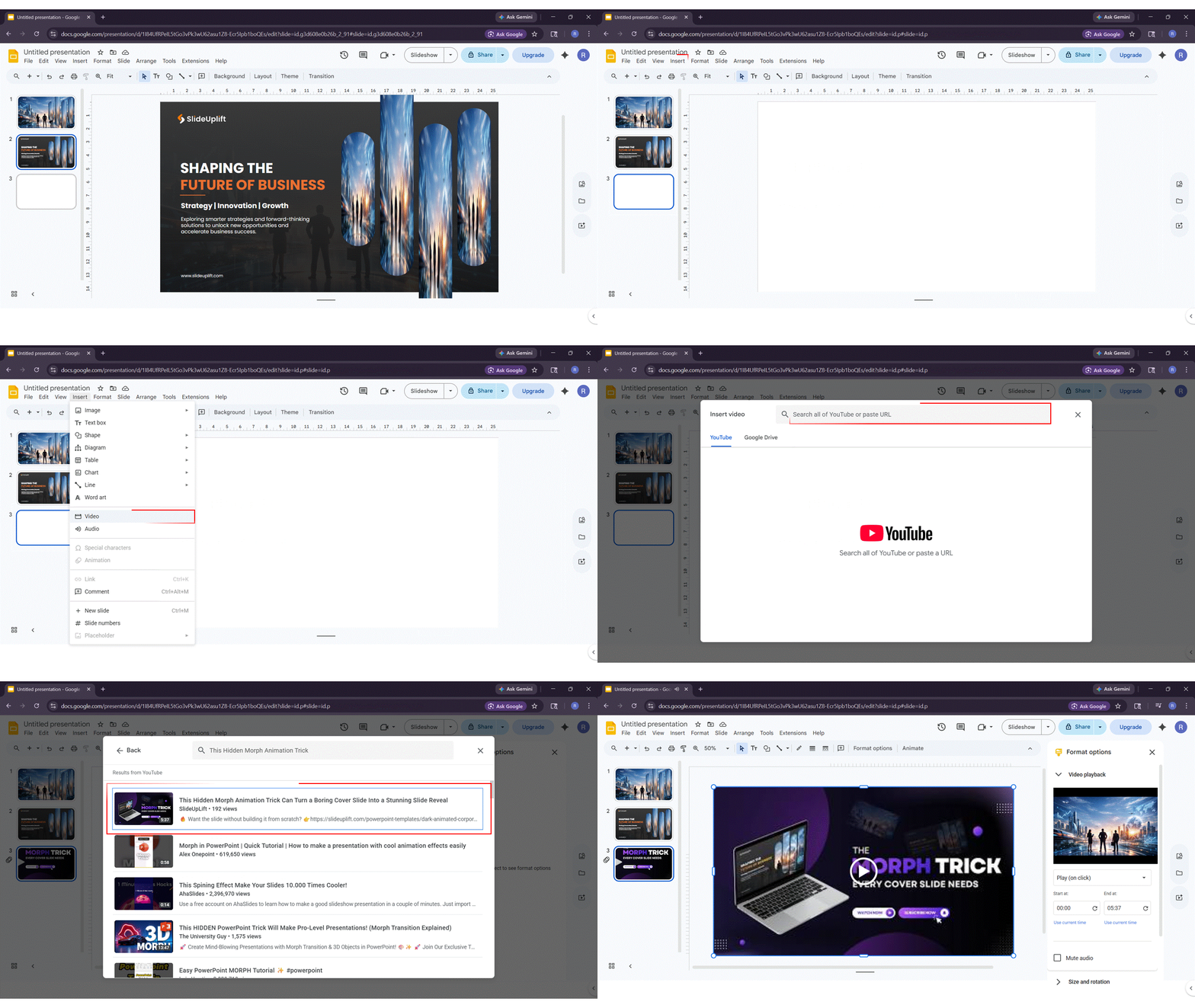
Pro Tip: Only Public and Unlisted YouTube videos appear in search results. If the video you need does not show up, it is likely set to Private. Use the URL method below instead.
How to Embed a YouTube Video in Google Slides by URL
This is the better option for unlisted company videos or when you already have the link.
- Go to YouTube and open the video you want.
- Copy the URL from the address bar, or click Share → Copy Link.
- Return to your Google Slides presentation and open the target slide.
- Click Insert → Video.
- Click the By URL tab.
- Paste the YouTube URL and click Select.
- Resize and reposition the video on your slide.
Use a standard youtube.com/watch?v=… link or a short youtu.be link. Playlist URLs may not embed correctly, so always use the individual video URL.
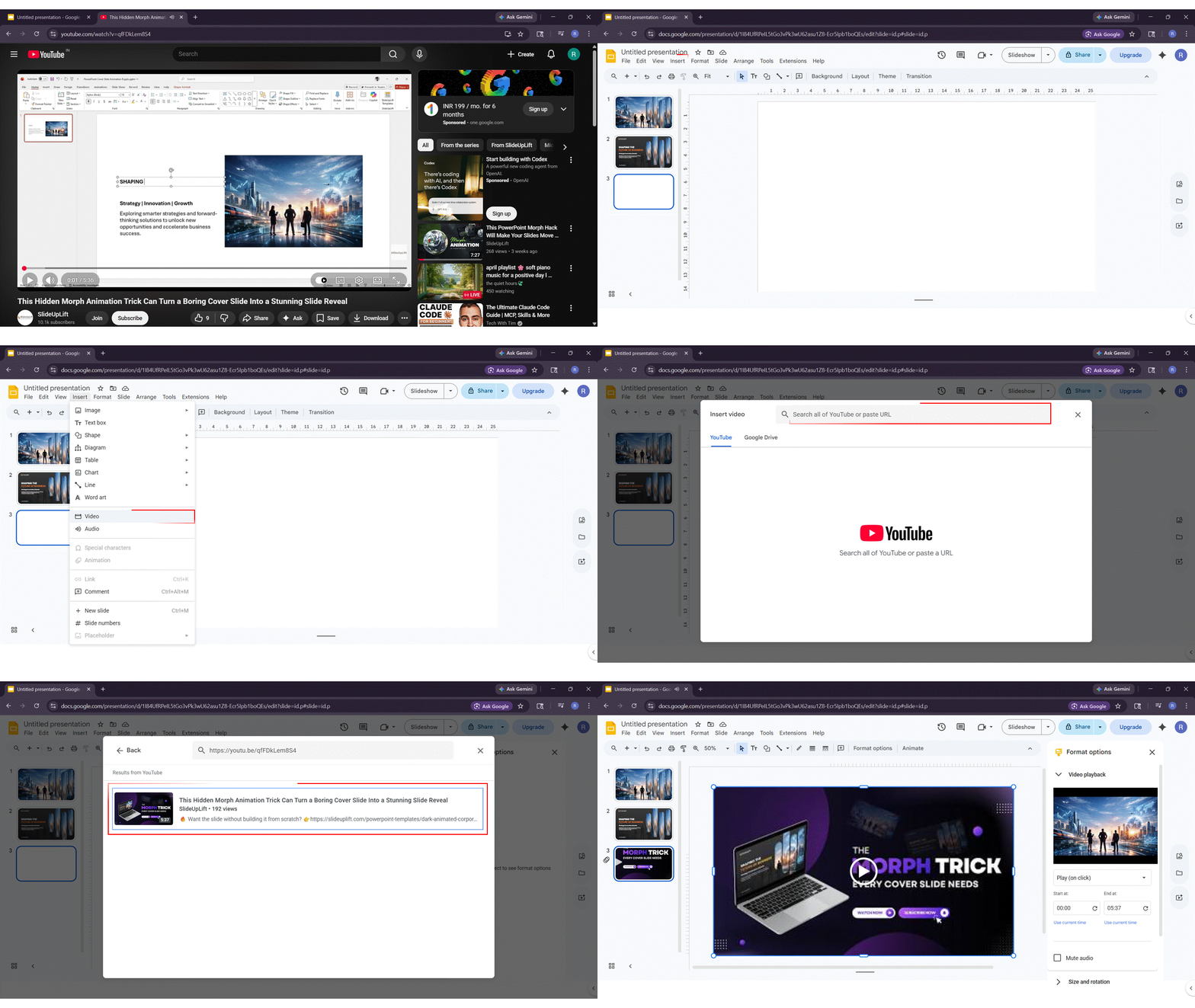
Note: The video must be Public or Unlisted, whether it is yours or someone else’s. Private and age-restricted videos will not embed regardless of the method used.
How to Embed a Video in Google Slides from Google Drive
Google Drive is ideal for any video you have created yourself — product demos, training recordings, or anything not publicly on YouTube. This is also the most reliable way to insert a video in Google Slides when you need to control who can view it.
Step 1 — Set Permissions Before Embedding (Do Not Skip This)
Open Google Drive, right-click your video file, and click Share → Get link. Change access from Restricted to “Anyone with the link.” If you skip this step, your audience will see a blank player during the presentation.
Step 2 — Insert the Video into Your Slides
- Open your Google Slides presentation and go to the desired slide.
- Click Insert → Video.
- Click the Google Drive tab.
- Browse your Drive or search for your video file.
- Click the video to select it, then click Select.
- The video appears on your slide. Reposition and resize as needed.
Keyboard shortcut: Press Alt+I+V (Windows/ChromeOS) or Ctrl+Option+I+V (Mac) to open the Insert Video dialog directly.
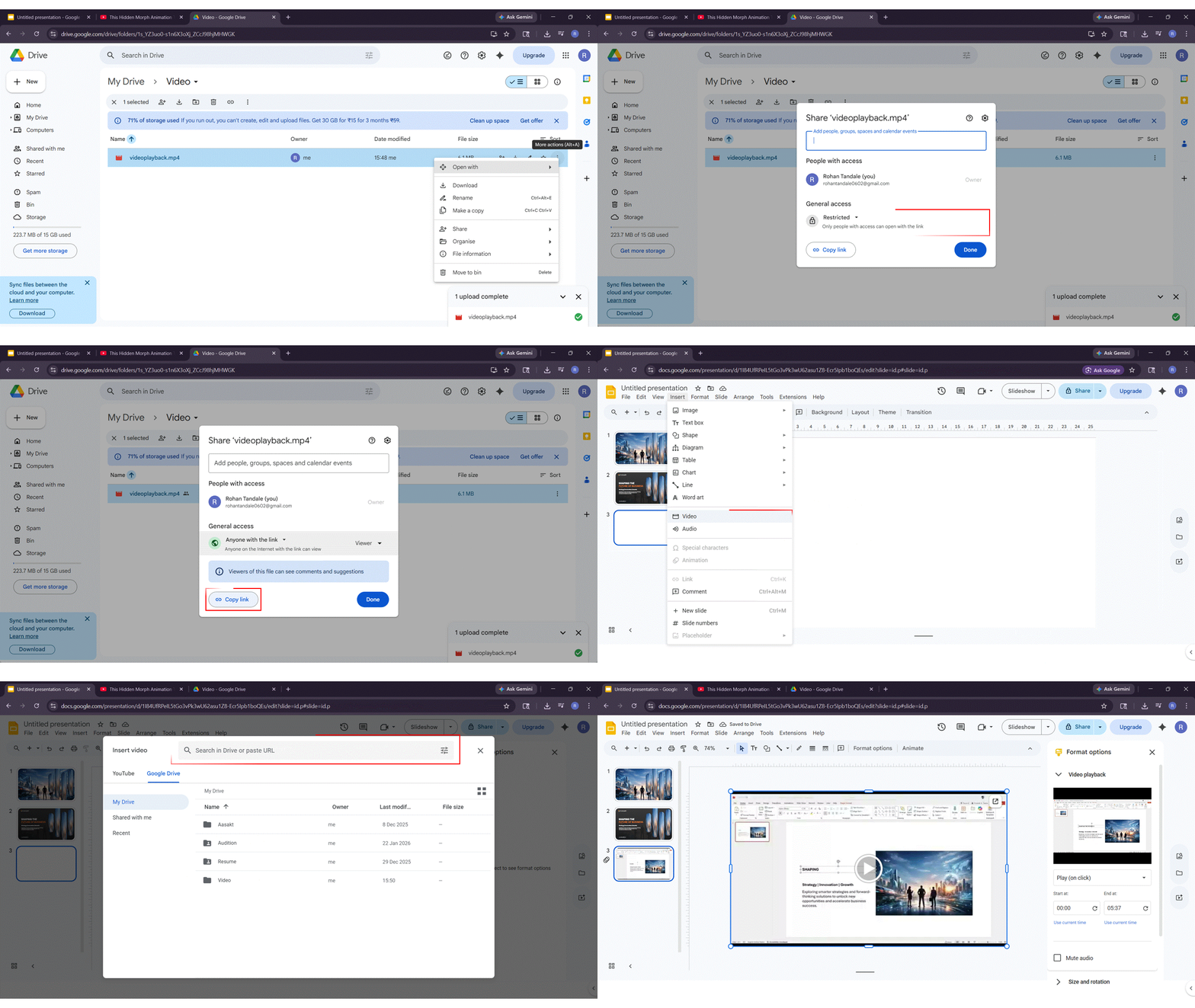
Google Workspace note: If you are on a school or work Google account, your organisation’s admin may have restricted external sharing. If the video still does not play after setting permissions correctly, contact your IT administrator.
How to Add a Video to Google Slides from Your Computer
To insert a video from your computer, you must first upload it to Google Drive — direct uploads from your desktop are not supported.
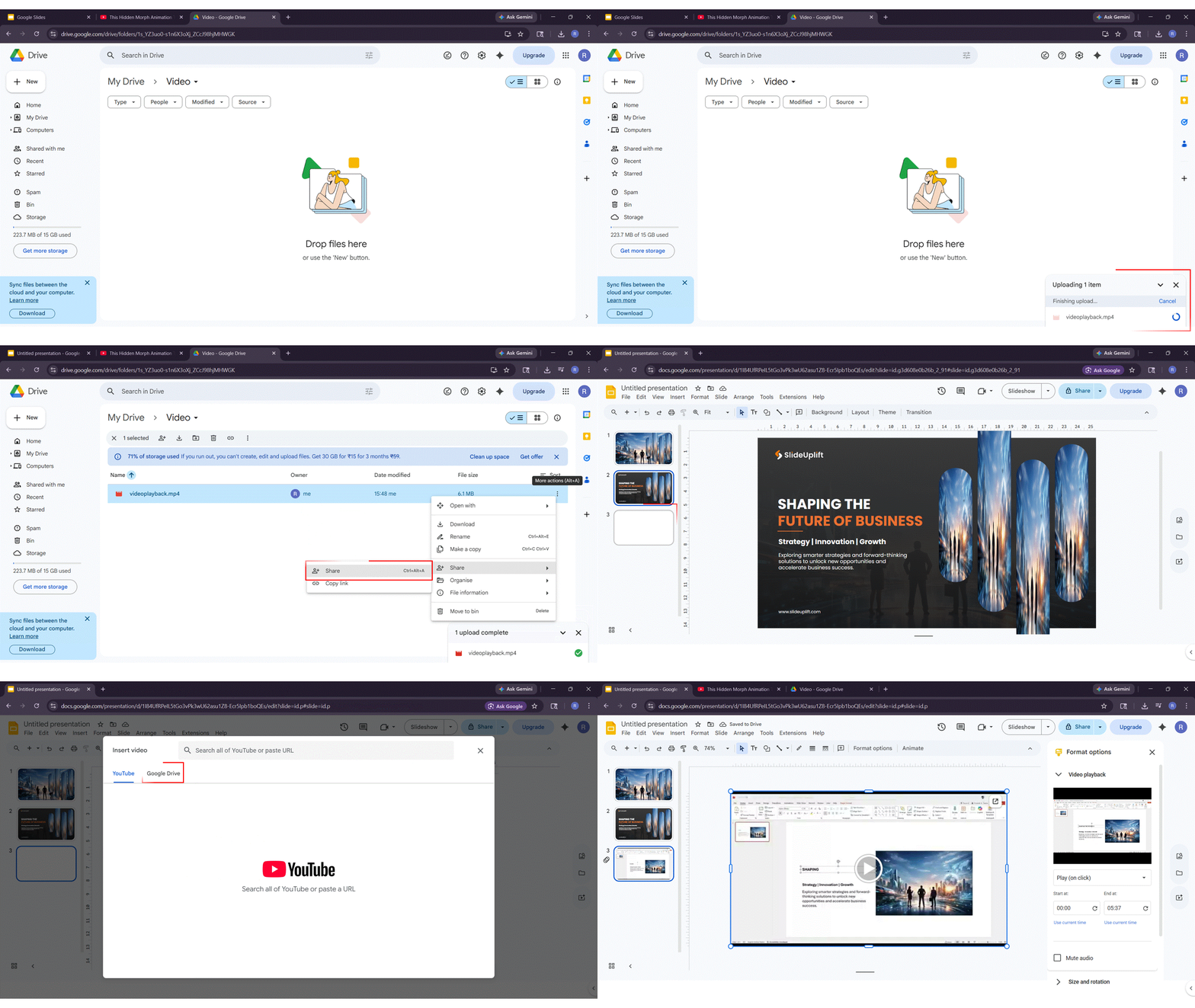
Step 1 — Upload Your Video to Google Drive
- Go to drive.google.com and click New → File Upload.
- Select your video file (MP4 recommended) and click Open.
- Wait for the upload to complete — a progress bar appears at the bottom right.
- Wait for the drive to finish processing. Large files can take several minutes.
- Right-click the file → Share → Get link → set access to “Anyone with the link.”
Step 2 — Insert into Google Slides
Follow the Google Drive insertion steps above: Insert → Video → Google Drive tab → select your file → Select.
Best practice: Upload Drive videos the day before your presentation. Large files can take extra time to process, and a file that shows as uploaded is not always immediately ready for smooth streaming.
Google Vids Integration
If you create videos using Google Vids (Google’s video creation tool within Workspace), you can bring them into Google Slides directly. In Google Vids, go to File → Export to Drive. Once exported, insert the video into your presentation using the Insert → Video → Google Drive tab as described above. This is the officially recommended workflow for Google Workspace users working across both tools.
Adding Videos on Mobile: Android, iPhone, and iPad
On Android
The Google Slides Android app supports full video insertion from both YouTube and Google Drive.
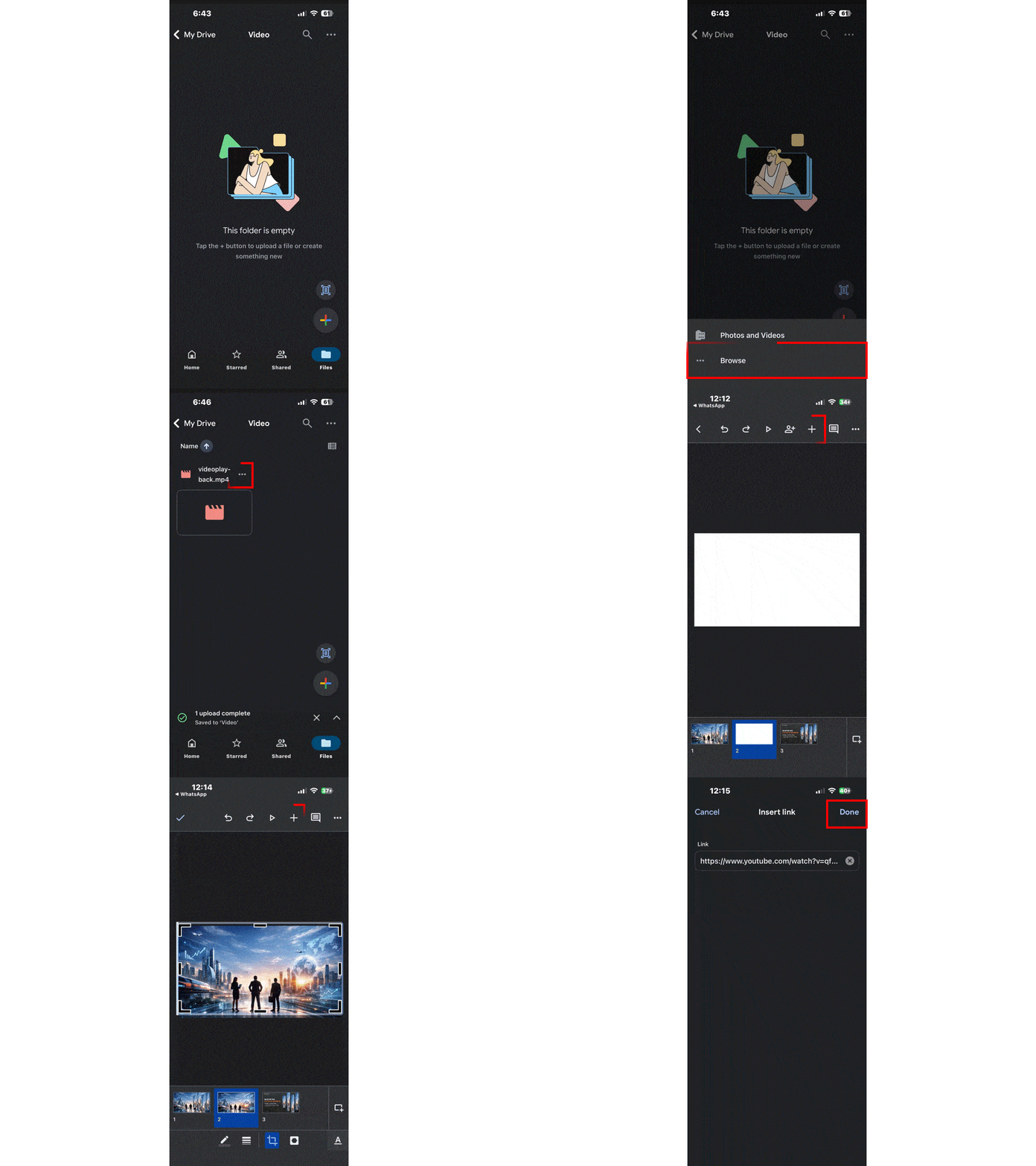
- Upload your video to Google Drive if it is not already on YouTube.
- Open the Google Slides app and open your presentation.
- Tap the slide where you want the video.
- Tap + → Insert → Video.
- Choose YouTube (search or paste URL) or Google Drive.
- Select your video and tap Insert.
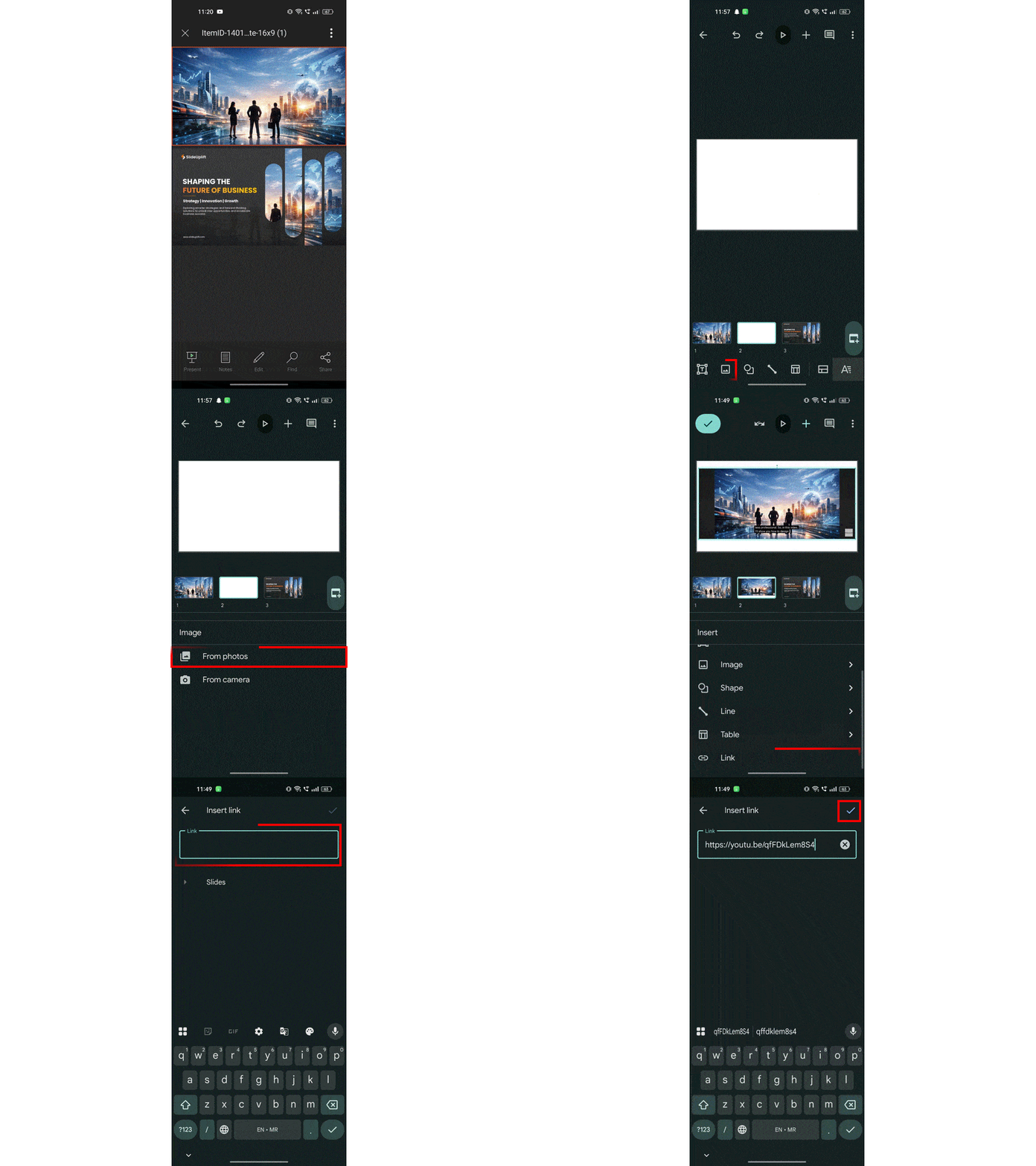
On iPhone
The iOS app does not support full video embedding. The reliable workaround:
- Upload your video to Google Drive and set sharing to “Anyone with the link.”
- Copy the Google Drive link (or the YouTube URL if the video is on YouTube).
- Take a screenshot of an engaging frame from the video and crop it as a thumbnail.
- In the Google Slides app, open the target slide.
- Tap + → Image → From Photos. Insert the cropped screenshot.
- Tap + → Link. Paste the video URL and tap ✓.
Tapping the thumbnail during your presentation opens the video. It is not an embedded player, but it is the most reliable option on iOS.
On iPad
The best method is to use Desktop Mode in Safari, which gives you the full web version of Google Slides:
- Open Safari on your iPad.
- Tap the aA icon in the address bar → Request Desktop Website.
- Go to slides.google.com and open your presentation.
- Use Insert → Video exactly as you would on a computer.
Desktop Mode in Safari bypasses the limitations of the iPad app and gives you full access to every embedding and customisation feature.
How to Customise Your Embedded Video in Google Slides
Once your video is on the slide, the Format Options panel gives you precise control over playback, timing, and appearance. To open it: click the video, then click Format Options in the top toolbar (or right-click → Format options).
Setting Playback Options
Under Format Options → Video Playback, choose from three settings:
- Play (on click): Default. The video plays when you click it during the presentation. Best when the video is supplementary to your narration.
- Play (automatically): Video starts as soon as you arrive at that slide. Best when the video is the sole focus of the slide.
- Play (manually): You must click the play button on the video frame itself. Useful for full presenter control.
If you need the same video to play across multiple slides, that works differently in PowerPoint — check our guide on video playback settings in PowerPoint.
Tip: Avoid autoplay for supplementary videos. If you are still talking when the slide loads, autoplay creates an audio conflict that disrupts your delivery.
Trimming Start and End Times
If you have a 5-minute video but only need a 45-second segment:
- Click the video → Format Options → Video Playback.
- Set the Start time and End time fields (format: minutes:seconds).
Google Slides will play only that segment — no external editing tool required. For example, if the key moment runs from 1:20 to 2:05, set Start = 1:20 and End = 2:05.
Muting Audio
In Format Options → Video Playback, check the Mute audio box. Use this when you want the visual context of a video but plan to narrate over it yourself. For a full narration walkthrough, see our guide on how to add a voiceover to Google Slides.
Resizing and Repositioning the Video
- Resize: Drag the corner handles — not the side handles. Side handles distort the aspect ratio.
- Lock aspect ratio: Hold Shift while dragging a corner to maintain proportions.
- Reposition: Click and drag the video anywhere on the slide. Red alignment guides appear to help you centre it.
- Precise dimensions: Right-click → Format options → Size & Rotation to enter exact pixel values.
Adding a Drop Shadow or Border
To add a drop shadow: click the video → Format Options → toggle on Drop Shadow. Adjust blur radius, distance, and angle to match your slide design. To add a border: with the video selected, use the border colour and border weight dropdowns in the top toolbar.
Troubleshooting: Why Is My Video Not Playing in Google Slides?
When something goes wrong, the table below covers every common scenario with a specific fix.
| Problem | Likely Cause | Fix |
|---|---|---|
| Video will not embed from YouTube | Video is set to Private | Change to Public or Unlisted on YouTube |
| The audience sees a blank video player | Drive sharing is restricted | Set the Drive file to Anyone with the link |
| The insert button does nothing | Browser extension conflict | Disable ad blockers and use Google Chrome |
| Video buffers or loads slowly | Large file or weak connection | Keep files under 100–200 MB, compress before uploading, and use MP4 format |
| Age-restricted video fails to embed | YouTube platform restriction | Choose a video without age restrictions |
| Unsupported format error on upload | WMV, MKV, or AVI file | Convert the file to MP4 before uploading |
| File shows Still Processing in Drive | Drive encoding is not finished | Wait for processing to finish, then retry |
| School or work account blocks video | Organisational admin policy | Contact your IT administrator for access |
| The video plays for you, but not the audience | Drive file set to Restricted | Update Drive sharing to Anyone with the link |
Tips for Using Videos Effectively in Google Slides
1. Always trim before you present
Even for a highly relevant video, play only the most impactful segment. Audience attention drops sharply for embedded videos longer than two minutes. Use the Start/End time fields in Format Options to trim without any external tool.
2. Test on the actual presentation network
A video that streams perfectly on your home Wi-Fi may buffer on a conference room or classroom network. Always run through your slides on the same internet connection your audience will use.
3. Upload Drive videos the day before
When you embed a video from Drive, the file must be fully processed before it streams reliably. Large files can take extra time to encode. Uploading the day before avoids last-minute surprises.
4. One video per slide
Multiple videos on one slide create a cluttered layout and make playback management awkward. If you need several videos, give each one its own dedicated slide.
5. Reserve autoplay for standalone video slides
If you are still talking when the slide loads, autoplay will play audio over your voice. Use on-click playback for any video that supports your narration, and autoplay only when the video is the sole focus.
Now that you know how to add a video to Google Slides, take your presentation a step further with professionally designed Google Slides templates that make your slides more engaging and visually appealing.

Conclusion
Embedding videos in Google Slides becomes straightforward once you know the two core rules: only YouTube and Google Drive are the primary supported sources, and Drive videos must have the correct sharing permissions before your audience can see them. Everything else — trimming, autoplay, resizing — is handled inside Format Options.
Whether you are learning how to insert a video in Google Slides for the first time or troubleshooting a video that refuses to play, the methods above cover every scenario: desktop, YouTube, Drive, and mobile. If you also work in PowerPoint, the process is slightly different — see our step-by-step guide on how to embed a video in PowerPoint to get the same results across both tools.
The three habits that make the biggest practical difference are: convert your files to MP4 before uploading, set Drive sharing permissions before embedding, and always test on the same network where you will present. Do those three things, and your videos will work every single time.
FAQs
-
How do you add a video to Google Slides?
Go to Insert → Video in the top menu. Choose YouTube (search by keyword or paste a URL) or Google Drive. Select your video and click Select. The video appears on your slide where you can resize, reposition, and customise playback via Format Options.
-
How do I add a video to Google Slides from my computer?
Google Slides does not support direct uploads from your computer. Upload your video to Google Drive first (drive.google.com → New → File Upload), then go to Insert → Video → Google Drive tab, find the file, and click Select. Set the Drive file to “Anyone with the link” before your presentation.
-
How do I add a video to Google Slides on iPhone or Android?
On Android, the Google Slides app supports direct insertion via + → Insert → Video → YouTube or Drive. On iPhone, the app does not support full embedding. The workaround is to insert a screenshot as a thumbnail and hyperlink it to the video URL — tapping the thumbnail during your presentation opens the video.
-
Why can't I insert a YouTube video into Google Slides?
The most common causes: the video is Private (must be Public or Unlisted), it has age restrictions, it is region-locked, or your internet connection is unstable. If the Insert button does nothing at all, disable browser extensions such as ad blockers and use Google Chrome.
-
How do I make a video autoplay in Google Slides?
Click the video on your slide, then click Format Options in the toolbar. Under Video Playback, select “Play (automatically).” The video will start playing as soon as you arrive at that slide during your presentation.
-
What video formats does Google Slides support?
For Google Drive uploads, Google Slides supports MP4, MOV, and WebM. WMV, MKV, and AVI are not supported and will not play. MP4 is the recommended format as it is the most universally compatible.
-
Is there a file size limit for videos in Google Slides?
There is no official file size limit for videos in Google Slides, since videos stream from YouTube or Google Drive rather than being stored inside the presentation file. As a practical guideline, keeping files under 100–200 MB reduces the risk of buffering on slower networks and speeds up Drive processing time. Compress the file before uploading if it exceeds that range.
-
How do I add an MP4 video to Google Slides?
Upload the MP4 to Google Drive. Once processing is complete, go to Insert → Video → Google Drive tab, select the file, and click Select. Make sure the Drive file is set to “Anyone with the link” before your presentation.
-
Can I embed a Vimeo video in Google Slides?
Yes, for public Vimeo videos. Copy the Vimeo video URL, go to Insert → Video → By URL, paste the link, and click Select. Public Vimeo videos generally embed successfully. Password-protected or private Vimeo videos may not play for your audience — upload those to Google Drive instead.
-
How do I add a TikTok video to Google Slides?
TikTok videos cannot be embedded directly. Download the video, upload it to Google Drive in MP4 format, set the file to “Anyone with the link,” then insert it via Insert → Video → Google Drive tab.
Table Of Content



Related posts from the same category

11 Apr, 2025 | SlideUpLift
How to Add Audio to Google Slides: (Step-by-Step Guide)
Benefits of Adding Audio to Google Slides In today’s digital world, it is tough to hold your audience’s attention. Simply using text and images may not make it interesting enough.

1 Aug, 2024 | SlideUpLift
How To Add A GIF In Google Slides (Using 3 Methods)
GIFs add a visual aid to convey information in your presentations. These short animations can save time by expressing your point in a visually efficient way. Adding GIFs is one

18 Nov, 2023 | SlideUpLift
How to Insert Icons in Google Slides Presentations
Quick Answer There are 5 ways to insert icons in Google Slides quickly and effectively: Install the Flaticon or Noun Project add-on via Extensions > Add-ons > Get add-ons Use

6 Dec, 2023 | SlideUpLift
How to Flip or Mirror an Image in Google Slides?
Visuals are crucial in conveying messages effectively while presenting. They offer a variety of features to enhance your slides, including the ability to flip or mirror images. Flipping or rotating
9 Nov, 2021 | SlideUpLift
Learn How To Apply Filters To The Picture In Google Slides | Google Slides Tutorial
Google Slides is an excellent tool for creating a professional-looking presentation. Images are the most significant item you can incorporate in your presentation to provide visual attention. Using incorrect images

29 Nov, 2022 | SlideUpLift
How To Make An Image Transparent In Google Slides
The use of images makes your presentation very compelling. They help make a massive positive impact on your audience. According to one study by Forbes, 65% of us are visual

16 Dec, 2022 | SlideUpLift
How to Save a Google Slide As An Image
Have you ever created a slide in Google Slides that you wanted to use as a picture in another presentation or document, but you didn't know how to save a

30 Apr, 2026 | SlideUpLift
How to Add a Border in Google Slides (7 Easy Methods)
To add a border in Google Slides, insert a rectangle shape, set its fill to transparent, and customize the border color and weight from the toolbar. You can apply borders

6 Jan, 2023 | SlideUpLift
How to Add Header and Footer in Google Slides?
Google Slides is a powerful presentation tool allowing users to create professional-looking presentations easily. One important aspect of any presentation is the header and footer, which can provide context and

23 Sep, 2022 | SlideUpLift
How To Add Drop Shadows In Google Slides
Google Slides provide effects like drop shadows, which is an effective feature for presentation design. They can assist in making a flat image, text, or object more interesting by making