

 Flat 1


How to Insert a Check Mark in PowerPoint (PPT): 6 Methods
A check mark — also called a tick mark or tick symbol — is one of the most useful symbols you can place on a slide. It communicates completion, correctness, or approval without a single extra word. Knowing how to insert a check mark in PowerPoint properly — not just drop one in and hope for the best — is one of those small skills that come up more than you would expect.
Project status decks, onboarding checklists, training material, quiz slides, product comparison tables: each of these situations is easier to read when the check marks are consistent, correctly sized, and in the right style. Whether you are building a PPT from scratch or refreshing an existing deck, the challenge is that PowerPoint gives you more than one way to add them, and the right choice depends on what your slide actually needs.
This guide covers all six methods for how to insert a check mark in PowerPoint — and how to insert a checkmark in PowerPoint, since both spellings are common — including which ones work on Mac, which require a specific version, and when one approach is genuinely better than another. Every method has step-by-step instructions and clear guidance on when to use it.
Quick Answer — Insert a Check Mark in Your PPT Slides
Fastest method: Insert tab > Symbol > Wingdings font > character code 252 > Insert.
For a repeating checkmark list: Home tab > Bullets dropdown > Bullets and Numbering > Customize > select Wingdings check mark.
Windows keyboard shortcut: Click inside a text box, hold Alt, type 0252 on the numeric keypad, release Alt, then change the font to Wingdings.
Mac: Go to Insert > Symbol > Wingdings and click the check mark. Alternatively, press Control + Command + Space to open the Character Viewer, search “check mark,” and double-click to insert.
For a live, clickable checkbox in PPT (Windows only): Enable the Developer tab and use the Check Box ActiveX control.
Copy & Paste — Grab a Check Mark Symbol Instantly
Need a quick PPT check mark symbol? Copy one of these directly into your slide:
✓ Standard check mark (most common tick mark)
✔ Heavy check mark
☑ Check mark in a box
☒ X in a box
Note: After pasting into PowerPoint, select the character and set the font to Segoe UI Symbol if it does not render correctly.
What Is a Check Mark in PowerPoint and When Should You Use One?
A check mark in PowerPoint is a symbol placed on a slide to signal completion, correctness, or a selected option. Before picking a method, it is worth understanding the key distinction between the two types you can create.
Static Symbol vs. Interactive Checkbox
A static check mark is a visual character that sits on the slide permanently. Your audience sees it; no one can click it. This covers the vast majority of presentations — any deck that is meant to be watched or read rather than filled out.
An interactive checkbox is an ActiveX control that can be checked and unchecked during a live presentation by clicking it. It looks and behaves like a form field. This is useful for workshops or live audience participation sessions, but it only works on PowerPoint for Windows and requires additional setup. If you are unsure which type you need, a static check mark is almost certainly the right choice.
When to Use a Check Mark on a Slide
- Project status updates — mark completed milestones at a glance
- Step-by-step process slides — show which steps have been finished
- Quiz and assessment slides — indicate correct answers
- Onboarding and training checklists — track progress visually
- Product comparison tables — replace the word ‘Yes’ with a clear check mark
- Agenda slides — tick off items as the session progresses
All 6 Methods at a Glance
Before diving into the step-by-step walkthrough, here is a quick comparison of all six methods so you can choose the right one straight away.
| Method | Result | Windows | Mac | PPT Version | Best For |
|---|---|---|---|---|---|
| Insert > Symbol (Wingdings) | Static tick mark | Yes | Yes | 2016+ | Inline text, tables, shapes |
| Bullet Point Style | Static checklist | Yes | Yes | All | Checklists, agendas, task lists |
| Keyboard Shortcut | Static tick mark | Yes | Yes | All | Quick edits, text-heavy slides |
| Icons (SVG) | Scalable vector icon | Yes | Yes | 2019 / M365* | Design-forward or large check marks |
| Windows Emoji Bar | Unicode emoji | Yes | No | Win 10/11 | Quick, informal decks |
| Developer Tab (ActiveX) | Clickable checkbox | Yes | No | M365 Win | Live workshops, interactive forms |
Cross-Platform Note: SVG icons (Method 4) and Unicode check marks (Segoe UI Symbol) render correctly in Google Slides and Keynote. The Developer Tab checkbox (Method 6) does not. If your PPT file will be shared across platforms, stick to Methods 1, 3, or 4 — our guide on which programs can open PPTX files across platforms explains exactly what each viewer and editor supports.
Looking for a ready-made check mark for PowerPoint? Browse SlideUpLift’s check mark templates for PowerPoint collection — checklist and status update designs ready to customize in minutes.
Method 1 — What Font Has the Check Mark Symbol? Insert Using Insert > Symbol
This is the most reliable method for inserting a tick mark or check mark in PowerPoint and the one that works in the widest range of situations. You can use it in text boxes, table cells, shapes, and placeholders. Once placed, the check mark behaves like a text character — select it and use the Home tab to change its size or color.
How to Insert a Wingdings Check Mark on Windows
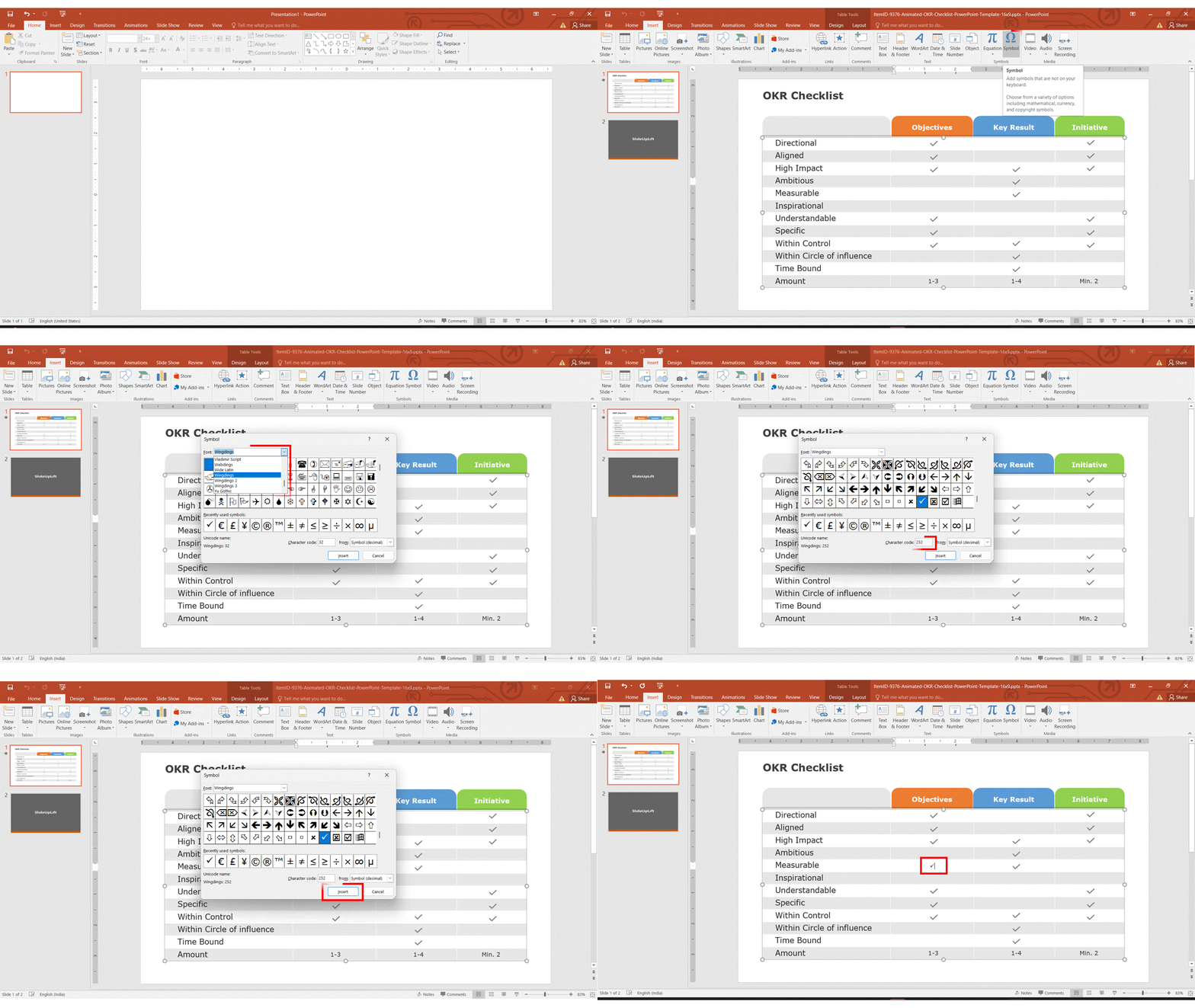
The Wingdings font is where the check mark symbol lives in PowerPoint — specifically at character code 252 for a standard tick and 254 for a tick inside a box. Here are the steps:
- Step 1: Open your presentation and click inside the text box, table cell, or shape where you want the check mark symbol in PowerPoint to appear.
- Step 2: Go to the Insert tab in the Ribbon.
- Step 3: In the Symbols group on the far right, click Symbol. A dialog box opens.
- Step 4: In the Font dropdown, select Wingdings.
- Step 5: In the Character code box at the bottom, type 252 for a standard tick mark, or 254 for a tick mark inside a box. The symbol highlights automatically.
- Step 6: Click Insert, then click Close.
- Step 7: The check mark symbol in PowerPoint now appears at your cursor position. Select it and adjust the font size and color from the Home tab as needed.
Steps for Mac
- Step 1: Click inside the text box or placeholder.
- Step 2: Go to Insert > Symbol in the Ribbon.
- Step 3: Select Wingdings from the Font dropdown.
- Step 4: In the Character code box at the bottom, type 252 to jump straight to the check mark, then click Insert and close the dialog.
Where Is the Check Mark in Wingdings? Character Codes to Know
| Code | Font | What You Get |
|---|---|---|
| 252 | Wingdings | Standard check mark (tick mark) — most common |
| 254 | Wingdings | Tick mark inside a box |
| 10003 | Segoe UI Symbol | Standard check mark — best for cross-platform PPT files |
| 10004 | Segoe UI Symbol | Heavy/bold check mark |
Pro Tip: The same Insert > Symbol approach works whenever you need to add symbols in PowerPoint— our guide on inserting the plus or minus symbol walks through the exact same steps for other special characters. Wingdings is a Microsoft proprietary font and can render incorrectly outside of PowerPoint. Segoe UI Symbol follows the Unicode standard and displays correctly on virtually all modern platforms.
How to Insert a Tick Mark in PowerPoint
If you are searching for how to insert a tick mark in PowerPoint or how to use a tick symbol in PowerPoint, you are in exactly the right place — a tick mark and a check mark are the same symbol. “Tick mark” and “tick symbol” are the Commonwealth English terms (widely used in the UK, India, and Australia) for the exact same ✓ character. Every method in this guide applies equally whether you call it a check mark or a tick mark. Use the steps above (Insert > Symbol > Wingdings > code 252) for the most reliable result.
Method 2 — Add a PowerPoint Checkmark as a Bullet Point List
When your slide has a list of items that all need check marks — a checklist, an agenda, a set of requirements — using a PowerPoint check mark as a bullet style is faster and cleaner than inserting individual symbols one by one. You set the bullet style once, and every new line you add automatically gets a check mark.
Steps
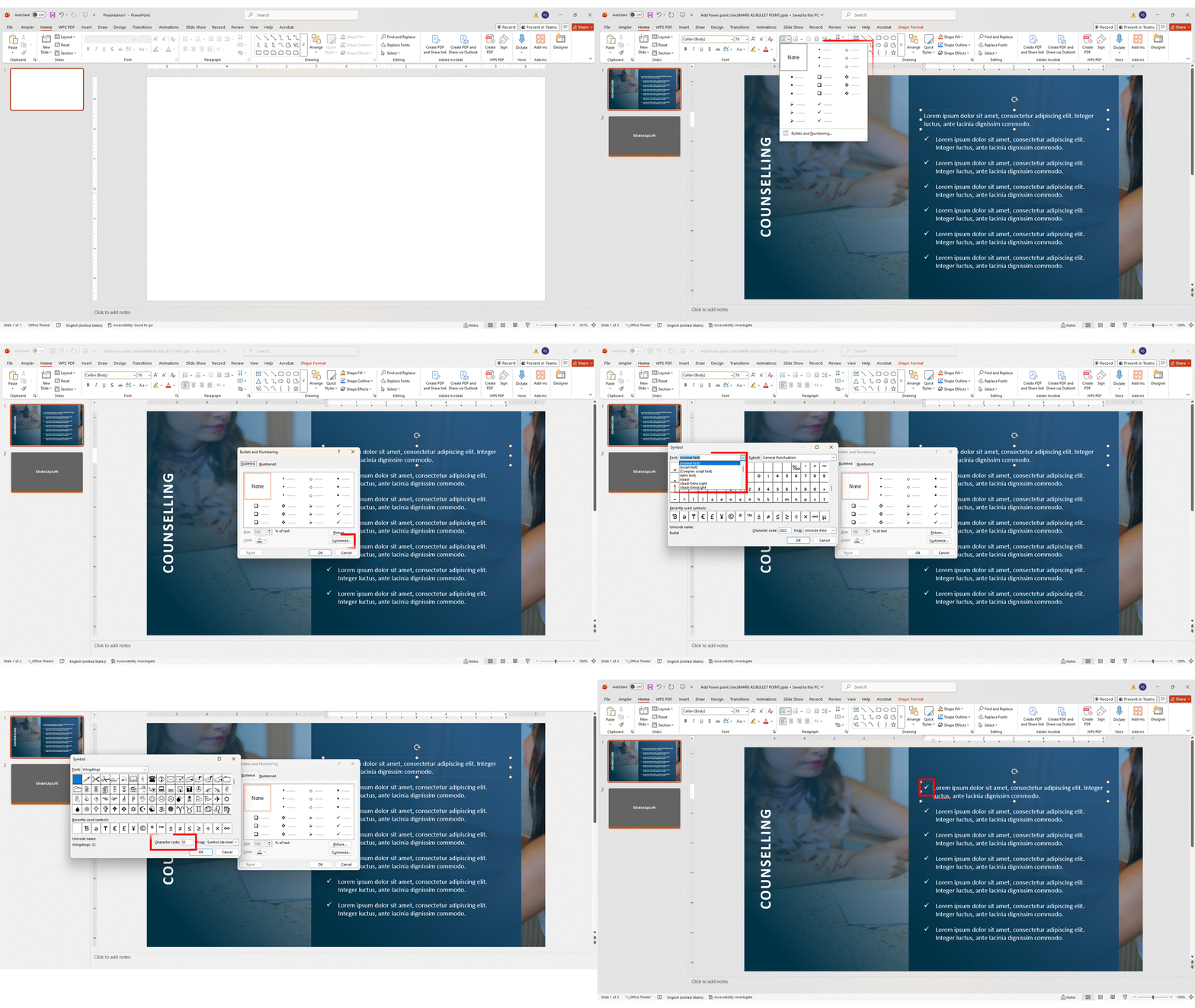
- Step 1: Click inside a text box or placeholder on your slide.
- Step 2: On the Home tab, click the small dropdown arrow next to the Bullets icon in the Paragraph group.
- Step 3: Select Bullets and Numbering from the dropdown menu.
- Step 4: On the Bulleted tab, click Customize (or Define New Bullet, depending on your version).
- Step 5: In the Symbol dialog, set the Font to Wingdings and select the check mark (code 252). Click OK.
- Step 6: Your text box now uses a PowerPoint check mark for every bullet. Type your list items and press Enter for each new one.
Customizing Size and Color
Inside the Bullets and Numbering dialog, there is a Size field (as a percentage of your text size) and a Color button. A size of 90 to 100 percent usually looks proportional. Green works well for completed items because it matches the shorthand most people already have for a check mark. You can also use your brand color to keep the presentation consistent.
When to Use This Method
Use bullet-style check marks when your list has three or more items, and you want them perfectly aligned without manual work. It is also the easiest approach to carry across multiple slides — copy the text box, update the text, and the PowerPoint checkmark formatting travels with it.
Pro Tip: If the check marks look too large or too small relative to your text, open Bullets and Numbering and adjust the size percentage. 90 to 100 percent is usually the right range.
Method 3 — What Is the Keyboard Shortcut for a Check Mark in PowerPoint?
Keyboard shortcuts let you insert a checkmark in PowerPoint without touching a menu or a dialog box. They are ideal for last-minute edits or any situation where you want to keep your hands on the keyboard.
Windows — Alt Code
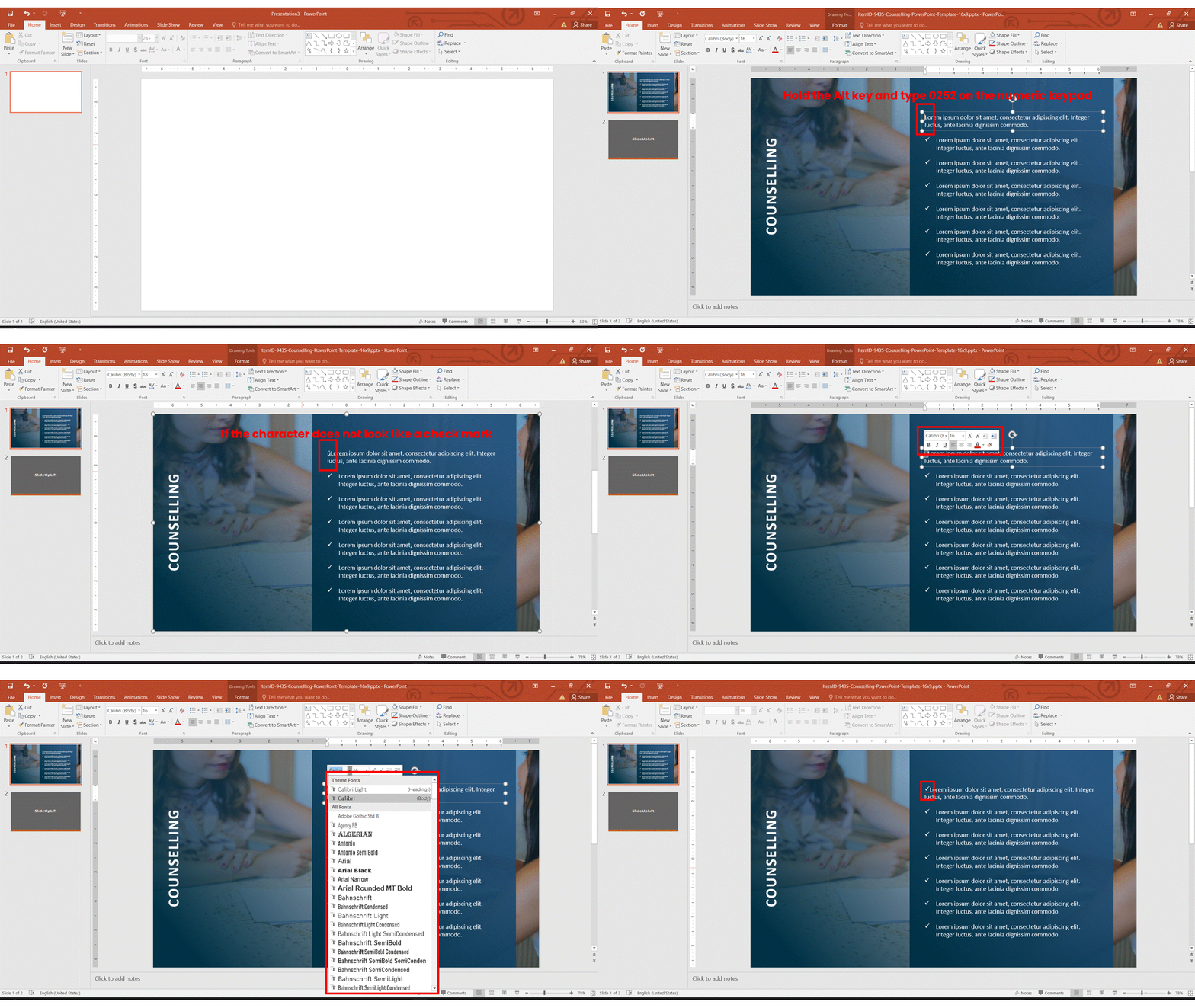
- Step 1: Click inside the text box where you want the check mark to go.
- Step 2: Turn on Num Lock.
- Step 3: Hold the Alt key and type 0252 on the numeric keypad. Release Alt. A character appears.
- Step 4: If the character does not look like a check mark, select it and change the font to Wingdings on the Home tab. The Alt code inserts a character at a specific position; Wingdings is what turns that position into a tick mark.
- Step 5: For a tick mark inside a box, use Alt + 0254 instead.
Note: Alt codes only work with the numeric keypad, not the number row at the top of the keyboard. If your laptop does not have a dedicated numpad, use Method 1 (Insert > Symbol) instead.
Mac — Insert > Symbol or Character Viewer
Important — Option + V Is Not a Check Mark on Mac
A widely circulated tip suggests pressing Option + V on Mac to insert a check mark. This is incorrect — Option + V produces the square root symbol (√), not a tick mark. The two reliable methods on Mac are shown below.
Option A — Insert > Symbol (recommended): Go to Insert > Symbol, select Wingdings from the Font dropdown, locate or type code 252, and click Insert. This works in all Mac versions of PowerPoint.
Option B — Character Viewer: Press Control + Command + Space to open the macOS Character Viewer. In the search bar, type “check mark.” Double-click the character you want to insert at the cursor position.
Common Mistakes to Avoid
- Using the number row at the top of the keyboard instead of the numpad on Windows — it does not work
- Forgetting to switch the font to Wingdings after entering the Alt code on Windows
- Using Option + V on Mac — this inserts a square root symbol, not a check mark
- Expecting the same shortcut to work across all fonts — it is font-dependent
Method 4 — Insert a Check Mark in PowerPoint Using Icons (SVG)
Version Note: The Icons library is available in PowerPoint 2019 and Microsoft 365. Some versions may require an active Microsoft 365 subscription for full access.
The Icons library gives you SVG-based check mark graphics that stay perfectly sharp at any size. A symbol character can look soft or blocky when scaled up to 72pt or 100pt. An SVG icon is drawn mathematically and is always crisp, regardless of how large you make it. This makes the Icons method the right choice whenever your check mark is a visual design element rather than inline text.
Steps
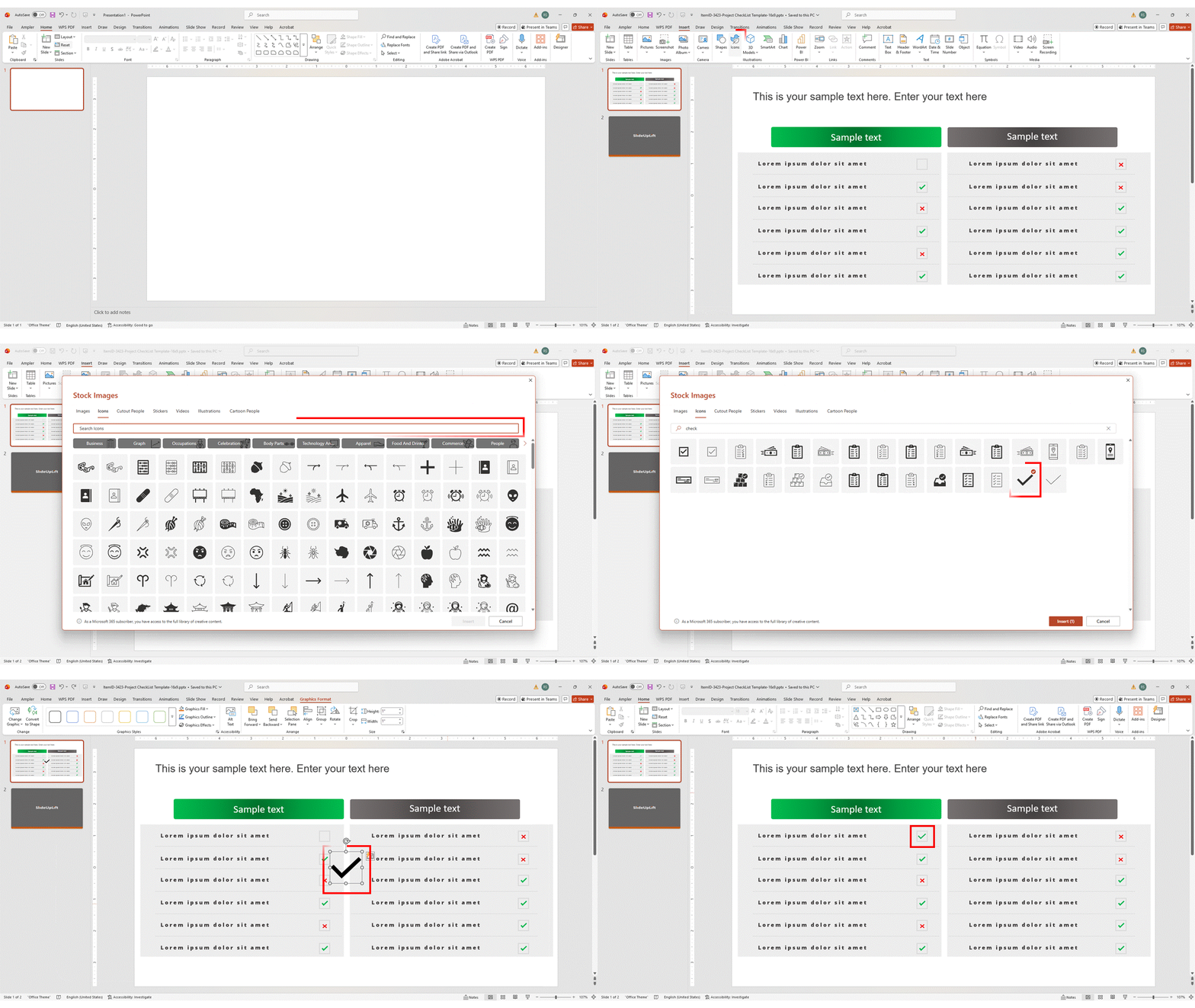
- Step 1: Go to the Insert tab in the Ribbon.
- Step 2: In the Illustrations group, click Icons. A search panel opens.
- Step 3: Type check or checkmark in the search bar to filter the results.
- Step 4: Select the icon style you want and click Insert.
- Step 5: The PowerPoint checkmark shape appears on your slide as an object — a clean SVG you can resize without losing sharpness. Drag the corner handles to resize it. To change its color, select it and use the Graphics Format tab > Graphics Fill.
Why Icons Scale Better Than Symbol Characters
Symbol characters are text, rendered by the font engine at a set point size. When you enlarge them significantly, the result depends on how the font is hinted, and it can look fuzzy. An SVG icon is always drawn at full resolution. If your check mark needs to be prominent — on a hero slide, in an infographic layout, or alongside large text — icons are the better tool.
Pro Tip: After inserting an icon, you can right-click it and choose Edit Points to fine-tune its shape, or group it with other slide elements to create a composite graphic. These options are not available with a text symbol.
Method 5 — How to Insert Checkmark in PowerPoint Using the Windows Emoji Bar
This is the fastest method on Windows 10 and 11 for a check mark — if you want to insert emojis in PowerPoint more broadly, we have a full guide covering every method for Windows and Google Slides.
Steps to Insert Checkmark in PowerPoint via the Emoji Bar (Windows Only)
- Step 1: Click inside the text box on your slide.
- Step 2: Press Windows key + Period (Win + .) to open the emoji picker.
- Step 3: In the search bar, type check. Checkmark emoji options appear in the results.
- Step 4: Click the one you want, and it is inserted immediately.
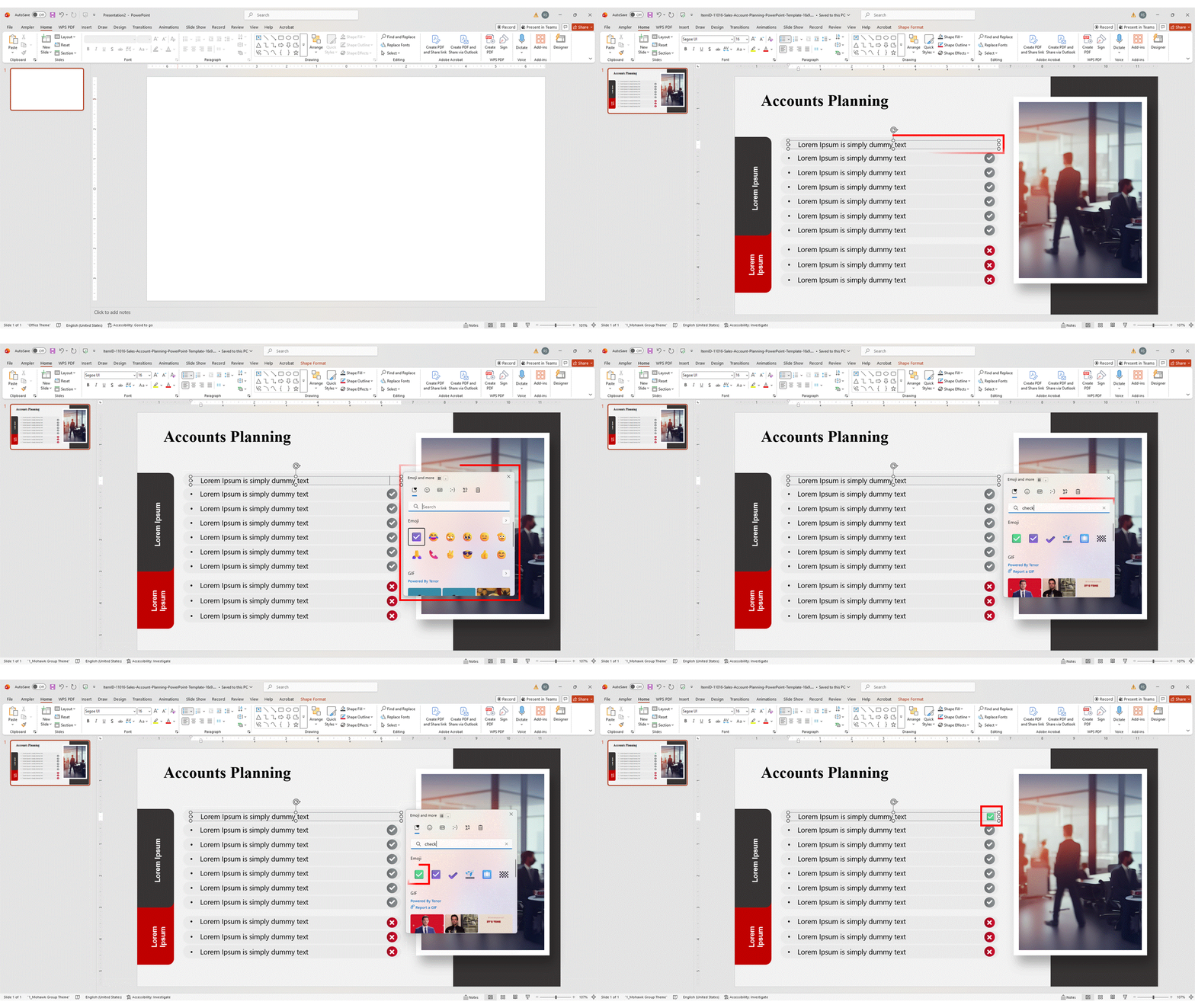
Emoji Checkmark vs. Wingdings Checkmark — What Is the Difference?
The emoji check mark (Unicode U+2705) is a color emoji character — it looks like a bright green tick inside a box. It works well for informal internal decks or workshop materials where a casual look is acceptable. The Wingdings check mark is a plain text symbol that inherits whatever color and size you set, making it more suitable for branded, professional, or client-facing presentations. For formal work, Wingdings or Segoe UI Symbol is the better choice. For quick internal PPT slides, the emoji bar is significantly faster.
Method 6 — Add a Clickable Checkbox in PowerPoint Using the Developer Tab
Windows Only — This Method Does Not Work on Mac
The Developer tab on Mac does not include ActiveX controls. This method is only available on PowerPoint for Windows. If you are on a Mac and need a clickable checkbox, you would need a third-party add-in.
Every other method in this guide creates a static visual symbol. This one is different. The Developer tab in PowerPoint lets you insert an ActiveX checkbox — a real interactive element that can be checked and unchecked by clicking during a presentation. It is the only native way to create a truly clickable checkbox in PowerPoint — the same Developer Tab setup is used when you want to make an interactive quiz in PowerPoint with live, clickable answer options.
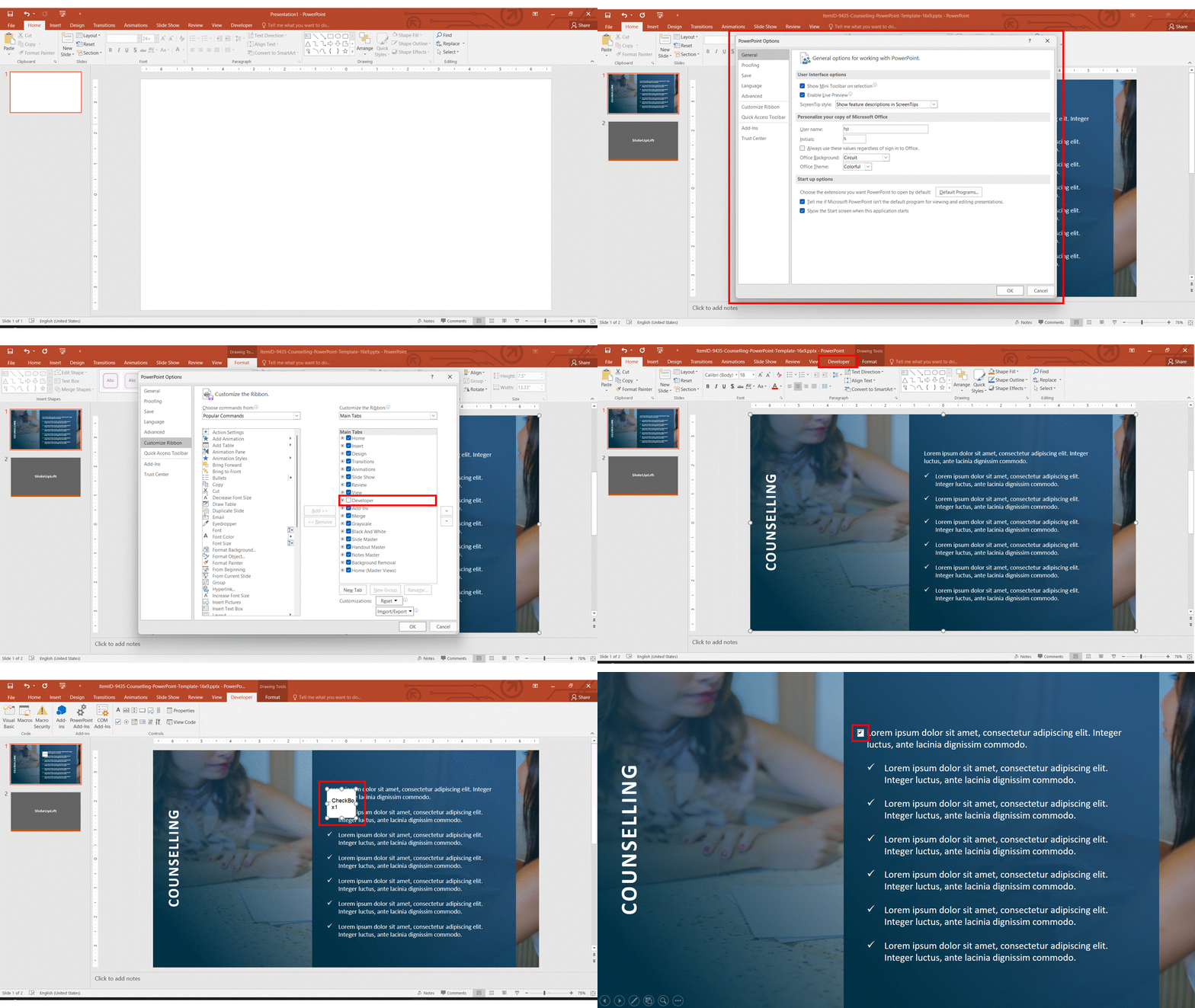
How to Enable the Developer Tab
- Go to File > Options > Customize Ribbon.
- In the right-hand Main Tabs column, find Developer and check the box next to it.
- Click OK. The Developer tab now appears in your Ribbon.
How to Insert a Clickable Checkbox in PowerPoint
- Click the Developer tab, then click the Check Box icon in the Controls group.
- Click and drag on your slide to draw the checkbox at the size you want.
- To add more checkboxes, copy the first one (Ctrl + C) and paste (Ctrl + V) rather than drawing each one individually.
- When you have finished placing checkboxes, click the Design Mode button in the Controls group to exit edit mode. The checkboxes are now clickable.
Troubleshooting: Saving Your File With the Checkbox Working
- Critical — Save as .pptm, Not .pptx: ActiveX checkboxes are macro-enabled controls. If you save the file as a standard .pptx, PowerPoint will strip the ActiveX checkbox out on save, and your interactive elements will be lost.
- How to save correctly: Go to File > Save As, and in the file type dropdown select PowerPoint Macro-Enabled Presentation (*.pptm). This preserves the ActiveX checkbox so it remains clickable.
- Sharing with others: The recipient must also be using PowerPoint for Windows. When the file is opened in Google Slides, Keynote, or PowerPoint for Mac, the checkbox interactivity is lost. For presentations that will be shared broadly, a static check mark (Methods 1–5) is the safer choice.
Limitations to Know
- Windows only — Mac does not support ActiveX controls in PowerPoint
- Interactivity is lost when the file is opened in Google Slides or Keynote
- Saving as .pptx removes the clickable behavior — must save as .pptm
- Visual customization is limited — the tick style and design cannot be heavily modified
For the vast majority of presentations, a well-placed static check mark is all you need, and it works everywhere. Reserve the Developer Tab checkbox for situations where someone genuinely needs to click items in real time during a session.
Bonus — How to Animate a Check Mark in PowerPoint
An animated check mark can add real impact to a milestone or project update slide. If you want to go deeper, our guide on how to add animations to PowerPoint covers every entrance, exit, and motion path effect with examples.
Steps
- Step 1: Insert your check mark using any method above. Icon-style check marks (Method 4) work especially well for animation because they are larger, cleaner objects.
- Step 2: Select the check mark element on your slide.
- Step 3: Go to the Animations tab and click Add Animation.
- Step 4: Choose an entrance effect. Appear is the cleanest option for a simple reveal. Wipe (from left) creates a drawing-style motion. Zoom feels more energetic and dynamic.
- Step 5: In the Timing group, set the trigger to On Click or After Previous, depending on your preferred flow.
- Step 6: Use the Preview button on the Animations tab to review how it looks before presenting.
Pro Tip: On a project timeline slide, pair the Wipe animation (from left) with a green icon-based check mark and set the duration to 0.3–0.5 seconds. Fast enough to feel crisp, slow enough to land.
Tips for Using Check Marks Effectively Across Your Deck
Knowing how to make a checkmark in PowerPoint properly — and how to make a checkmark in PowerPoint look right at every size — is step one. Using it well across an entire deck takes a bit more intention, but a few simple rules make the difference between a polished presentation and one that looks slightly off.
Keep the Style Consistent
If you use a Wingdings symbol on slide 3, do not switch to an SVG icon on slide 8 and a bullet-style check mark on slide 12. Pick one method for your entire PPT and stick with it. Inconsistency in symbol style is one of those details audiences notice subconsciously — it makes an otherwise strong presentation feel unpolished.
Use Color With a Purpose
A green check mark in PowerPoint on a light background reads as ‘completed’ or ‘correct’ immediately, which is why the green PowerPoint check mark is the default choice for finished status indicators. That association is near-universal. Grey check marks read as inactive or optional. Avoid using a red check mark where an X mark belongs — if you need to show correct versus incorrect, pair the check mark (Wingdings code 252) with an X mark (Wingdings code 251) and keep the color coding consistent throughout.
Match the Size to the Context
An inline check mark used next to text should be roughly the same size as that text, or slightly larger. A check mark used as a standalone design element on a hero slide should be large enough to be the focal point. Scaling a Wingdings character above 60–72pt can make it look soft — if you need a large, prominent check mark, use an SVG icon instead.
Test Cross-Platform Rendering Before You Share
If your presentation will be viewed in Google Slides, Keynote, or exported as a PDF, test it before you send. Wingdings characters sometimes render as boxes or question marks in non-Microsoft environments. Using Segoe UI Symbol (character code 10003) or an SVG icon from the Icons library avoids this issue entirely, since icons are embedded in the file and render correctly regardless of which app opens it.
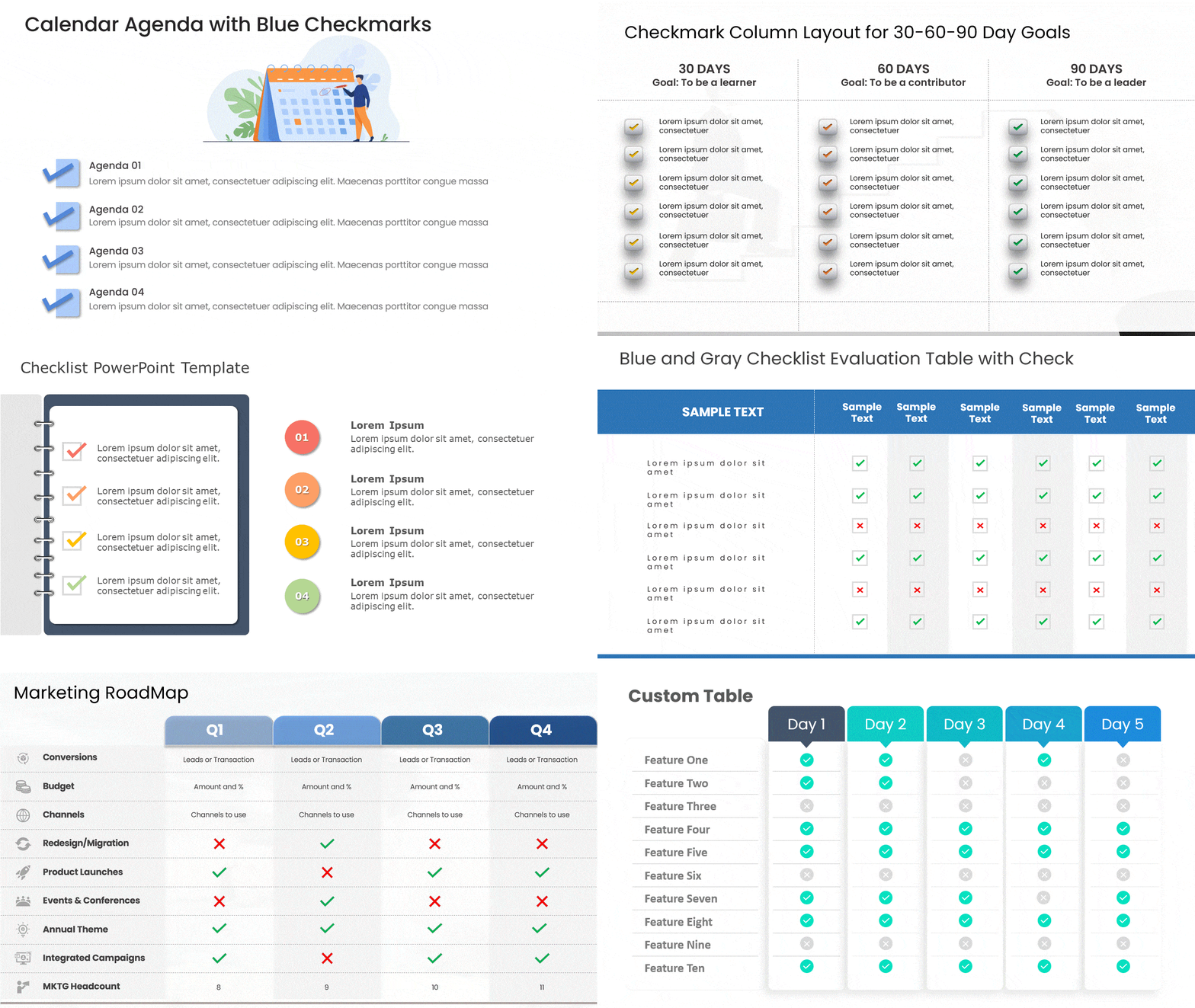
Want to skip the manual formatting? Browse our Check Mark PowerPoint Templates and start with ready-made, fully customizable checkmark slides.
Conclusion
There are six practical methods for how to insert a check mark in PowerPoint, and the right one depends on what your slide actually needs. For a reliable, flexible tick mark that works in any context, Insert > Symbol with Wingdings (code 252) is the go-to. For a repeating checklist, the bullet style is faster and more consistent. For large, design-forward check marks that stay sharp at any scale, the Icons library is the better choice. And for live interactive sessions where someone needs to physically check items, the Developer Tab checkbox is the only native option — though it is limited to Windows and must be saved as .pptm.
Whatever method you choose, consistency across the whole deck matters. Once you know how to make a check mark in PowerPoint and have a method that fits your workflow, applying it the same way every time is what makes a deck feel polished. A unified check mark or tick mark style, used with intentional sizing and color, communicates progress and completion cleanly — and that is exactly what a well-built PowerPoint slide should do.
FAQs
-
What is the easiest way to insert a check mark in PowerPoint or insert a checkmark in PowerPoint?
Insert > Symbol > Wingdings > character code 252 is the most reliable method — it works in text boxes, table cells, shapes, and placeholders across all versions. For speed on Windows, use Alt + 0252 on the numeric keypad, then change the font to Wingdings. For a repeating checklist, set the bullet style to a Wingdings check mark on the Home tab.
-
What font do I need to show a check mark symbol in PowerPoint?
Wingdings is the most commonly used font: code 252 gives a standard tick mark, and code 254 gives a tick mark inside a box. For files shared across platforms or opened in Google Slides, use Segoe UI Symbol (code 10003) instead — it is part of the Unicode standard and displays correctly in virtually all modern applications.
-
Why is my Alt code showing the wrong character on Windows?
Two common causes: using the top number row instead of the numeric keypad (Alt codes only work with the numpad, and Num Lock must be on), or not changing the font to Wingdings after inserting. Select the inserted character and set the font to Wingdings on the Home tab to convert it to a tick mark.
-
Can I insert a check mark in PowerPoint on a Mac?
Yes, you can insert a checkmark in PowerPoint on a Mac in two ways. Go to Insert > Symbol, select Wingdings, and click the check mark. Alternatively, press Control + Command + Space to open the macOS Character Viewer and search for ‘check mark.’ Do not use Option + V — that produces a square root symbol (√), not a tick mark. The Developer Tab interactive checkbox does not work on Mac.
-
What is the difference between a check mark and a checkbox in PowerPoint?
A check mark is a static visual symbol — a tick that sits on the slide and cannot be clicked. A checkbox is an interactive ActiveX control from the Developer tab that can be checked and unchecked during a live presentation. Checkboxes are Windows-only and do not function in Google Slides, Keynote, or when saved as PDF.
-
Will a Wingdings check mark display correctly in Google Slides?
Not always. Wingdings is a proprietary Microsoft font, so Google Slides may show a box or question mark instead. The safest fix is to use Segoe UI Symbol (code 10003) — it is Unicode and renders correctly across platforms. Alternatively, use Insert > Icons to add an SVG-based check mark, which is embedded in the file and always displays correctly.
-
How do I change the color or size of a check mark in PowerPoint?
For a symbol or text-based check mark, select it and use the Font Size and Font Color controls on the Home tab, exactly as you would for regular text. For an icon-based check mark, select it and go to the Graphics Format tab — use Graphics Fill for color and drag the corner handles to resize. For a bullet check mark, adjust the size percentage in Bullets and Numbering.
-
Is a tick mark the same as a check mark in PowerPoint?
Yes, exactly the same symbol. “Tick mark” and “tick symbol” are the Commonwealth English terms (commonly used in the UK, India, and Australia) for the same ✓ character. Every method in this guide applies whether you call it a check mark or a tick mark in PowerPoint. The character code, font, and steps are identical.
-
How do I add a green check mark in PowerPoint?
It depends on the type of check mark. For a symbol or text-based check mark: select it, go to Home tab > Font Color, and choose a green shade. For an icon-based check mark (Method 4): select the icon, go to the Graphics Format tab > Graphics Fill, and select a green color. Both approaches let you match your brand or use the universal ‘completed’ green color.
-
How do I insert a checkmark in PowerPoint quickly?
The quickest way to insert a checkmark in PowerPoint is to copy ✓ from the Quick Answer block above and paste it into your slide. For a method that lives inside PowerPoint, use the Insert > Symbol > Wingdings > 252 route, or press Windows + . on Windows to open the emoji picker and search for ‘check.’
Table Of Content


Related posts from the same category

4 Oct, 2019 | SlideUpLift
How to insert 3D models in PowerPoint
Imagine giving a product presentation in front of your clients and you feel the need to showcase the product prototype without actually having it there with you. Also, you may

3 Feb, 2023 | SlideUpLift
How To Make A Graph In PowerPoint?
Do you need help communicating data effectively in your presentations? Data visualization is an essential tool in today's world as it helps represent complex data sets in a simple and

20 Mar, 2026 | SlideUpLift
How to Add Annotations in PowerPoint: The Complete Step-by-Step Guide
This blog explains how to add real-time annotations in PowerPoint presentations using tools like the pen, highlighter, and laser pointer to make slides more interactive and engaging. It provides step-by-step

26 Dec, 2022 | SlideUpLift
How to make a table in PowerPoint?
Tables are an essential element of any presentation, as they allow you to organize and present data in a clear and concise manner. Whether you're creating a business presentation, a

11 Sep, 2024 | SlideUpLift
How To Create Puzzle Pieces In PowerPoint [+Templates]
The jigsaw puzzle is the perfect design element that you can use for your strategy presentations; it helps with the storytelling aspect of your presentation by showing how the pieces
14 Aug, 2025 | SlideUpLift
Curved Arrow PowerPoint: How to Make, Draw, and Customise Arrows Step by Step
Quick Answer: To make a curved arrow in PowerPoint, go to Insert > Shapes > Block Arrows, select a curved arrow shape, and drag to draw it on your slide.

30 Apr, 2021 | SlideUpLift
Learn How To Communicate In Several Languages In PowerPoint
In this tutorial, we will learn how to change language in PowerPoint. Presentations are an essential part of the business world. Businesses and professionals use presentations to inform, educate, motivate

30 Dec, 2022 | SlideUpLift
How To Make A Table Of Contents In PowerPoint?
Are you tired of flipping through multiple slides or using the "Find" function to locate specific content in your PowerPoint presentations? A Table of Contents can help solve this problem

25 Jan, 2018 | SlideUpLift
PowerPoint Hack: How To Create Sections In PowerPoint And How To Zoom In PowerPoint
This PowerPoint tutorial is about How To Create Sections In PowerPoint. Imagine that you are about to begin your business presentation to a room full of clients, and you remember

26 Aug, 2025 | SlideUpLift
Track Changes In PowerPoint And Keep Your Team In Sync
Ever spent hours perfecting a PowerPoint, way too much time that you then forget to track who made what change? You aren't alone. Unfortunately, unlike Word or Gmail slides, PowerPoint