

 Flat 4


How to Wrap Text in Google Slides — 4 Methods That Actually Work
Learn how to wrap text in Google Slides with simple step-by-step methods to align text around images and create clean, professional layouts. This guide explains practical workarounds since Google Slides doesn’t have a built-in wrap feature, helping you improve readability and visual appeal. Discover easy techniques to make your presentations more organized and engaging in minutes.
Introduction
Google Slides is a powerful presentation tool, but it comes with one notable limitation — there is no built-in wrap text feature. If you have ever tried to place an image next to a paragraph and watched your text completely disappear behind it, you already know the frustration. Knowing how to wrap text in Google Slides is one of the most searched workarounds for a reason.
The good news? There are four clean, reliable methods to achieve a professional text-wrapping effect — no third-party tools needed. This guide walks you through each step by step.
What Is Text Wrapping and Why Does It Matter?
Text wrapping refers to how text flows around images, shapes, or other objects on a slide or page. When done right, it creates a polished layout where visuals and content coexist without overlapping or cluttering the slide.
Key Benefits of Text Wrapping in Presentations
- Better Readability — Text stays legible, with clear separation from visuals
- Cleaner Design — No overlapping elements or awkward white gaps
- Professional Look — Slides appear structured and intentional
- Stronger Emphasis — Images feel integrated, not dropped in
- Less Distraction — Audiences focus on content, not layout issues
Can You Wrap Text in Google Slides?
Not natively — Google Slides does not offer an automatic text wrap option the way Microsoft Word or Google Docs does. There is no single-click wrap text button.
However, you absolutely can achieve the same visual result through manual positioning of text boxes and images. The four methods below are the most effective ways to do it. Once you know them, text wrapping in Google Slides becomes second nature.
Method 1 — Resize the Text Box Around the Image
This is the most straightforward approach. It works best when you have a simple layout with one image and a block of text.
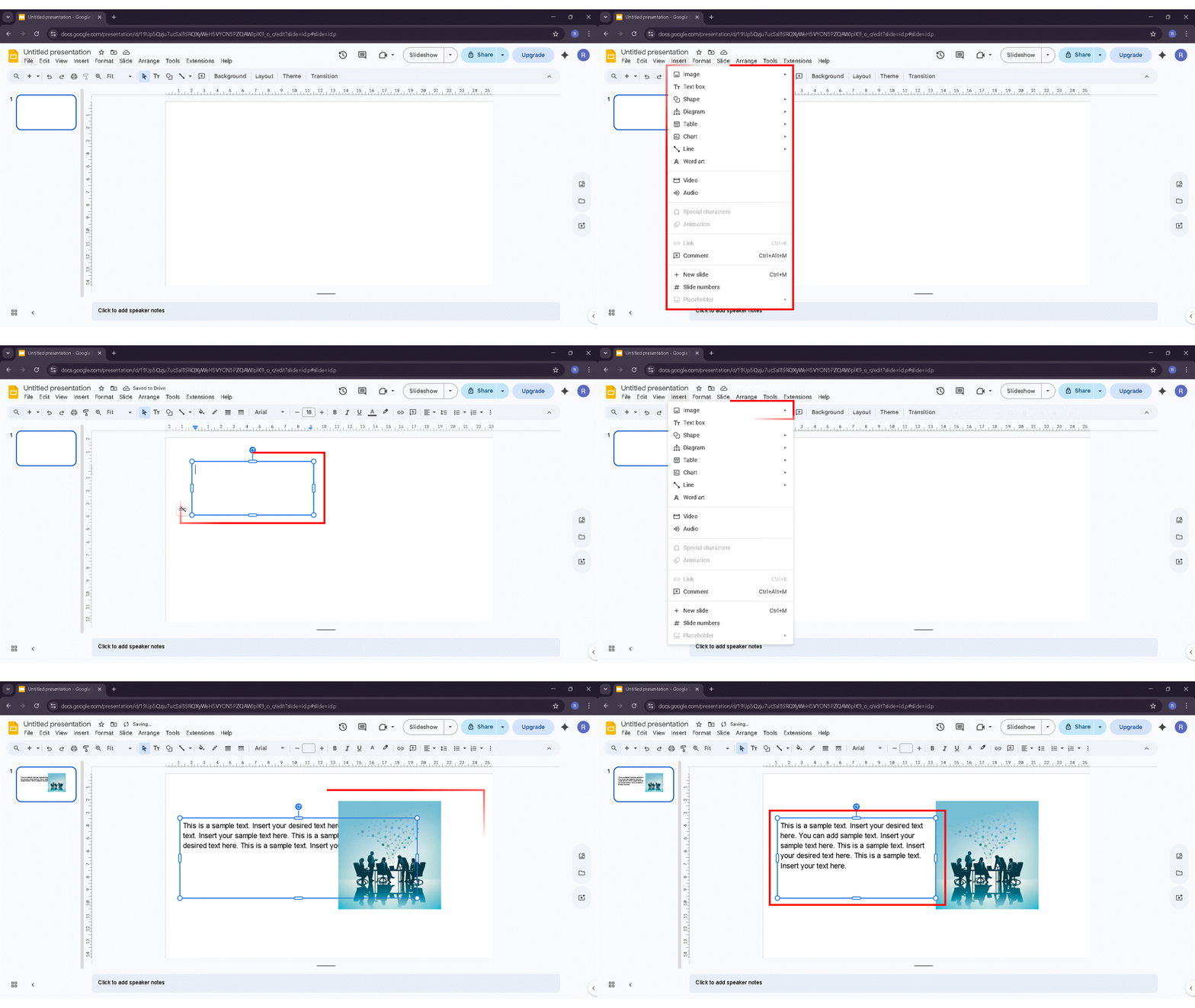
- Open your Google Slides presentation
- Go to Insert → Text Box and draw a text box on your slide
- Type or paste your content into the text box
- Mark the area where your image will go — leave that space empty inside the text
- Go to Insert → Image and place your image onto the slide
- Resize and reposition the image to fit the marked area
- Click on the text box and drag its blue border handles so the text box boundary aligns tightly with the image edge
- Adjust until the text visually wraps around the image
Best for: Simple one-image layouts with a single column of text
Method 2 — Use Manual Line Breaks for Precise Control
This method gives you the most control over exactly how and where your text breaks around an image. It is ideal when your image sits in the middle of a text block.
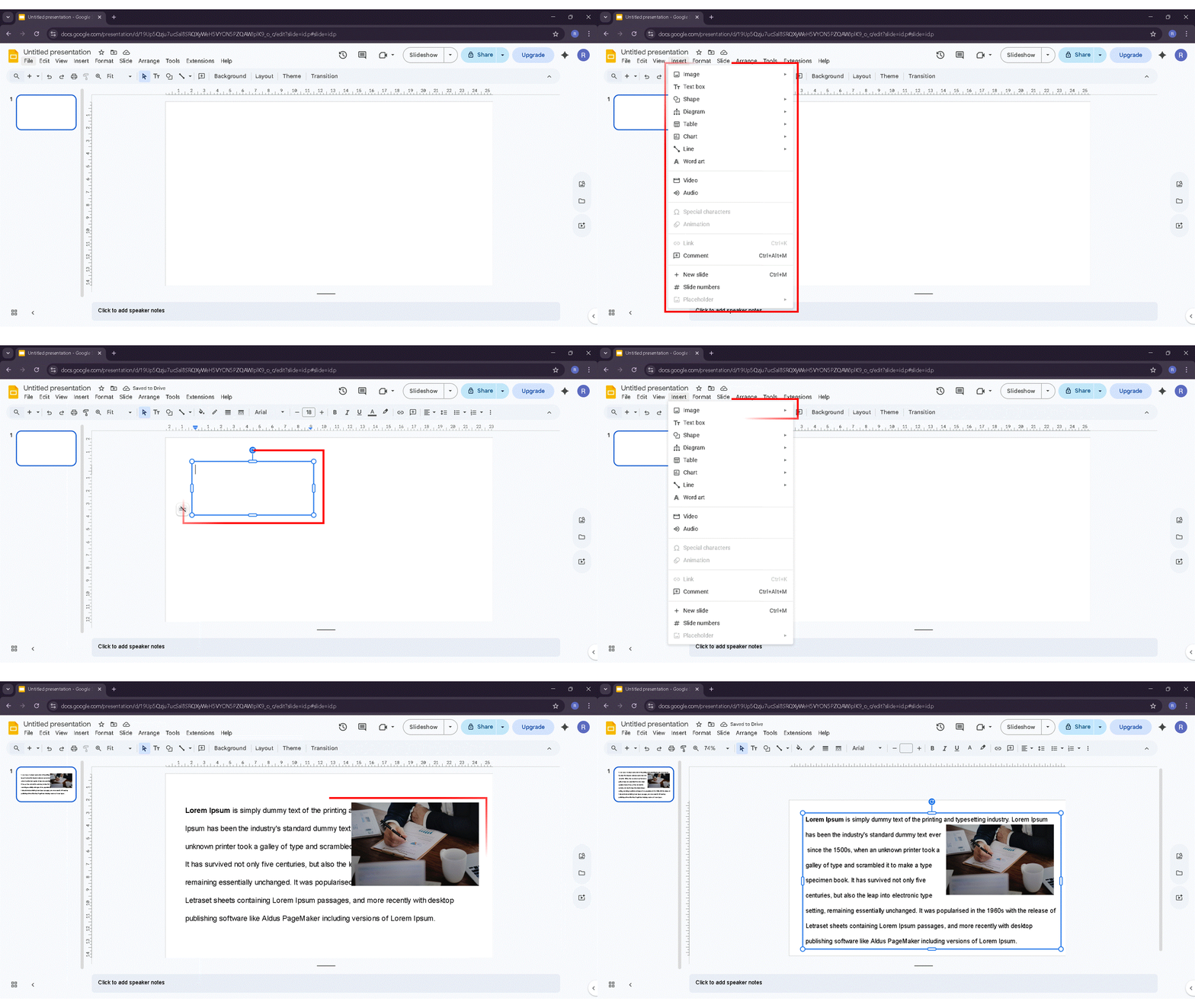
- Open your Google Slides presentation
- Insert a text box and type your full content
- Insert your image and position it where you want it on the slide
- Look at which lines of text overlap with the image
- Click before the first word that overlaps and press Enter to push the text below the image
- Repeat for every line that overlaps with the image
- Fine-tune the text box size so the remaining text sits cleanly beside or below the image
Pro Tip: Use Format → Align & Indent → Justified on your text box for a clean, even right edge — this makes the layout look significantly more professional.
Best for: Images placed in the center or middle of a text block
Method 3 — Use Multiple Text Boxes for Full Flexibility
This is the most flexible method and delivers the most polished result. Instead of one large text box, you use two or more smaller ones arranged around the image. This is how to make text wrap around image in Google Slides, the way designers actually do it.
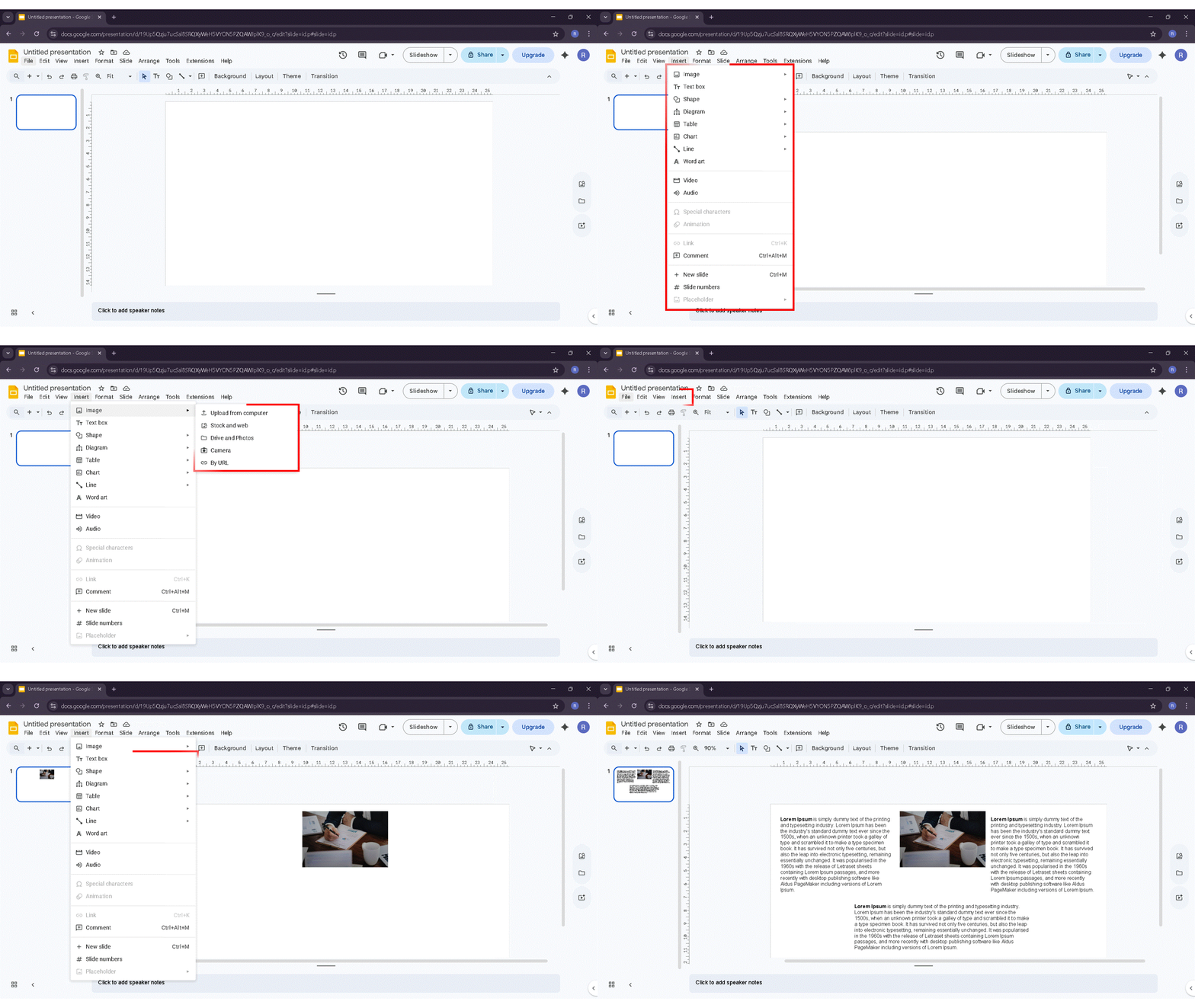
- Open your Google Slides presentation
- Insert your image and position it where you want it — left, right, or center
- Go to Insert → Text Box and create a text box to the left of the image (if the image is on the right)
- Create another text box to the right of the image if needed
- Add a third text box below the image to continue the text flow
- Paste or type portions of your content into each text box
- Adjust each box’s size and position so the text reads smoothly from one box to the next
- Select each text box and apply Justified alignment from the Format menu
Best for: Complex layouts, image-heavy slides, or when you want full creative control over the layout
Method 4 — Use a Table for Structured Text Wrapping
This method is underused but surprisingly effective. By inserting a table and placing your image in one cell and your text in the adjacent cell, Google Slides naturally keeps them side by side without any manual repositioning. It is the closest thing to a native text wrap that Google Slides actually supports — and it works especially well for consistent, repeatable slide layouts.
- Open your Google Slides presentation
- Go to Insert → Table and select a 1 row × 2 column table (one cell for the image, one for the text)
- Click inside the left cell and go to Insert → Image to place your image inside it
- Resize the image within the cell by dragging its corner handles — the cell will expand to fit
- Click inside the right cell and type or paste your text content
- Select the entire table, then go to Format → Table properties
- Under Cell padding, set padding to 12–16pt on all sides to create breathing room between the image and text
- To remove the table border so it blends seamlessly into your slide, go to Format → Table properties → Table border and set the border width to 0pt
- Select the text in the right cell and apply Justified alignment from the Format menu for a clean edge
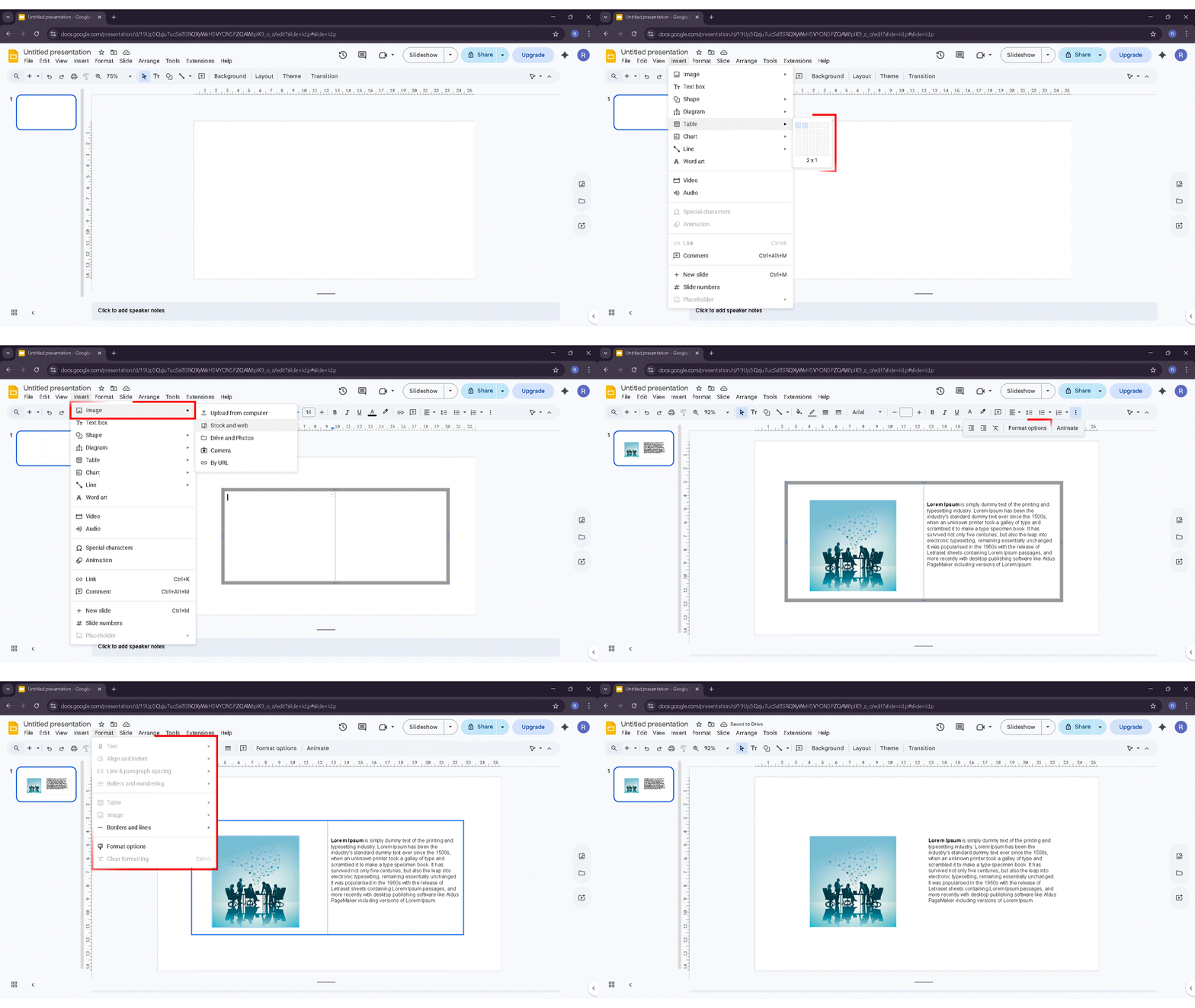
Pro Tip: Once the border is removed and padding is set, the table becomes completely invisible — your audience will simply see an image sitting cleanly next to a column of text, indistinguishable from a native wrap text effect.
Best for: Slides where you need consistent image-text alignment across multiple slides, or when you want a layout that stays locked even if you resize the slide.
If you also use PowerPoint for presentations, check out this guide on how to wrap text in PowerPoint — it’s just as handy.
How to Improve Your Text Wrapping Effect
Once you have set up your layout using any of the four methods, these small adjustments will take it from decent to polished.
Justify Your Text Alignment
- Select your text box
- Click Format in the menu bar
- Go to Align & Indent
- Select Justified
This removes the ragged right edge from your text, making it look aligned and intentional — especially important when text sits next to an image.
Best Alignment Options to Use:
| Alignment | When to Use |
| Justified | Long paragraphs beside an image |
| Left Align | Short text snippets or captions |
| Right Align | Text placed to the left of an image |
| Center | Text below or above an image only |
Additional Formatting Tips
- Keep consistent spacing between your image and text boxes — at least 8–12px of breathing room
- Use the same font size across all text boxes so the flow reads as one continuous body of text
- Lock your image position once placed (right-click → Order) to avoid accidentally moving it while editing text boxes
- Group your final elements (Ctrl + A to select all, then right-click → Group) to move the entire layout as one unit. Learn how to group elements
If you want to skip the manual work altogether, browse our ready-to-use Google Slides templates and get a head start on your next presentation.

Conclusion
Text wrapping in Google Slides may not be a built-in feature, but with the four methods covered in this guide — resizing text boxes, using manual line breaks, arranging multiple text boxes, or using a table for structured layouts — you can achieve a clean and professional result that rivals any native wrap text tool. The key is choosing the right method for your slide structure: Method 1 for simplicity, Method 2 for precision, Method 3 for full design control, and Method 4 for consistent, repeatable layouts across multiple slides. Pair whichever approach you use with justified alignment and consistent spacing, and your slides will look polished and intentional every time. Once you have practiced these techniques a few times, how to wrap text in Google Slides will feel less like a workaround and more like a natural part of your presentation workflow.
FAQs
-
Does Google Slides have a built-in wrap text feature?
No. Google Slides does not currently have a native wrap text option. Unlike Google Docs or Microsoft Word, there is no automatic wrap text button. Users must manually position text boxes around images to achieve the same effect.
-
Why doesn't Google Slides have an automatic text wrap option?
Google Slides is built around simplicity and slide-based layouts rather than document-style formatting. Its design prioritizes ease of use over complex text-flow features. That said, the manual methods covered in this guide make it easy to replicate the effect.
-
Which method is the easiest for beginners?
Method 1 — resizing the text box around the image — is the simplest starting point. It requires no extra text boxes and works well for basic layouts.
-
What is the best method for a professional-looking result?
Method 3 — using multiple text boxes — gives the most polished outcome and is closest to true text wrapping. Combined with justified alignment, it looks indistinguishable from a native wrap text feature.
-
How do I stop text from overlapping my image?
Use Method 2 and manually press Enter at each line that overlaps the image. Alternatively, resize your text box in Method 1 so its boundaries do not extend behind the image.
-
Can I use multiple text boxes to wrap text around an image in Google Slides?
Yes — this is actually the recommended approach for complex layouts. Place separate text boxes on the left, right, and below your image, and distribute your content across them. Google Slides text wrap around image effects, achieved this way, look completely natural.
-
Is there an add-on for text wrapping in Google Slides?
There is no widely used, reliable add-on specifically for Google Slides wrap text around image. The four manual methods in this guide are the most dependable and require no additional installs.
-
How do I make the text wrapping look consistent across all slides?
Create a master layout using Method 3 on one slide, group all elements, then duplicate the slide for other sections. Adjust the text content in each duplicate while keeping the layout intact.
-
Does the wrap text effect work on mobile Google Slides?
Basic text box positioning works on mobile, but for precise control over text wrapping in Google Slides, using the desktop browser version is strongly recommended.
-
What alignment setting makes text wrapping look the most professional?
Justified alignment is the best choice. It removes the uneven right edge from your text, giving it a clean, newspaper-column look that integrates well with images.



Related posts from the same category

18 Nov, 2022 | SlideUpLift
Learn How To Add Bullet Points In Google Slides
In today’s dynamic world, people have very less attention span to read and absorb information. Be it blogs, posts, or presentations, people generally scan through the information. To get people
12 Oct, 2023 | SlideUpLift
How to Do Hanging Indent on Google Slides: 4 Easy Methods (Complete Guide)
Have you ever tried to format citations or multi-line bullet points in Google Slides, only to end up with text that wraps messily back to the left edge? You are
5 Aug, 2022 | SlideUpLift
How To Hyperlink In Google Slides Presentation?
A hyperlink is described as a word, phrase, or picture that, when clicked, directs the user to a pre-selected document, webpage, or even a portion within the Google Slides presentation

3 Feb, 2023 | SlideUpLift
How To Wrap Text In PowerPoint?
If you've found yourself with more text than can fit onto a single PowerPoint slide, then you know how frustrating it can be to try to fit everything while still

20 Nov, 2023 | SlideUpLift
How to Add Superscript and Subscript in Google Slides
Quick Answer: To add a superscript in Google Slides: Click inside a text box and type your full expression (e.g., x2). Highlight only the character to raise (e.g., the 2).

15 Mar, 2023 | SlideUpLift
How to Add Fonts to Google Slides Presentations?
Fonts wield a subtle yet powerful influence on perceptions, impacting trust, credibility, and the audience's journey toward their objectives. Just as different music genres evoke distinct emotions, varied fonts can

25 Apr, 2023 | SlideUpLift
How To Curve Text In PowerPoint
Are you tired of the dull and monotonous textual appearance of your slides in your presentation? Do you want to add some creativity and visual interest to it? Look no

30 Apr, 2026 | SlideUpLift
How to Add a Border in Google Slides (7 Easy Methods)
To add a border in Google Slides, insert a rectangle shape, set its fill to transparent, and customize the border color and weight from the toolbar. You can apply borders

29 Dec, 2023 | SlideUpLift
How to Make Checkboxes in Google Slides?
Google Slides is one of the most widely used presentation tools today. It is used for creating simple text and picture presentations and complex presentations. You can create surveys and

6 Jan, 2023 | SlideUpLift
How to Add Header and Footer in Google Slides?
Google Slides is a powerful presentation tool allowing users to create professional-looking presentations easily. One important aspect of any presentation is the header and footer, which can provide context and