

 Flat 1


60+ Best Business Presentation Topics to Captivate Your Audience (2026)
Imagine standing in front of a room full of people waiting to hear what you have to say. Instead of feeling nervous, you feel confident and prepared — because you chose a topic your audience actually cares about, and you built your talk around it.
Whether you’re pitching a new product, presenting a financial report, or leading a training session, the topic you choose does more of the work than most presenters realize. A well-chosen subject holds attention on its own; a poorly chosen one forces you to fight for attention on every slide.
This guide gives you 60+ business presentation topics organized by audience — corporate teams, leaders, managers, students, and time-pressed meetings — along with a simple framework for choosing the right one and the templates to build it fast.
Quick Answer
Popular business presentation topics include project management, strategic planning, customer journey mapping, marketing plans, pitch decks, business plans, HR initiatives, product launches, portfolios, and business proposals. The best topic for your presentation depends on five things: relevance to your audience, originality, timeliness, clarity, and whether it gives listeners something actionable to take away.
What Is a Business Presentation?
A business presentation is a formal way for professionals or teams to communicate information, proposals, reports, strategies, or ideas within a corporate environment. Most use visual aids — slides, charts, graphs, and multimedia — to improve engagement, and follow a simple structure: introduction, main content, and conclusion. Strong presenters layer in storytelling and interactive elements like Q&A or polls to keep the audience involved.
What Makes a Good Business Presentation Topic?
Your topic is the first impression your audience gets, and it often determines whether they lean in or tune out. Five criteria separate strong topics from weak ones:
- Relevance — Choose a subject your audience is already thinking about — their goals, their blockers, their industry’s current pressures.
- Originality — Avoid recycling angles your audience has seen before. A fresh perspective on a familiar problem beats a novel problem nobody has.
- Timeliness — Anchor the topic to the current business climate. In 2026, that means AI adoption, hybrid-work operations, and sustainability commitments rather than last cycle’s talking points.
- Clarity — If the topic needs jargon to explain, it needs work. Anyone in the room should grasp it in one sentence.
Actionability and visual appeal — The best topics inspire a next step, and they translate naturally into charts, frameworks, and visuals. If you can’t picture the slides, reconsider the topic. (For the design side of this, see our guide on how to make a PowerPoint presentation attractive.
How to Choose the Right Topic (60-Second Framework)
Answer three questions before committing:
- Who is in the room? Executives want decisions and trade-offs; teams want process and clarity; students want fundamentals with real examples.
- What should change after your talk? Inform, persuade, or align — pick one primary goal and let it filter your topic list.
- Do you have real experience with it? Familiarity lets you tell stories and answer questions with confidence, which the audience always notices.
10 Core Business Presentation Topics (The Essentials)
These ten are the workhorses of corporate communication — the presentation types nearly every professional will build at some point. Each one maps to a ready-made SlideUpLift template category.
1. Project Management
Project management presentations cover planning, executing, monitoring, and closing out complex work — scope, timelines, budgets, risks, and deliverables. They’re essential for any company where projects succeed or fail on coordination. A clear project roadmap is usually the centrepiece slide, giving stakeholders the whole plan at a glance. For a deeper list of PM-specific angles — stakeholder management, scheduling, conflict resolution — see our dedicated guide to project management presentation topics.

2. Strategic Planning
A strategic planning presentation lays out long-term goals, vision, and the roadmap to reach them. Popular formats include the 30-60-90 day plan and the OKR framework for measurable goal tracking; frameworks like SOAR analysis help structure the thinking behind the plan. If you’re presenting strategy to senior leadership, borrowing the structure of a McKinsey-style presentation– one clear takeaway per slide, evidence beneath- makes the recommendation land harder.
3. Customer Journey Mapping
A customer journey presentation tracks how customers interact with your company at each stage of the purchase process — their needs, behaviors, and pain points — and where the experience breaks down. Timelines, roadmaps, and journey maps are the natural visual formats, and the output is a prioritized list of experience fixes.

4. Marketing Plan
A marketing plan presentation explains how you’ll promote products and services: target audience analysis, market research, promotional tactics, branding strategy, and — critically — how success will be measured and adjusted. It’s one of the most persuasive business presentation ideas for securing budget, because it connects spend directly to outcomes. For structure, our guide to the best marketing plan templates breaks down each required section.

5. Pitch Deck
A pitch deck is a concise synopsis of a business idea and its value proposition — mission, product, target market, and unique selling point — usually built to raise capital or win partners. Many founders start with a simple business idea pitch presentation before expanding to a full investor deck. The same persuasion structure powers sales presentations, where the “investor” is a buyer instead.

6. Business Plan
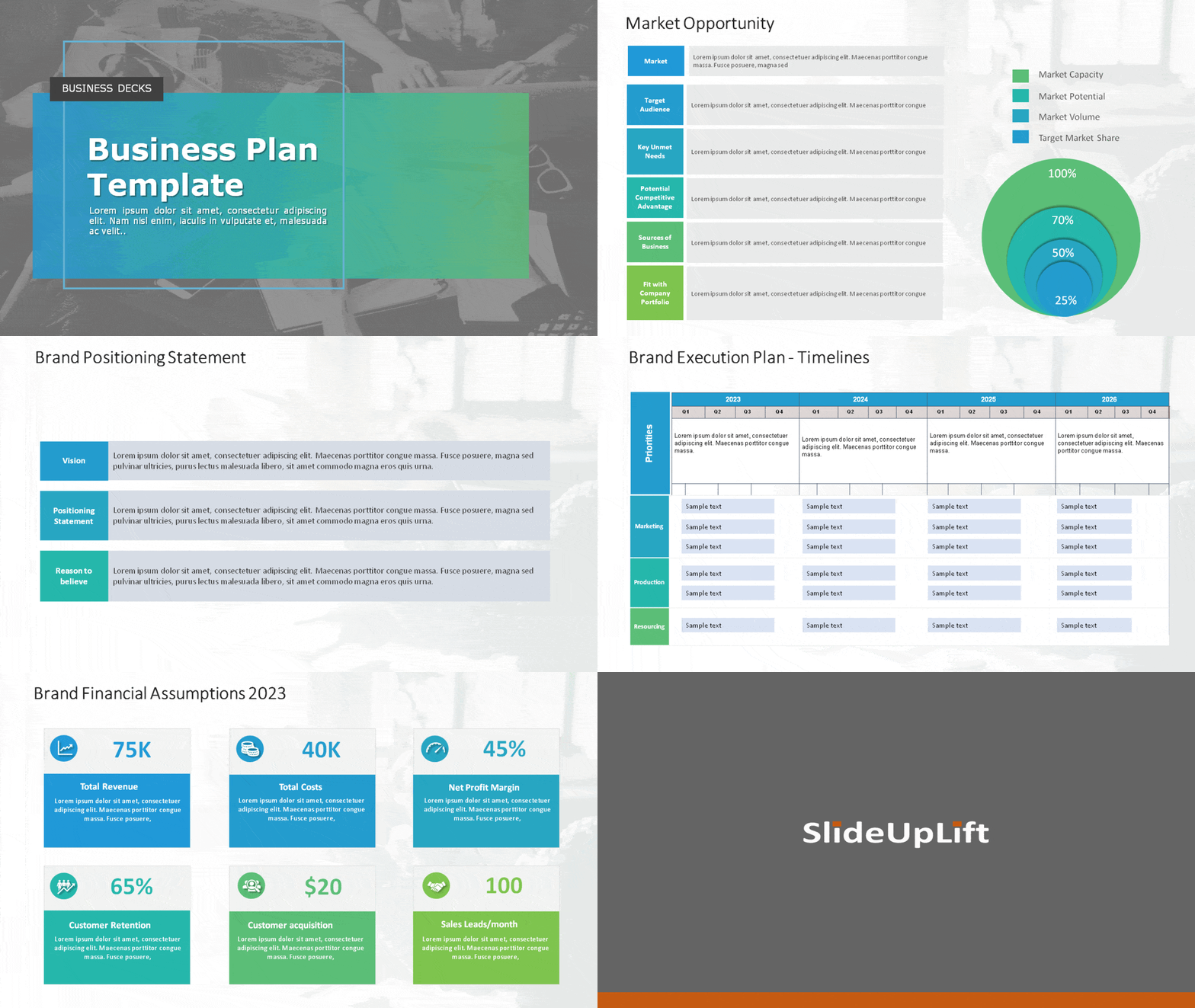
A business plan presentation gives a comprehensive overview of the company’s goals, strategy, and operations: structure, revenue streams, financial projections, and risks. It’s the format of record for funding conversations, expansion proposals, and partnership discussions.

7. HR & People
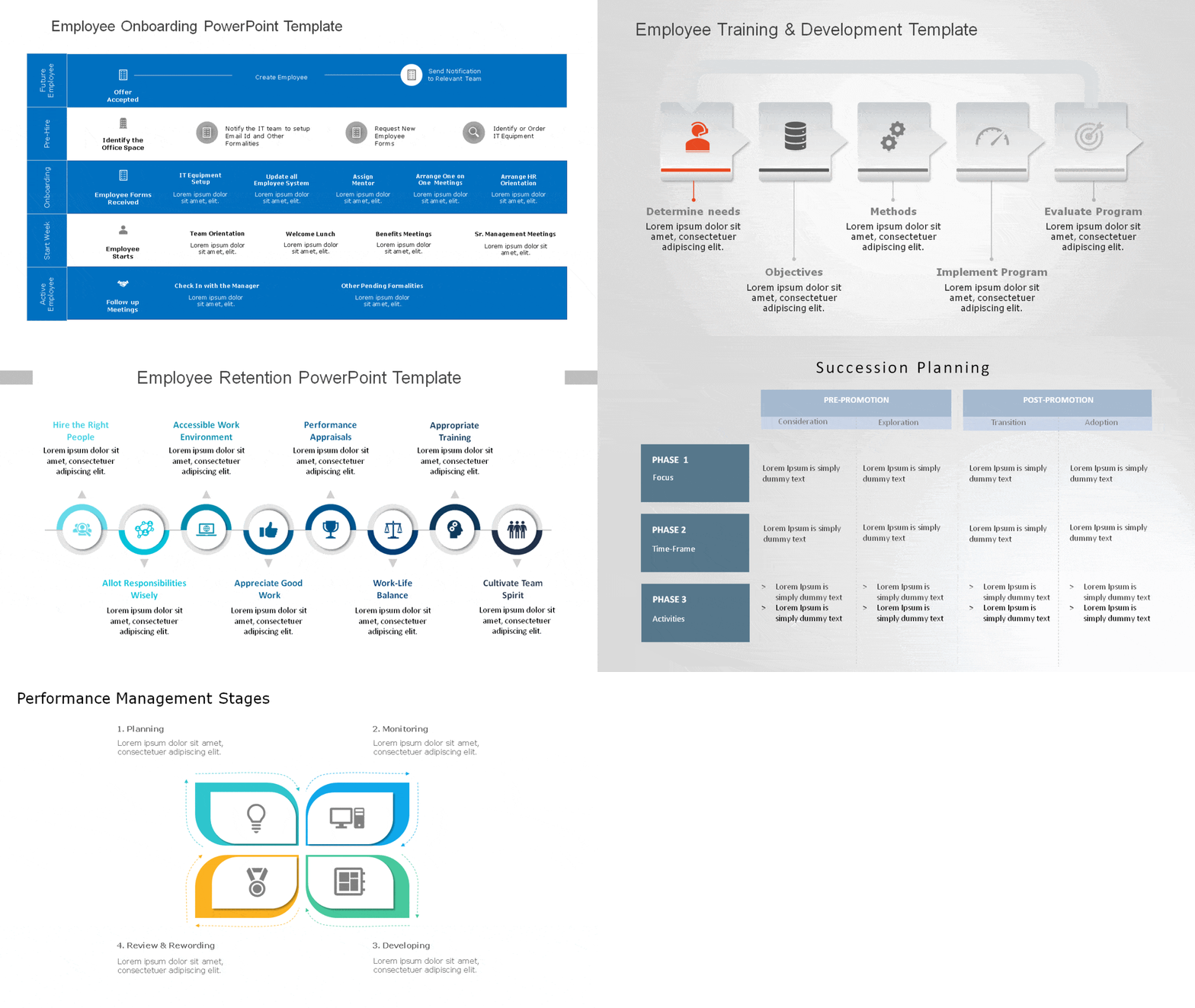
HR presentations cover the policies and programs that shape company culture: onboarding, training and development, retention strategy, performance management, and succession planning. They work best when built around one clear people-problem and its measurable fix.
8. Product Launch
A product launch presentation outlines the new product’s features and benefits, the target audience, and the go-to-market plan — demos, competitive analysis, and launch-phase marketing. Its job is to create internal alignment and external excitement at the same time.

9. Portfolio / Company Profile
A portfolio presentation showcases past work, client outcomes, and case studies to win new business. The strongest versions quantify impact — what changed for the client, by how much — and let testimonials carry the credibility.

10. Business Proposal
A business proposal presentation makes the case for a specific action: the market opportunity, the competition, the plan, financial projections, and a clear call to action. For worked examples of how these look when done well, see our roundup of business presentation examples.

Leadership Topics for Presentation
Leadership presentations are a category of their own — they run in training programs, offsites, and management meetings, and they reward topics that connect a leadership skill to a business outcome. Ten that consistently work:
- Leading through change: how managers keep teams productive during reorganizations, pivots, and layoffs.
- Emotional intelligence at work: self-awareness, empathy, and conflict de-escalation as measurable leadership skills.
- Delegation and accountability: why leaders under-delegate, and frameworks for handing off work without losing quality.
- Giving feedback that changes behavior: structures for performance conversations people actually act on.
- Coaching and mentoring junior leaders: building the next layer of management from within.
- Data-driven decision-making: using KPIs and OKRs to remove opinion from leadership debates.
- Ethical leadership: how integrity decisions compound into culture, retention, and brand.
- Leading hybrid and remote teams: presence, communication cadence, and trust without an office.
- Running meetings worth attending: agenda discipline, decision rights, and when not to meet.
- Time management for leaders: protecting deep-work time while staying available to the team.
Business Management Topics for Presentation
Management topics focus on how the work gets organized — ideal for team briefings, operations reviews, and internal training:
- Agile vs. traditional project methodologies — choosing the right delivery model for the work at hand.
- Risk management fundamentals — identifying, scoring, and mitigating business risks before they land.
- Building a performance management system — goals, reviews, and development plans that employees trust.
- Process improvement and lean operations — finding and removing waste in everyday workflows.
- Cross-functional collaboration — breaking silos between departments that share outcomes.
- Managing organizational change — communication plans that bring skeptical teams along.
- Workforce planning and skills gaps — preparing today’s team for next year’s work, including AI-driven role changes.
- Budgeting and resource allocation — making trade-offs visible so priorities survive contact with reality.
Business Law & Ethics Topics for Presentation
Law and compliance topics resonate with audiences responsible for risk — and they’re chronically under-presented, which makes them stand out:
- Intellectual property basics for business teams — what to protect, when, and what infringement risk looks like.
- Data privacy and compliance — what current privacy regulation requires of everyday business operations.
- Contracts 101 — the clauses that create most disputes, and how to read them before signing.
- AI governance and responsible use — policy questions every company adopting AI tools must answer.
- Workplace ethics and whistleblowing — building reporting channels people actually use.
- Legal issues in international trade — navigating cross-border rules as the business expands.
Business Presentation Topics for Students
For business students — BBA, MBA, or high-school business studies — the strongest topics connect classroom concepts to real companies. Direct answer for anyone searching: good student topics are foundational, example-rich, and presentable in under 15 minutes:
- SWOT analysis of a real company — apply the framework to a brand the class knows.
- How a startup you admire got its first customers — go-to-market told as a story.
- The basics of entrepreneurship — from idea validation to first revenue.
- Marketing fundamentals: the 4 Ps in practice — with one current campaign as the case study.
- Why businesses fail — common patterns from real post-mortems.
- The gig economy and the future of work — what changing employment models mean for graduates.
- Sustainable business models — companies profiting from doing less harm.
- How AI is changing entry-level business roles — practical, career-relevant, and current.
- Customer service as a competitive advantage — why retention beats acquisition on the math.
- Personal branding for young professionals — immediately actionable for a student audience.
5-Minute Business Presentation Topics
When time is tight — stand-ups, lightning talks, interview presentations — pick one narrow idea with one clear takeaway. These fit the format:
- One process we should automate this quarter — a single workflow, its cost, and the fix.
- What our top competitor did last month — one move, why it matters, how we respond.
- A tool the team should adopt — the problem, a 2-minute demo, the ask.
- One customer complaint we keep getting — the pattern, the root cause, the proposed fix.
- This month’s KPI story — one metric, why it moved, what we do next.
- A 90-day plan snapshot — three goals, three milestones, one risk.
- Lessons from a project that just closed — what worked, what didn’t, one change to keep.
- An elevator pitch for a new internal idea — the shortest form of a business idea pitch presentation.
How to Turn a Topic into a Finished Deck
Choosing the topic is half the job; building the deck shouldn’t take the other ninety percent. Starting from a professionally designed template lets you spend your time on the message instead of the layout. SlideUpLift’s library covers every category above — project management, strategy, pitch decks, HR, launches, and more — in both PowerPoint and Google Slides. For inspiration on structure and flow before you start, browse these business presentation examples from real corporate use cases.
Conclusion
A great business presentation starts before the first slide — with a topic your audience already cares about. Use the five criteria (relevance, originality, timeliness, clarity, actionability) to shortlist, pick the category that matches your room, and build from a template so your effort goes into the story, not the formatting. Start brainstorming your next presentation today — the topic list above should make it the easiest part.
FAQs
-
What are the best business presentation topics for 2026?
The best business presentation topics for 2026 are AI adoption and governance, sustainable operations, hybrid-work productivity, data-driven decision-making, and customer experience strategy. These are timely, relevant across industries, and rich in current data and examples.
-
How do I choose a good business presentation topic?
Match the topic to your audience’s current priorities, confirm you have real knowledge or experience with it, and make sure it leads to a clear takeaway or action. If it fails any of those three tests, keep looking.
-
What are good business presentation topics for students?
Good student topics are foundational and example-driven: a SWOT analysis of a real company, the basics of entrepreneurship, why businesses fail, or how AI is changing entry-level roles. They demonstrate applied understanding without requiring insider data.
-
Which topics work best for a corporate audience?
Corporate audiences respond best to strategy, leadership development, change management, and operational efficiency — topics tied to decisions they’re actively facing. Frame each one around a decision or trade-off, not just information.
-
What can I present in five minutes?
Present one idea with one takeaway: a single KPI story, one process to automate, a tool recommendation, or a snapshot of a 90-day plan. Five-minute formats fail when they compress a big topic instead of choosing a small one.
Table Of Content


Related posts from the same category

9 Feb, 2024 | SlideUpLift
Best Business Presentation Examples To Ace Your Next Meeting
Imagine yourself sitting in a boardroom, surrounded by high-level executives, investors, and clients, eagerly waiting to hear what you say. You feel the weight of their expectations bearing down on

7 Nov, 2022 | SlideUpLift
Ace Your Remote Presentations With The Best Business PowerPoint Templates 2022
Standing apart from the crowd is important, more so in the case of a business presentation. As an audience, you would always appreciate original and unique content as well as

16 Apr, 2018 | SlideUpLift
Microsoft PowerPoint vs. Google Slides: What’s Best for a Business Presentation?
Picking a right business presentation tool can be tad challenging, especially when options that you are weighing seem to be close. For business presentations, the most popular options that anyone

13 Oct, 2025 | SlideUpLift
How to Write a Business Case: A Beginner’s Guide + Examples
Every project needs a passport to get through executive approval. Without it, even the best plans can get grounded before taking off. This very piece of evidence holds the power

5 Mar, 2025 | SlideUpLift
Must-Have Templates For Creating Winning Business Proposal Presentation
In today’s competitive business world, securing an investment, a partnership, a client, or a deal depends greatly on how well you present your business proposals. Keeping your business proposals to

10 Aug, 2022 | SlideUpLift
How To Create Storylines For Business Presentations
A time-honored strategy- storytelling, has been used for centuries to help people comprehend various events and concepts. The art of stories has been handed down from generation to generation. According

2 Sep, 2022 | SlideUpLift
Ideas To Create And Deliver Outstanding Business Presentations
You must have made a presentation or done some type of public speaking at some time in your life. If you haven't already, it could be anytime now Great presenters

20 May, 2022 | SlideUpLift
Must Have Tools For Problem Solving In Business
According to certain research, the typical business professional spends 3 hours every week handling work-related problems! Isn’t it quite a lot? Problem solving is crucial to operating a company, and

24 Jan, 2024 | SlideUpLift
How to Make a Business Plan Presentation: Guide, Examples & Free Template
Quick Answer A business plan presentation is a concise, visual slide deck — usually 10 to 12 slides — that communicates a company's business model, market analysis, competitive position, marketing

18 Aug, 2021 | SlideUpLift
Risk Management: The What and the How
Whenever starting a new venture, or embarking on a new project, the risk is an inherent part of the process. A seemingly gentle tread into unknown waters, can be fraught