

 Flat 4


How to Add Annotations in PowerPoint: The Complete Step-by-Step Guide
This blog explains how to add real-time annotations in PowerPoint presentations using tools like the pen, highlighter, and laser pointer to make slides more interactive and engaging. It provides step-by-step guidance on drawing, emphasizing key points, and improving audience engagement during a live slideshow. It also highlights how to save and export annotated slides, making it useful for collaboration, meetings, and post-presentation sharing.
Introduction
Whether you are leading a boardroom discussion, teaching a class, or walking a client through a proposal, knowing how to add annotations in PowerPoint can completely change how your audience engages with your content. Instead of static slides, you get a live, interactive experience where you can draw, highlight, and emphasise points in real time — all without leaving your presentation.
This guide covers everything: from using the pen and highlighter tools to saving your annotated PowerPoint as a shareable PDF. You will also find keyboard shortcuts, iPad-specific steps, and tips for annotating while presenting on Zoom or Teams.
What Are Annotations in PowerPoint?
A PowerPoint annotation is any mark, drawing, or highlight you add on top of a slide — either before the presentation or live during the slide show. Think of it as writing on a whiteboard, but directly on your slides.
Two Ways to Use Annotation in PowerPoint
- Pre-designed annotations are drawings or callouts you add to slides while building your deck. These become a permanent part of the slide design and are visible every time the presentation runs.
- Real-time annotations are marks you make during a live slide show using the built-in pen and highlighter tools. These are temporary by default, but PowerPoint gives you the option to keep them once the presentation ends — turning your live session into a fully annotated presentation.
Understanding the difference matters because each approach suits a different goal. Pre-designed annotations work well for structured, polished decks. Real-time annotations are ideal for interactive sessions, training, or discussions where audience responses shape what you write.
How to Annotate a PowerPoint Presentation During a Slideshow (Step-by-Step)
This is the core skill. Follow these steps to annotate PPT slides live, directly inside your running slideshow.
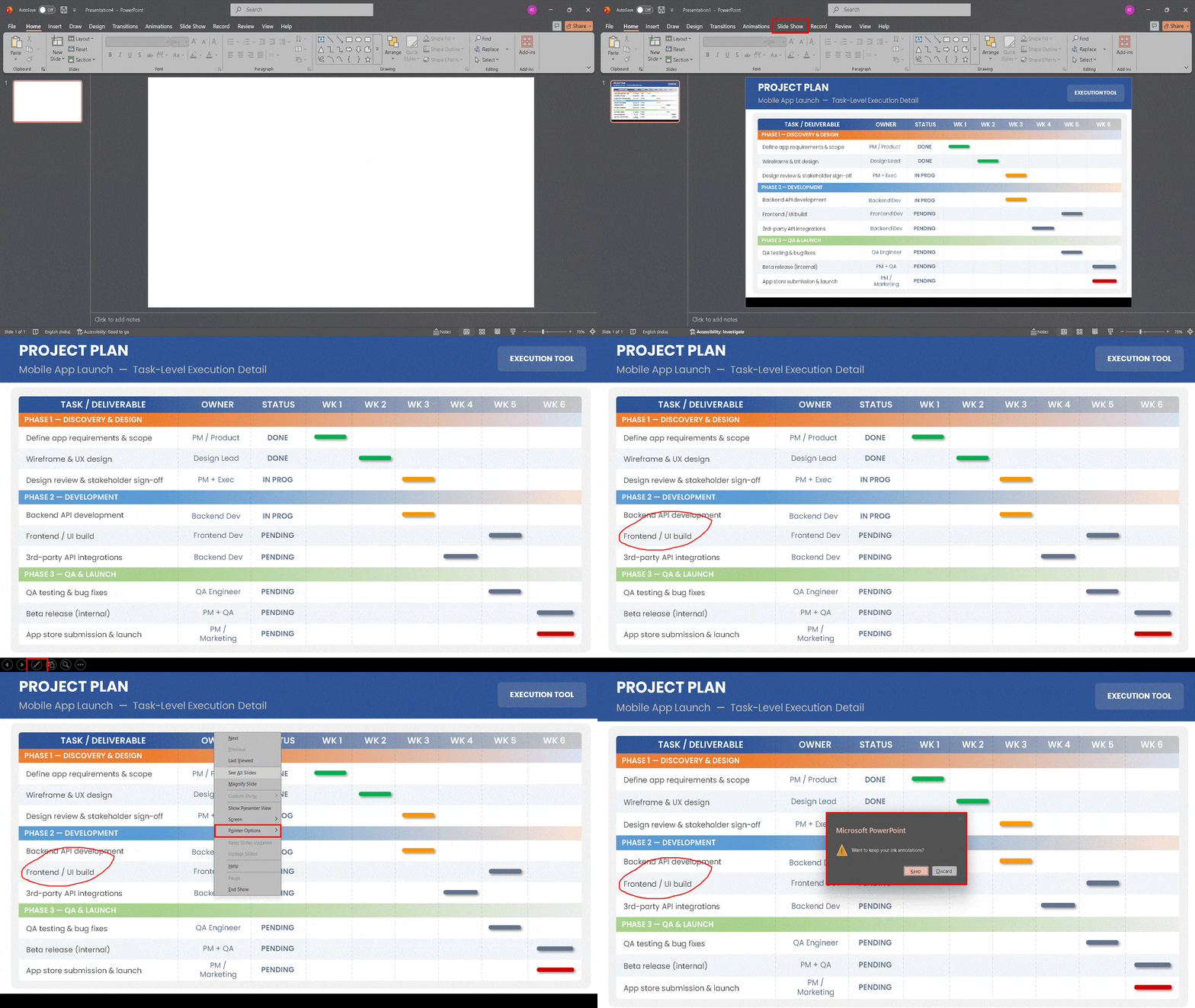
Step 1 — Start Your Slide Show
Go to the Slide Show tab and click From Beginning, or press F5. Your presentation will open in full-screen mode.
Step 2 — Open the Annotation Toolbar
Look at the bottom-left corner of your screen. You will see a small floating controls bar. Click the pen icon to open the annotation menu.
Step 3 — Choose Your Annotation Tool
The annotation menu gives you four options:
- Laser Pointer — projects a glowing dot on the slide without leaving any ink
- Pen — draws freehand lines and shapes in your chosen colour
- Highlighter — applies a semi-transparent colour over text or images
- Eraser — removes specific ink marks from the slide
Select the tool that fits what you need at that moment. You can switch between all of them without exiting the slide show.
Step 4 — Annotate Directly on the Slide
Click and drag your mouse (or use your finger on a touchscreen) to draw, underline, circle, or highlight anything on the current slide. Use right-click or the controls bar to change your pen colour or thickness at any point.
Step 5 — Save or Discard Your Annotations
When you press Escape or end the slide show, PowerPoint will ask: “Do you want to keep your ink annotations?”
- Click Keep to save all marks to the slides — this creates an annotated PowerPoint you can share directly.
- Click Discard to remove all marks and return to the clean original.
If you select Keep, every annotation becomes an embedded drawing object on its respective slide.
PowerPoint Annotation Tools Explained: Pen, Highlighter, and Laser Pointer
PowerPoint gives you three core annotation tools, each with a distinct purpose. Knowing when to use which one is what separates a smooth, confident presenter from someone fumbling mid-slide.
The Pen Tool — Freehand Drawing and Underlining
The pen tool is your go-to for freehand drawing during a presentation. Use it to:
- Circle a key figure or data point
- Underline an important phrase
- Draw arrows pointing to a specific area
- Write short notes or labels directly on the slide
You can customise the color (from a full color picker) and the thickness (thin for detail, thick for emphasis). A thick red circle around a critical number immediately pulls every eye in the room.
The Highlighter Tool — Emphasising Without Covering
The highlighter lays a semi-transparent colour over existing content. It is ideal when you want to draw attention to text or a chart element without obscuring it. Use it to:
- Mark key sentences in a quote
- Highlight a specific row in a data table
- Emphasise a label within a diagram
Unlike the pen, the highlighter does not draw defined shapes — it is purely for marking areas of the slide.
The Laser Pointer — Guide Attention Without Leaving Ink
The laser pointer is the one annotation PowerPoint feature that leaves no mark on the slide. It projects a glowing coloured dot (red, green, or blue) that follows your cursor, guiding your audience’s attention without adding any permanent ink.
To activate it during a slide show:
- Click the pen icon in the controls bar
- Select Laser Pointer
- Move your mouse — the dot follows your cursor across the slide
The laser pointer is especially useful when you want to direct attention to a chart element, figure, or image without writing on the slide. It keeps the slide visually clean while giving you full control over audience focus.
Tip: You can also hold Ctrl and press the left mouse button during any slide show to instantly activate the laser pointer — without opening the annotation menu at all. Mac users can use Cmd+ Click.
How to Adjust Colour and Thickness
During a live presentation, right-click anywhere on the slide and go to Pointer Options. From here you can:
- Switch between the pen and the highlighter
- Select a new ink colour
- Adjust the pen line thickness
Changing these settings takes only a few seconds and does not interrupt the flow of your presentation.
Keyboard Shortcuts for Annotations in PowerPoint
Switching tools via the controls bar takes a few clicks. PowerPoint Keyboard shortcuts let you move between annotation modes instantly, keeping your presentation rhythm intact.
| Action | Windows | Mac |
| Activate the Pen tool | Ctrl + P | ⌘ + P |
| Activate Highlighter | Ctrl + I | No shortcut — use the controls bar |
| Activate Laser Pointer | Ctrl + L | ⌘ + L |
| Activate Eraser | Ctrl + E | No shortcut — use Shift + E to erase all ink |
| Switch back to the cursor | Ctrl + A | ⌘ + A |
| Hide the pointer | Ctrl + H | ⌘ + I |
Memorise Ctrl + P (pen) and Ctrl + A (cursor) at a minimum — or ⌘+P and ⌘+A on Mac. Those two shortcuts alone will dramatically speed up your annotation workflow during any live session.
Mac users note: fewer slideshow annotation shortcuts are available on Mac; the pen and cursor shortcuts work identically, but the highlighter and eraser require the controls bar rather than a keyboard shortcut.
How to Switch Between Annotation Tools Seamlessly During a Presentation
One of the most common mistakes when annotating PPT slides is fumbling between tools mid-presentation, which breaks focus and flow. Here is how to stay smooth:
- Lead with keyboard shortcuts. They are faster than clicking the toolbar and keep your eyes on the audience, not the screen.
- Pre-decide your tool order. Before the session, consider which slides need highlighting vs freehand drawing.
- Use the eraser strategically. Remove exploratory scribbles while keeping useful annotations.
- Right-click for the fastest menu. A right-click during the slide show opens a context menu with direct access to all pointer options.
How to Annotate a PowerPoint on an iPad
To annotate PPT on iPad, the process is even more intuitive than on a desktop, because the touch interface makes drawing natural and precise.
Steps to Annotate PPT on iPad
- Open your presentation in the Microsoft PowerPoint app on your iPad.
- Tap Slide Show to enter presentation mode, or tap the three-dot menu and select Presenter View.
- During the slide show, tap the pen icon in the bottom-left corner.
- Choose your tool — Pen, Highlighter, or Laser Pointer.
- Use your finger or Apple Pencil to draw directly on the slide.
- When you end the slide show, tap Keep to save your annotated presentation, or Discard to remove all marks.
Apple Pencil Advantage
If you are using an Apple Pencil, annotating ppt on iPad feels closest to writing on paper. The precision and pressure sensitivity make it ideal for writing shorthand notes, signing off on slides, or marking up detailed diagrams during a client review.
Note: Make sure you are running the latest version of PowerPoint for iPad. Some features — like the full colour picker and line thickness control — are only available in updated versions.
How to Annotate in PowerPoint When Presenting on Zoom or Teams
Annotating live while screen-sharing on Zoom or Microsoft Teams requires one extra step: making sure you share the right window. Here is the correct approach for each platform. If you need a broader overview of presenting PowerPoint online, our guide on broadcasting PowerPoint online covers the full setup in detail.
Presenting and Annotating on Zoom
- Launch your presentation in Slide Show mode in PowerPoint first.
- In Zoom, click Share Screen and select the slide show window (not the PowerPoint editor window).
- Use PowerPoint’s built-in pen and highlighter tools as normal — all marks are visible to attendees in real time.
Important: Do not use Zoom’s own annotation toolbar if you want to save your marks. Zoom annotations float at the OS level and cannot be exported back into the PowerPoint file.

Presenting and Annotating on Microsoft Teams
- In a Teams meeting, click Share and choose Window, then select the PowerPoint slide show window.
- PowerPoint’s full annotation toolbar works normally in this mode.
- If you want a blank canvas for brainstorming alongside your slides, Teams also integrates with Microsoft Whiteboard as a companion tool.
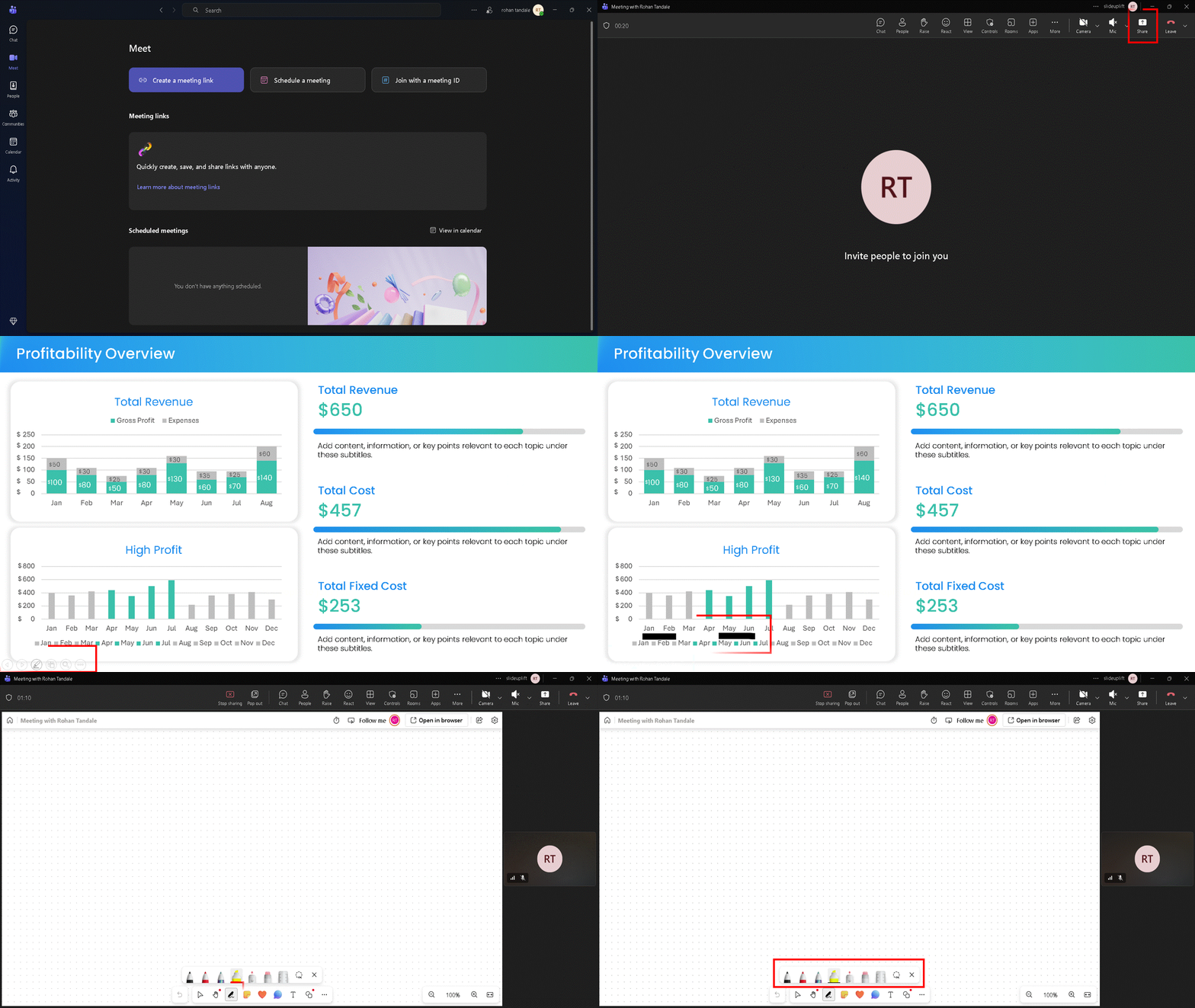
For both platforms, starting PowerPoint in slide show mode before sharing ensures your audience only sees the presentation — not your toolbar, taskbar, or editing interface.
How to Save and Export Your Annotated PowerPoint as a PDF
Once your session ends and you choose to keep your marks, you have an annotated PowerPoint file with all drawings embedded as slide objects. Sharing the .pptx file works perfectly, but exporting to PDF is often cleaner for client distribution or archiving.
Steps to Export an Annotated Presentation as PDF
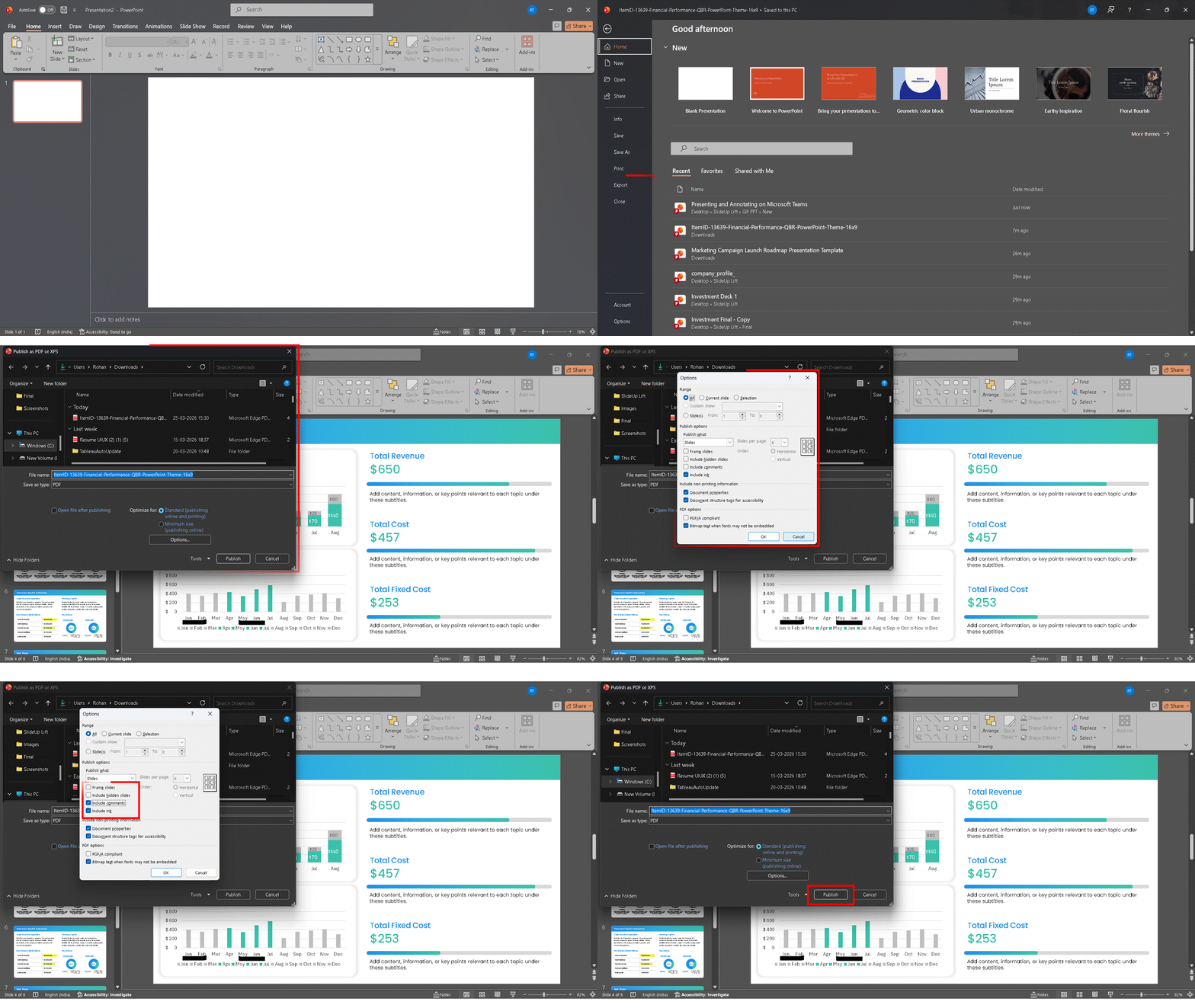
- Go to File > Export > Create PDF/XPS
- Click Options before saving
- In the Options dialog, check “Include comments and ink markup.”
- Click OK, name your file, and click Publish
Your PDF will include every annotation — highlights, pen drawings, circled figures — exactly as they appeared on the slides during the session.
Tip: An annotated presentation exported to PDF is especially useful after client meetings, training sessions, or workshops. It captures the live discussion visually, giving every participant a record of what was emphasised, agreed on, or flagged — without needing a separate written summary. For a full walkthrough on export settings and formatting options, see our guide on how to save PowerPoint as a PDF.
Why Annotations Make Your Presentations More Effective
Knowing how to annotate a PowerPoint is one skill. Understanding why it works helps you use it confidently and consistently.
They Direct Attention Instantly
A well-placed circle or underline tells your audience exactly where to look — no verbal instruction needed. Annotations in PowerPoint essentially act as a virtual pointer that leaves a visible trace, ensuring attention stays on the right spot even as you continue speaking.
They Make Complex Ideas Easier to follow.
When you are explaining a multi-step process, a data trend, or a diagram with many parts, drawing through it live is far more effective than describing it. Real-time annotation lets you walk the audience through complexity step by step — at their pace, not a pre-set animation speed.
They Create a Record of the Discussion
Unlike verbal conversations, an annotated presentation captures what was discussed, decided, or flagged as important. Exporting it as a PDF gives every stakeholder a visual record of the session — especially valuable after sales calls, project reviews, or team training.
They Signal Confidence and Engagement
Presenters who annotate live come across as more in control of their material. Using the PowerPoint annotate tools mid-presentation shows fluency with both the subject and the tool. It is the difference between reading a script and having a genuine conversation with your audience.
FAQs
-
How do I add notes to a PowerPoint without annotating live?
If you want to know how to add notes to PowerPoint without drawing on the slide, use the Notes panel instead. In the normal editing view, there is a ‘Click to add notes’ field below each slide. These notes appear only in Presenter View — they are invisible to your audience. This is entirely separate from the PPT annotation tools and is designed for speaker cues, not audience-facing marks. For a complete walkthrough, see our guide on how to add speaker notes in PowerPoint.
-
Can I annotate PowerPoint slides using a touchscreen device?
Yes. On any Windows touchscreen laptop or tablet, PowerPoint recognises touch input automatically. Start your slide show, open the annotation toolbar, select your tool, and draw with your finger. A stylus improves precision considerably. The experience is similar to how you would annotate ppt on iPad — natural and responsive to touch.
-
How do I annotate in PowerPoint on Zoom without losing the marks?
Use PowerPoint’s built-in pen and highlighter tools, not Zoom’s annotation overlay. Share only the slide show window in Zoom, then annotate using PowerPoint’s controls bar. The marks made through PowerPoint are embedded in the file and can be saved when you exit the slide show. Zoom’s annotation layer is separate, lives outside the file, and cannot be saved back into PowerPoint.
-
How do I add notes to a PowerPoint after the presentation ends?
If you choose to keep your annotations when exiting the slide show, they are already embedded as drawing objects on each slide. You can also open the file afterward and add text boxes or formal comments via Insert > Comment or Insert > Text Box. For structured annotation in ppt after a session, the Review tab’s Comments feature is often cleaner than retrospective drawing.
-
Can I annotate Power BI visuals embedded in PowerPoint?
You can draw on top of Power BI visuals using PowerPoint’s pen and highlighter, since the annotation sits on the slide layer — not inside the embed. However, any live data interactions within the Power BI visual (filtering, drilling down) are separate from PowerPoint’s tools. You cannot annotate inside the visual itself; your marks overlay it as a separate layer.
-
Are there advanced annotation add-ins for PowerPoint?
Yes. Several third-party add-ins extend what is possible beyond the standard tools:
- ClassPoint — adds stamps, draggable objects, and audience response tools to the annotation toolbar
- Mentimeter — embeds live polls and word clouds that act as interactive annotation layers
All are available through Insert > Get Add-ins inside PowerPoint.
-
How do I use the Ink Tools in the PowerPoint Draw Tab?
The Draw tab (available in Microsoft 365) is a more powerful version of annotation that works in both editing mode and slide show mode. To use it:
- Click the Draw tab in the ribbon
- Select a pen, highlighter, or pencil from the gallery
- Adjust colour and thickness using the dropdown next to each tool
- Draw directly on the slide
The Draw tab also includes Ink to Shape (turns drawn lines into clean geometric shapes) and Ink to Math (converts handwritten equations into formatted notation). These features are not available through the standard slide show annotation toolbar, making the Draw tab the most complete PowerPoint annotation workflow available in the desktop app.
Table Of Content




Related posts from the same category

25 Jan, 2018 | SlideUpLift
PowerPoint Hack: How To Create Sections In PowerPoint And How To Zoom In PowerPoint
This PowerPoint tutorial is about How To Create Sections In PowerPoint. Imagine that you are about to begin your business presentation to a room full of clients, and you remember

4 Oct, 2019 | SlideUpLift
How to insert 3D models in PowerPoint
Imagine giving a product presentation in front of your clients and you feel the need to showcase the product prototype without actually having it there with you. Also, you may

3 Feb, 2023 | SlideUpLift
How To Make A Graph In PowerPoint?
Do you need help communicating data effectively in your presentations? Data visualization is an essential tool in today's world as it helps represent complex data sets in a simple and
19 Aug, 2020 | SlideUpLift
How To Add Speaker Notes in PowerPoint
Are you tired of fumbling through your PowerPoint presentations, struggling to remember every single point you wanted to make? Or are you concerned you'll forget a crucial detail during a

19 Apr, 2023 | SlideUpLift
How To Add PowerPoint Borders To Your Presentation
Adding borders in PowerPoint is an essential aspect of presentation design as it helps to enhance the visual appeal of your slides. Customizing your presentation with borders can be a
25 Jan, 2018 | SlideUpLift
How To Print Handouts in PowerPoint & Printing Slides With Notes
This PowerPoint tutorial explains how to print handouts in powerpoint in simple steps. Sometimes it becomes necessary to provide handouts to your audience. Handouts are necessary to provide references to

8 Sep, 2022 | SlideUpLift
How to Add Background Music in PowerPoint: The Complete Guide (All Versions)
You've spent hours building the perfect presentation — your slides are polished, your data is solid, your design is on point. But something still feels flat. That missing ingredient? Background
25 Jan, 2018 | SlideUpLift
How To Reduce PowerPoint File Size & Compress A PowerPoint
This PowerPoint tutorial explains how to reduce powerpoint file size. Business presentations contain a huge number of slides filled with graphics, audios, videos, etc. making it bulky and taxing on

30 Apr, 2021 | SlideUpLift
Learn How To Communicate In Several Languages In PowerPoint
In this tutorial, we will learn how to change language in PowerPoint. Presentations are an essential part of the business world. Businesses and professionals use presentations to inform, educate, motivate
14 Aug, 2025 | SlideUpLift
Curved Arrow PowerPoint: How to Make, Draw, and Customise Arrows Step by Step
Quick Answer: To make a curved arrow in PowerPoint, go to Insert > Shapes > Block Arrows, select a curved arrow shape, and drag to draw it on your slide.