
 Flat 4


How to Rotate a Slide in PowerPoint: Complete Guide
This blog explains how to rotate slides in PowerPoint using all practical methods, including changing slide orientation, rotating objects, and handling single-slide workarounds. It also covers professional solutions for mixing portrait and landscape slides, along with common limitations and best practices. Readers will learn when to use Slide Master to fix layouts and maintain consistency after orientation changes.
Introduction
Have you ever made the perfect slide, only to find your content doesn’t fit quite right? Maybe it’s a tall infographic, a vertical chart, or a long list that feels cramped. This happens to almost everyone in PowerPoint. While it would be nice to just click a “rotate” button, the real fix is adjusting slide orientation and size. Ever noticed how some slides look perfectly neat while others feel messy? If you’ve struggled with slide orientation, object rotation, or creating mixed portrait and landscape slides, you’re not alone.
In this blog, we’ll explore how to rotate slide in PowerPoint and all the ways to do it like a pro. You’ll learn how to adjust entire presentations, spin individual objects, handle single slides, use Slide Master for consistency, and save time with simple tips. By the end, you’ll feel confident creating clean, visually appealing slides every time.
What Does Rotating a Slide Mean?
Rotating a slide means turning the entire slide at a specific angle. It changes the slide’s orientation from the standard horizontal or vertical layout. This rotation can be subtle or dramatic, depending on the design goal. Designers often use it to add visual interest.
Slide rotation helps draw attention to important content and create dynamic layouts. It adds energy to a presentation without relying on animations. This technique works well for creative storytelling slides. When used carefully, it keeps the audience engaged.
Slide Orientation Options: Landscape vs Portrait
PowerPoint offers two primary slide orientation options that define the shape of your canvas. The default is Landscape, which is ideal for most on-screen presentations as it matches the aspect ratio of modern displays. The alternative is portrait orientation, which is perfect for content that is taller than it is wide.
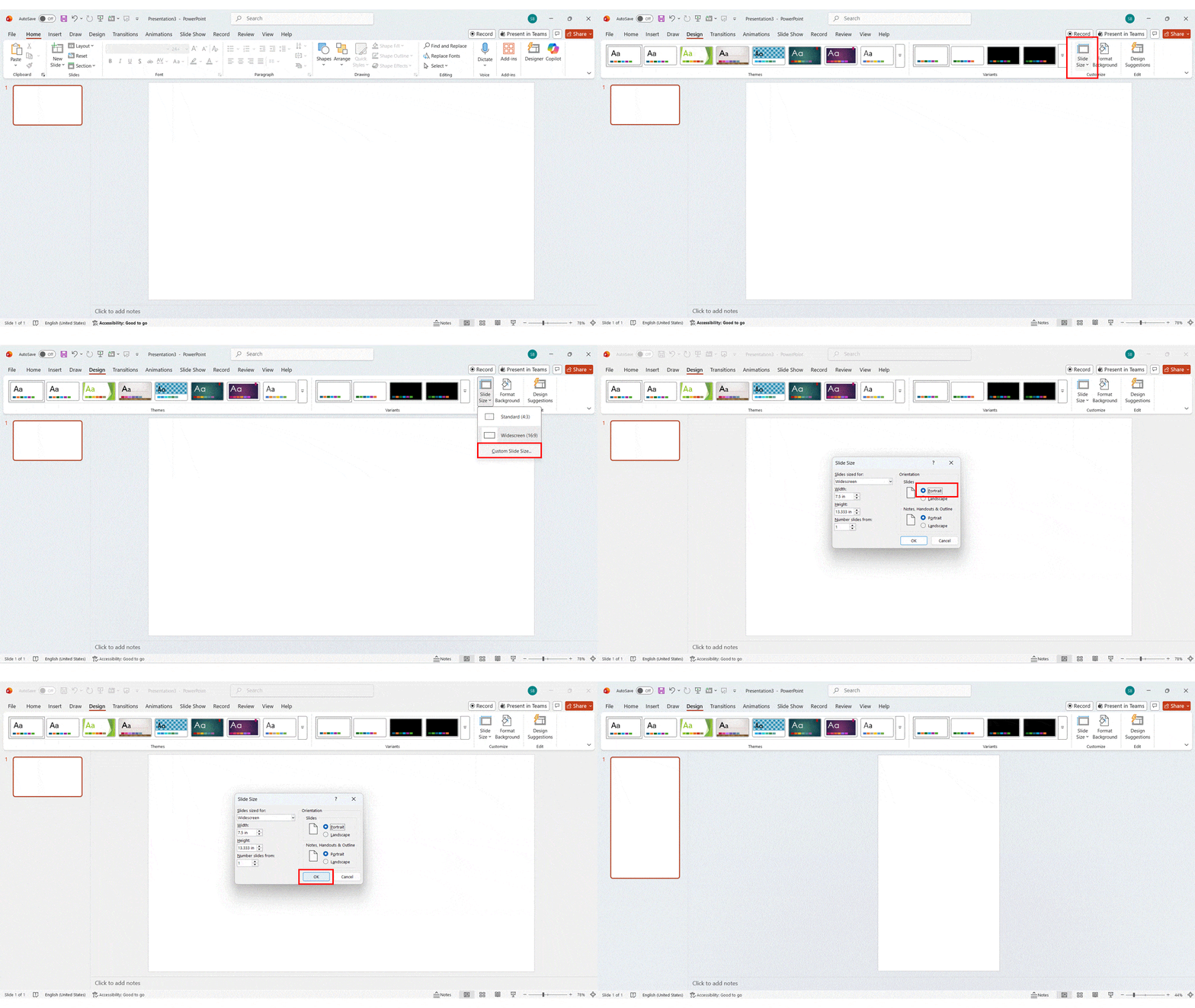
To rotate all slides in a PowerPoint presentation, you need to change this setting. The steps are simple: navigate to the “Design” tab, click “Slide Size,” and then select “Custom Slide Size.” In the dialog box that appears, you can switch the orientation from Landscape to Portrait or vice versa.
Here’s a quick breakdown:
- Landscape: The default orientation, wider than it is tall. Best for widescreen displays and wide charts.
- Portrait: Taller than it is wide. Ideal for printed documents, posters, and mobile viewing.
- Custom Slide Size: Allows you to define specific dimensions for either orientation.
Why and When to Change Slide Orientation
Changing slide orientation helps your content fit better. Some layouts need more vertical space. Tall visuals feel cramped on landscape slides. Portrait slides work well for long lists and infographics. They reduce shrinking and improve readability. This makes slides easier to understand.
The final use of your slides also matters. Printed materials follow paper standards. Portrait layouts suit handouts, posters, and reports.
Common Scenarios for Rotating Slides
- Slide rotation should solve a real problem. It works best when driven by content needs. For example:
- Creating posters or flyers for print.
- Showing vertical infographics or timelines.
- Mobile viewing is another key reason. Phones are held vertically. Portrait slides feel natural and easy to scan.
- Designing slides for mobile-first viewing.
- Building content for vertical digital screens.
Limitations and Compatibility Considerations
- PowerPoint has strict orientation rules. You cannot mix portrait and landscape slides. One setting applies to the entire file.
- This creates issues when only one slide needs rotation. PowerPoint does not support single-slide orientation changes.
- Workarounds exist but have downsides. Rotated content may feel awkward. Linked files increase complexity and risk.
Beginner’s Guide: Preparing to Rotate Slides in PowerPoint
Before changing slide orientation, some preparation helps avoid problems. Different PowerPoint versions place settings in different locations. The core feature still works the same way.
The most important step is creating a backup. Orientation changes can affect layouts. A backup lets you restore the original file anytime.
What You Need Before You Start?
- Check your PowerPoint version: Most modern versions support slide orientation changes. Button locations may vary slightly between versions.
- Understand version limitations: No PowerPoint version supports rotating a single slide. This is a built-in limitation across all versions.
- Create a backup copy: Save your presentation with a new name before editing. This protects your original layout.
- Know your goal clearly: Decide if you need portrait slides for all slides. Or only for specific content.
Important Tips to Avoid Content Distortion
- Expect layout changes: Orientation changes affect slide dimensions. Text, images, and charts may shift.
- Choose “Ensure Fit” first: This keeps all content visible. You can resize elements manually later.
- Be careful with “Maximize”: It fills the slide but may crop content. Use it only if needed.
- Use Slide Master for consistency: Adjust placeholders after changing orientation. This keeps layouts uniform.
- Group and realign elements: Grouping helps manage complex slides. It makes resizing easier and cleaner.
- Review every slide manually: Check text wrapping and image placement. Fix issues before presenting.
How to Rotate Slide in PowerPoint: Step-by-Step Guide
From changing the layout of the entire presentation to rotating a single slide or object, there’s a solution for every need. Let’s explore all the ways you can rotate slides in PowerPoint.
Method 1: Rotate the Entire Presentation (Landscape ↔ Portrait)
This method changes the orientation of all slides in your presentation.
Steps:
- Open your presentation in PowerPoint.
- Go to the Design tab on the ribbon.
- Click Slide Size → select Custom Slide Size.
- In the Orientation section, choose Portrait or Landscape.
- Click OK.
- When prompted, select Ensure Fit to prevent cutting off content.
- Review all slides and adjust layouts if needed.
Tip: Use the Slide Master to fix placeholders and maintain consistent formatting.
Method 2: Rotate Individual Objects on a Slide
Use this when you want to spin text, images, or shapes without changing the slide layout.
Steps:
- Click on the object you want to rotate (text box, shape, or image).
- Use the rotation handle (circular arrow at the top) to rotate freely.
- For precise control:
- Go to Shape Format or Picture Format → Rotate.
- Choose a preset angle or select More Rotation Options to enter an exact degree.
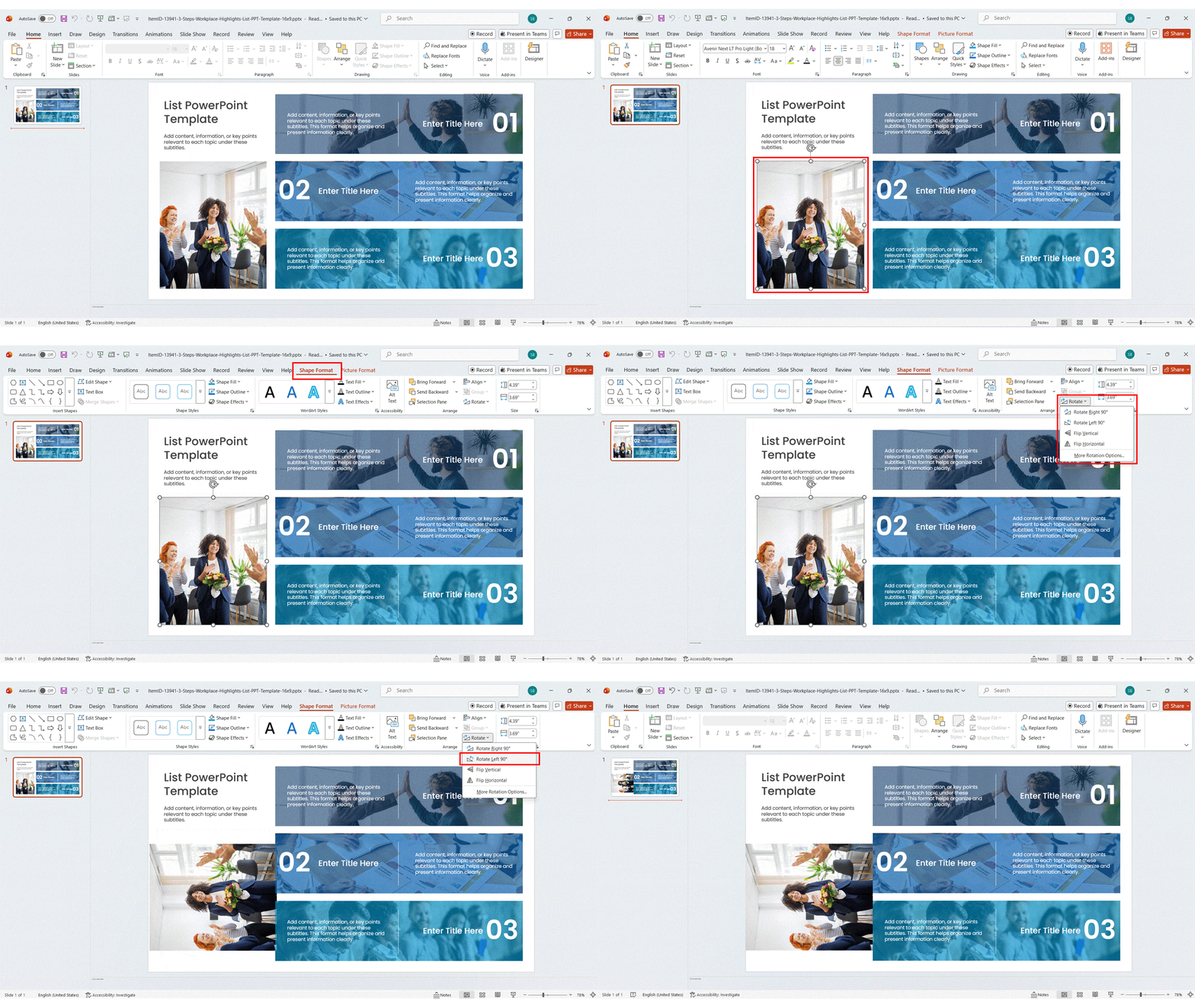
Key Difference: This method only affects the object, not the slide canvas.
Method 3: Rotate Content on a Single Slide 90°
This is a workaround when you want one vertical-looking slide in a landscape presentation.
Steps:
- Duplicate the slide as a backup.
- Press Ctrl+A (Windows) or Cmd+A (Mac) to select all objects.
- Press Ctrl+G / Cmd+G to group everything together.
- Go to Shape Format / Picture Format → Rotate → Rotate Right 90°.
- Use alignment tools to center the rotated content.
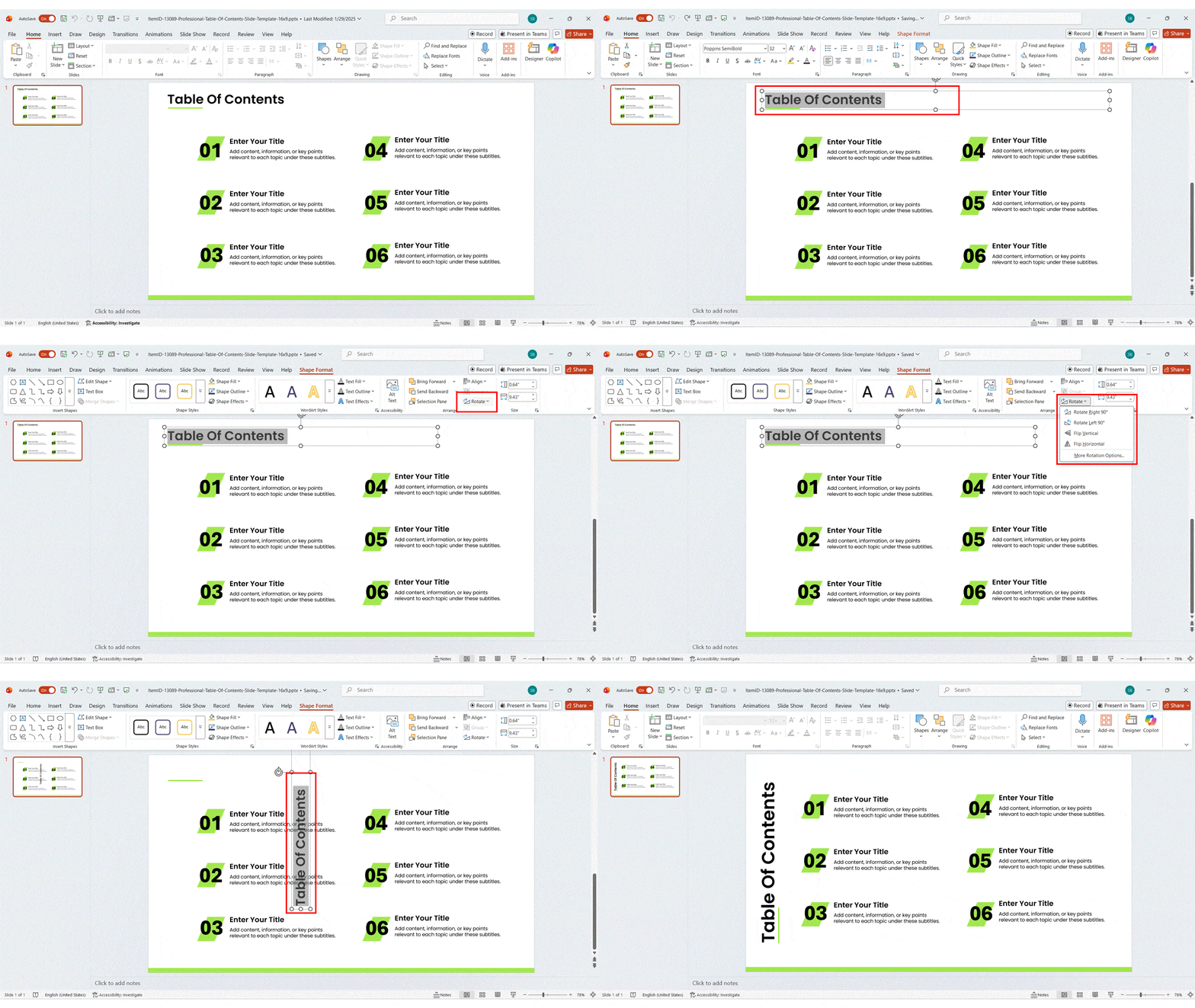
Tip: Perfect for a vertical chart, phone mockup, or infographic.
Limitation: The slide is still landscape—the content is just rotated.
Method 4: Mix Portrait and Landscape Slides Using Two Presentations (Workaround)
Use this for a professional mixed-orientation presentation.
Steps:
- Create a landscape presentation (main deck).
- Create a portrait presentation (vertical slides).
- Add hyperlinks in the main deck to jump to the portrait deck.
- Add hyperlinks in the portrait deck to return to the main deck.
- Keep both files in the same folder for smooth transitions.
Tip: This method is ideal for conferences, reports, or formal presentations with both orientations.
Method 5: Clean Up Layouts Using Slide Master
After orientation changes, slide layouts can shift. Use the Slide Master to fix this globally.
Steps:
- Go to View → Slide Master.
- Adjust title and content placeholders for the new orientation.
- Fix font sizes, footers, and spacing.
- Exit Slide Master—changes apply to all slides using that layout.
- Review slides for consistent formatting.

Tip: Always use the Slide Master after major orientation changes to save time.
Slide Orientation vs Object Rotation: What’s the Difference?
It’s important to understand the difference between rotating objects and changing the slide orientation.
- You cannot freely rotate the slide canvas itself.
- You can rotate individual elements, such as text boxes, images, shapes, and charts.
- Object rotation is done via the rotation handle or the Shape Format tab.
- Changing the slide orientation (from landscape to portrait) affects the entire slide canvas.
How to Rotate Text, Images, and Shapes on a Slide?
Rotating a slide changes the canvas; rotating an object only moves that element.
Steps to rotate objects:
- Select the object – Click on the image, shape, or text box.
- Use the rotation handle – Click and drag the circular arrow at the top to spin manually.
- Use the Format tab for presets – Go to Shape/Picture Format → Rotate and choose a preset angle (e.g., Rotate Right 90°).
- Enter a precise angle – In the Rotate menu, select More Rotation Options to type a specific degree.
Tip: Object rotation doesn’t affect the slide layout or canvas size.
If you’re looking to mirror visuals instead of rotating them, this guide on how to flip an image in PowerPoint explains horizontal and vertical flipping clearly.
Key Differences Between Object Rotation and Slide Orientation
Understanding the distinction helps maintain a clean, professional design.
| Feature | Slide Orientation | Object Rotation |
| Scope | Applies to the entire presentation | Applies only to selected items on a slide |
| Effect | Changes slide dimensions; may distort content | Only moves or spins the element; layout stays intact |
| Control | Limited to 90° flip (Landscape ↔ Portrait) | 360° rotation; precise angles possible |
| Tools | Design → Slide Size | Shape/Picture Format → Rotate |
Summary:
- Slide orientation sets the canvas for the whole presentation.
- Object rotation is local, giving freedom to adjust individual elements creatively.
Time-Saving Tips for Rotating Slides Like a Pro
- Use Slide Master First: Before rotating slides, set up your placeholders, fonts, and layout. This saves a lot of time adjusting each slide after rotation. If you’re new to it, this guide on how to use PowerPoint Slide Master explains it step by step.
- Always Back Up Your Presentation: Save a copy of your file before making orientation changes. This prevents accidental content loss and lets you experiment safely.
- Choose “Ensure Fit” When Prompted: When PowerPoint asks, selecting Ensure Fit keeps all content visible and reduces the need for manual resizing.
- Group Objects Before Rotation: For rotating a single slide’s content, group all text, images, and shapes. This ensures everything rotates together and stays aligned.
- Plan Orientation in Advance: Decide whether your slides should be portrait or landscape before designing. Planning early avoids redoing layouts later.
- Adjust Layout with Slide Master: After changing orientation, use Slide Master to fix placeholders, titles, and footers for all slides at once. This keeps your presentation consistent.
Conclusion
After going through this blog, you now know how to rotate PowerPoint slide, individual objects, or even a single piece of content in PowerPoint. You’ve learned methods for changing entire presentations, spinning objects, and clever workarounds for mixed layouts. Using Slide Master helps keep your slides neat, consistent, and professional, while grouping objects and choosing “Ensure Fit” saves time and prevents any messy distortions. With these Presentation tips, creating clean, visually appealing slides becomes simple, and rotating slides doesn’t feel confusing anymore.
FAQs
-
Can I rotate a single slide from landscape to portrait in PowerPoint?
No, you cannot change the orientation of a single slide in PowerPoint. Any change from landscape to portrait applies to the entire presentation. If you want to achieve a vertical look for just one slide, a workaround is to rotate the content on that slide 90 degrees or use a separate, linked presentation with a different custom slide size. This is a practical approach when learning how to rotate a PowerPoint slide effectively without affecting the whole deck.
-
How do I create both portrait and landscape slides in the same presentation?
To have both portrait and landscape slides, you need to use a workaround since a single PowerPoint presentation can’t mix orientations. The best method is to create two separate presentations—one for landscape slides and one for the portrait slide—and use hyperlinks to navigate between them during your slideshow.
-
Does changing slide orientation affect existing content layout?
Yes, changing the slide orientation significantly affects the content layout. PowerPoint slides will need adjustments as the canvas dimensions change. Using the “Ensure Fit” option helps scale content to prevent it from being cropped, but you will likely need to manually readjust the layout of your elements.
-
Where can I find slide rotation options in different PowerPoint versions?
If you’re wondering how to rotate a slide in PowerPoint, here’s where to find the settings.
- In modern PowerPoint, go to Design → Slide Size → Custom Slide Size.
- In older versions, look for Page Setup under the Design tab.
- From there, you can change your slides to Landscape or Portrait.
-
Can you change the orientation of just one slide in PowerPoint?
No, PowerPoint requires all slides in a presentation to share the same orientation. To include a single portrait slide, you must either rotate the content on a landscape slide or create a separate portrait presentation and link to it from your main deck. The slide size option affects the entire file.
-
Is it possible to have both portrait and landscape slides in the same PowerPoint file?
It is not possible to have both portrait and landscape slides natively in the same PowerPoint file. The orientation changes apply to the entire document. The professional workaround is to create two separate files—one for each orientation—and use hyperlinks to switch between them during your presentation.
-
Where do I find the settings to flip or rotate a slide horizontally in PowerPoint?
- PowerPoint does not allow flipping the entire slide horizontally.
- You can only rotate or flip individual objects on the slide.
- Select the object → Shape/Picture Format → Rotate → choose Flip Horizontal.
-
Are there any limitations when changing the orientation of slides in PowerPoint?
Yes, the main limitation in PowerPoint is that orientation changes apply to all slides; you cannot mix portrait and landscape. This can cause compatibility issues and may distort your content. You must review and adjust your layout after changing the slide size.
-
How can I create a vertical (portrait) slide in an existing PowerPoint presentation?
To create a vertical page, you must change the entire PowerPoint presentation to portrait orientation. Go to “Design” > “Slide Size” > “Custom Slide Size,” and select “Portrait.” This will convert every slide in your deck into a portrait slide, not just one.
-
What version of PowerPoint allows you to rotate individual slides?
No version of PowerPoint, including the latest software versions, allows you to rotate individual slides by changing their slide orientation. This setting is global and applies to the entire presentation. Workarounds, like rotating content, are necessary to achieve the effect of a single rotated slide.
Table Of Content



Related posts from the same category

14 Aug, 2026 | SlideUpLift
SlideUpLift Launches Creatos AI, the AI Presentation Maker That Never Starts From a Blank Page
Free to try, with 40,000+ professionally designed slides, AI-assisted editing, one-click branding and a fully editable PowerPoint at the end JERSEY CITY, N.J. - Aug. 14, 2026 : SlideUpLift, a

14 Aug, 2026 | SlideUpLift
How to Create an Impactful Career Presentation
Quick Answer: A strong career presentation has three parts: a short intro that states who you are and where you're headed, 3–5 milestones told as brief stories (not a list
3 Aug, 2026 | SlideUpLift
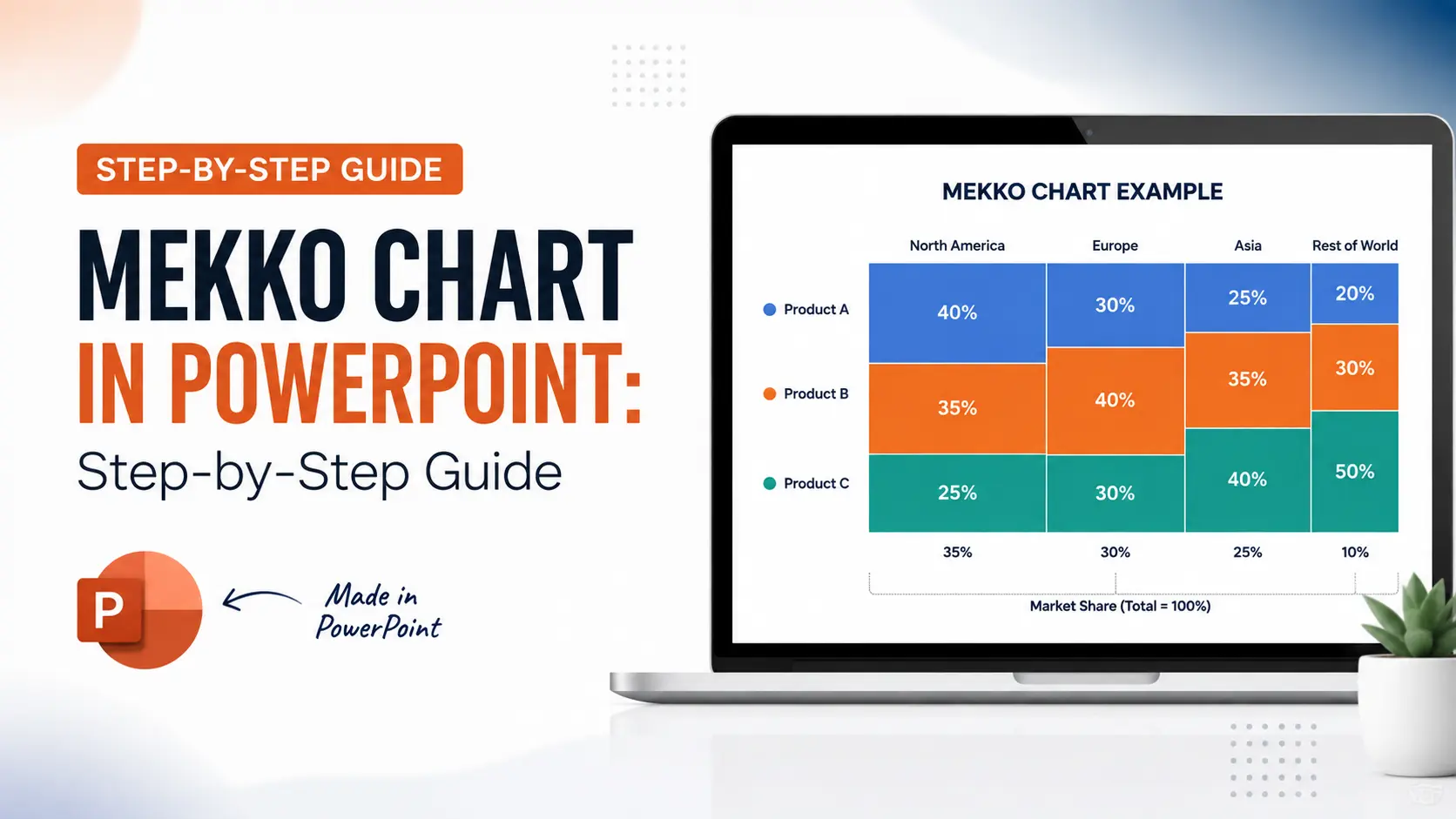
Mekko Chart in PowerPoint: Step-by-Step Guide (2026)
A mekko chart (or marimekko chart) uses variable column widths to show the size of each category, and stacked segments inside each column to show its internal split. PowerPoint has

30 Jul, 2026 | SlideUpLift
The Ultimate Guide to Types of Charts and Their Uses
Quick Answer: There are many types of charts to choose from, and there is no single "best" one — the right choice depends on what you want your data to
16 Jul, 2026 | SlideUpLift
Appendix Slide in Presentations: What It Is and How to Add One
Appendix Slides: Additional data & Q&A for deeper insights An appendix slide is a supporting slide placed at the end of a presentation, after the closing slide, that holds supplementary

6 Jul, 2026 | SlideUpLift
Mastering Masking Images in PowerPoint: Step-by-Step Guide
Quick Answer Masking images in PowerPoint means displaying a picture only within a chosen shape — such as a circle, custom outline, or block of text — instead of a
15 Jun, 2026 | SlideUpLift
How to Add Exponents in Google Slides (3 Methods)
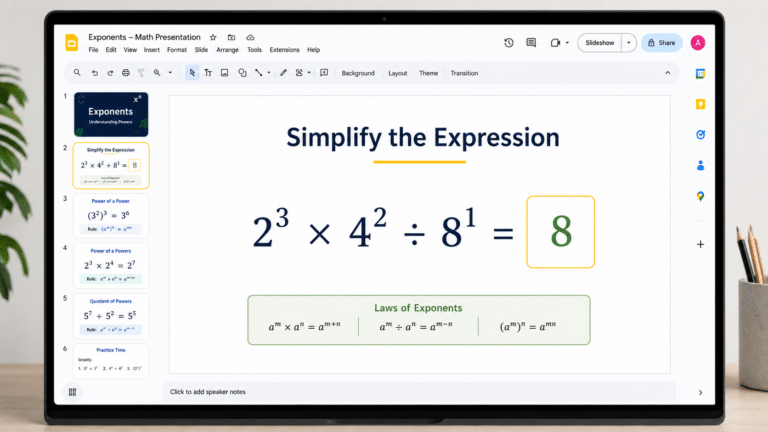
Quick Answer: To add an exponent in Google Slides: Click inside a text box and type your full equation (e.g., x2). Highlight only the character to raise (e.g., the '2').

3 Jun, 2026 | SlideUpLift
How to PowerPoint Shuffle Slides: 3 Easy Methods
Quick Answer PowerPoint has no built-in shuffle button, but you can randomize PowerPoint slides in three ways: Drag and drop in Slide Sorter view — fastest for small decks (under

26 May, 2026 | SlideUpLift
Claude for PowerPoint: A Comprehensive Guide for Users
Quick Answer Claude for PowerPoint is an official AI add-in by Anthropic, installed from the Microsoft Marketplace (AppSource). Once added, it embeds a sidebar directly in PowerPoint — on the

30 Apr, 2026 | SlideUpLift
How to Add a Border in Google Slides (7 Easy Methods)
To add a border in Google Slides, insert a rectangle shape, set its fill to transparent, and customize the border color and weight from the toolbar. You can apply borders

28 Apr, 2026 | SlideUpLift
How to Insert a PDF into Google Slides Every Method That Actually Works
No, Google Slides does not let you insert a PDF directly as an editable PDF object. Instead, you can use one of three practical workarounds. First, convert the PDF pages
24 Apr, 2026 | SlideUpLift
How to Insert a Check Mark in PowerPoint (PPT): 6 Methods
The fastest way to insert a check mark in PowerPoint is to copy and paste this symbol directly: ✓. If you want to insert it from PowerPoint, go to Insert

22 Apr, 2026 | SlideUpLift
How to make a Venn Diagram on Google Slides (3 Easy Methods)
Need to compare two products, contrast competing ideas, or map shared traits for a classroom exercise? The most common question designers and educators ask is how to make a Venn

21 Apr, 2026 | SlideUpLift
How To Lock An Image In Google Slides: Complete Step-By-Step Guide
If you have ever carefully positioned a logo or background graphic in Google Slides — only for an accidental click to send it flying across the slide — you are

15 Apr, 2026 | SlideUpLift
How To Change Opacity in Google Slides (Images, Shapes & Backgrounds)
In Google Slides, images and shapes use different controls for opacity. To change the opacity of an image, select it, open Format options, and adjust the Opacity or Transparency control

14 Apr, 2026 | SlideUpLift
How to Add a Video to Google Slides Step by Step (2026)
Embedding a video in your presentation takes just a few clicks through the Insert menu — but getting it to actually play for your audience requires knowing a few rules

13 Apr, 2026 | SlideUpLift
How To Lock An Image In PowerPoint: Complete Step-By-Step Guide
If you have ever spent time positioning a logo or background graphic perfectly — only for an accidental click to send it flying across the slide — this guide is

8 Apr, 2026 | SlideUpLift
How to Embed YouTube Video in PowerPoint (2026 Complete Guide)
Most PowerPoint videos fail at the worst moment — they don’t play, lag during playback, or force you to switch tabs mid-presentation. This guide shows you exactly how to embed
6 Apr, 2026 | SlideUpLift
How to Make an Interactive Quiz in PowerPoint (No Add-ins Required)
Quick Answer You can build a fully interactive quiz in PowerPoint using only the built-in Action and Hyperlink features — no add-ins or plugins required. Create three slide types (question,

1 Apr, 2026 | SlideUpLift
How to Print Google Slides with Notes: Step-by-Step Guide
Knowing how to print Google Slides with notes gives presenters and audiences a richer, more complete version of any presentation — each printed page shows the slide in the upper

30 Mar, 2026 | SlideUpLift
How to Convert PPT to Video: Complete Guide for 2026
This guide shows how to convert PPT to video using PowerPoint and other tools with simple, step-by-step methods. It covers formats, quality settings, narration, animations, and fixes for common export

26 Mar, 2026 | SlideUpLift
How to Curve Text in Google Slides (5 Methods That Actually Work)
This guide explains how to curve text in Google Slides using simple workarounds like Word Art, text rotation, and external tools, since there’s no built-in feature for curved text. It

24 Mar, 2026 | SlideUpLift
How to Wrap Text in Google Slides — 4 Methods That Actually Work
Learn how to wrap text in Google Slides with simple step-by-step methods to align text around images and create clean, professional layouts. This guide explains practical workarounds since Google Slides

20 Mar, 2026 | SlideUpLift
How to Add Annotations in PowerPoint: The Complete Step-by-Step Guide
This blog explains how to add real-time annotations in PowerPoint presentations using tools like the pen, highlighter, and laser pointer to make slides more interactive and engaging. It provides step-by-step

17 Mar, 2026 | SlideUpLift
How to Create a Project Presentation That Gets Stakeholder Approval
In any business environment, the ability to create a project presentation that actually moves people — securing approvals, aligning teams, and building client confidence — is one of the most
16 Mar, 2026 | SlideUpLift
How to Convert PowerPoint to Google Slides?
This blog explains how to convert PowerPoint to Google Slides using simple step-by-step methods like uploading PPT files to Google Drive or importing them directly into Slides. It helps users

13 Mar, 2026 | SlideUpLift
How to Play Video in PowerPoint Across Single and Multiple Slides
This blog explains how to play a single video across multiple slides in PowerPoint using simple animation and playback settings. It walks through the step-by-step process of inserting the video,

11 Mar, 2026 | SlideUpLift
How to Hide a Slide in Google Slides: Complete Guide
Learn how to hide and unhide slides in Google Slides without deleting them in this step-by-step guide. The blog explains simple methods like using the Skip Slide option, toolbar, and

9 Mar, 2026 | SlideUpLift
How to Hide and Unhide Slides in PowerPoint (Complete Guide)
This blog explains how to hide and unhide slides in Microsoft PowerPoint so you can skip certain slides during a presentation without deleting them. It covers why the hide slide
5 Mar, 2026 | SlideUpLift
Quarterly Business Review (QBR): What It Is, Examples & How to Present One
A QBR, or quarterly business review, is a strategic meeting held every three months to evaluate business performance, review key metrics, and align on goals for the next quarter. QBRs

4 Mar, 2026 | SlideUpLift
What Is a Product Roadmap? A Complete Guide With Types, Examples, and Templates
A product roadmap is a high-level strategic document that communicates a product’s vision, direction, priorities, and planned progress over time. It shows the product team and stakeholders what is being
![How To Broadcast a PowerPoint Presentation Online [6 Working Methods]](https://slideuplift.com/wp-content/uploads/2020/04/Broadcast-Presentation-Online-1.jpg "How To Broadcast a PowerPoint Presentation Online [6 Working Methods]")
27 Feb, 2026 | SlideUpLift
How To Broadcast a PowerPoint Presentation Online [6 Working Methods]
If you have been looking for a way to broadcast a PowerPoint presentation online to a remote audience, you have probably run into tutorials that tell you to click Slide
27 Feb, 2026 | SlideUpLift
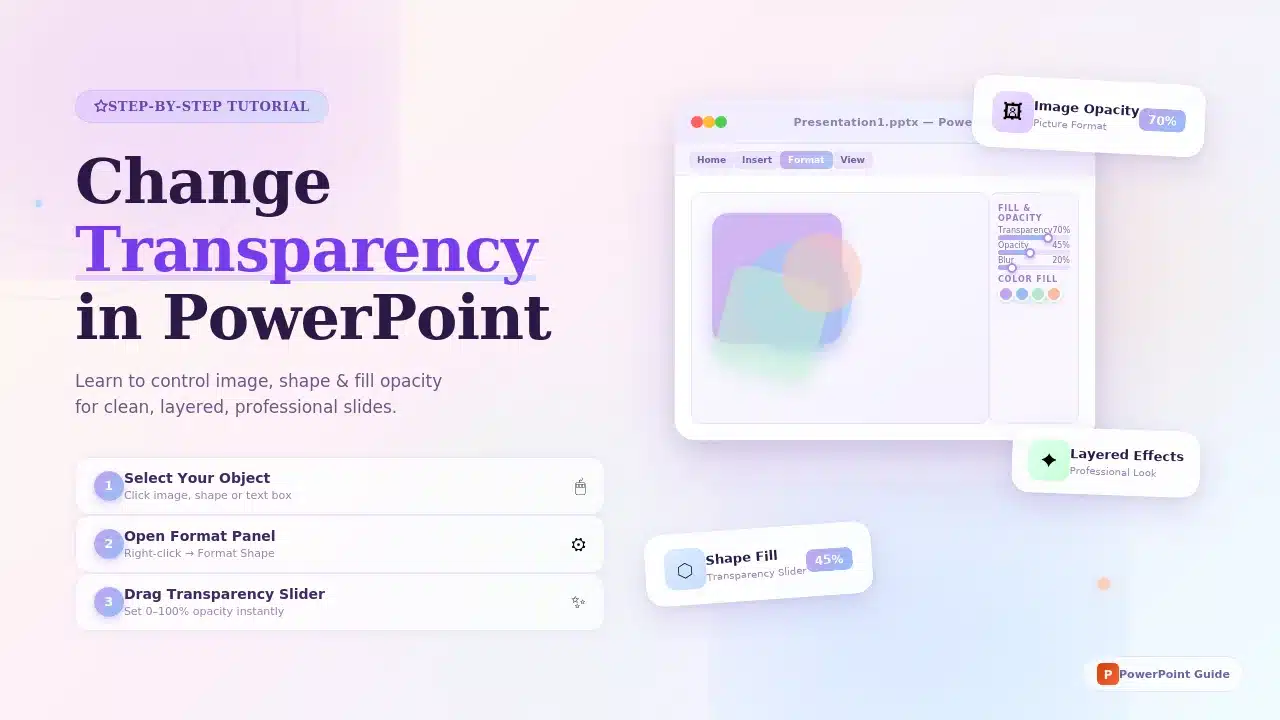
How to Change Transparency in PowerPoint (Step-by-Step Guide)
Learn how to use transparency in Microsoft PowerPoint to adjust the opacity of images, shapes, and text for cleaner, more professional slide designs. This step-by-step guide explains how to change

24 Feb, 2026 | SlideUpLift
Which Program Is Used to Open PPTX Files: Complete Guide
This blog explains which program is used to open PPTX files and how to view or edit presentations on Windows, Mac, and mobile devices. It covers tools like Microsoft PowerPoint,
20 Feb, 2026 | SlideUpLift
How to Create Engaging Academic Presentations: 10 Expert Tips + Templates
This blog is a complete guide on how to create engaging academic presentations, offering 10 expert tips for structuring content, designing slides, and delivering with confidence. It covers common mistakes

20 Feb, 2026 | SlideUpLift
How to Make Google Slides Play Automatically On A Loop? (Step-by-Step Guide)
There are two main ways to make Google Slides play automatically on a loop, and the right method depends on how you are showing the presentation. For a live presentation,
18 Feb, 2026 | SlideUpLift
How to Copy a Slide in Google Slides: Step-by-Step Guide
Learn how to duplicate, copy, and paste a slide in Google Slides using simple, step-by-step methods. This guide covers desktop shortcuts, right-click options, toolbar methods, and mobile steps for Android

17 Feb, 2026 | SlideUpLift
How to Round Corners in Google Slides: Complete Guide
Learn how to round corners in Google Slides using both the simple yellow handle method and the advanced Edit Points feature. This guide explains how to adjust the corner radius,
12 Feb, 2026 | SlideUpLift
How To Add plus or minus symbol in PowerPoint Presentations – Step-by-Step Guide
This blog explains how to add the plus or minus symbol (±) in Microsoft PowerPoint using keyboard shortcuts (Windows & Mac), the Symbols menu, equation tools, and copy-paste methods. It
10 Feb, 2026 | SlideUpLift
How To Convert Google Slides Into PDF: Quick & Easy Guide
This guide explains how to convert Google Slides into a PDF quickly and without formatting issues. It covers saving slides with or without speaker notes and methods for desktop and

6 Feb, 2026 | SlideUpLift
How To Make A Professional PowerPoint Presentation With Practical Tips
This blog shows how to make professional presentations with clear structure, engaging visuals, and effective delivery. It highlights using AI tools like ChatGPT and Copilot with ready-made templates to quickly

4 Feb, 2026 | SlideUpLift
How to Write a Sales Pitch That Captures Attention and Converts Leads
This SlideUpLift guide explains how to write an effective sales pitch by identifying your target audience, highlighting your unique value, focusing on benefits over features, and structuring a persuasive presentation

30 Jan, 2026 | SlideUpLift
Sales Presentation: A Complete Guide to Structure, Examples, and Best Practices
This blog is a complete guide to building a high-impact sales presentation, covering everything from structure and slide selection to delivery and follow-up. It explains what makes sales presentations effective,
28 Jan, 2026 | SlideUpLift
Types of Slides That Make Presentations Clear, Engaging, and Impactful
This blog explains why choosing the right slide types is essential for clear, engaging presentations. It covers the most important PowerPoint slide types, when to use them, and how they
21 Jan, 2026 | SlideUpLift
What Is 6×6 Rule in PowerPoint? Complete Guide To Improve Slides
This blog explains what is 6x6 Rule in PowerPoint and how it improves slide clarity and readability. It shows how to apply the rule, avoid common mistakes, and compare it
19 Jan, 2026 | SlideUpLift
How to Add Footnotes in PowerPoint: A Step-by-Step Guide
Adding footnotes in PowerPoint helps you cite sources and add context without overcrowding your slides. Since PowerPoint doesn’t offer an automatic footnote feature, footnotes are created manually using text boxes
16 Jan, 2026 | SlideUpLift
How To Merge PowerPoint Presentations Using Simple Methods and a Free Tool
Learn how to merge PowerPoint presentations quickly and easily using manual methods or a free merge PPT tool. Keep slides, formatting, animations, and transitions intact while creating polished, professional decks.

14 Jan, 2026 | SlideUpLift
McKinsey Slide Deck Guide: Presentation Style, Real Examples and Templates (2026)
The McKinsey presentation style is a structured, minimalist approach designed to help executives understand the main conclusion quickly. A typical McKinsey-style deck uses one clear idea per slide, an answer-first

14 Jan, 2026 | SlideUpLift
How to Add a Timer to Google Slides: Step-by-Step Guide
This blog walks you through how to add a timer to Google Slides using simple, practical methods that actually work. It covers Auto-play timing, visible countdown timers, videos, and add-ons,

8 Jan, 2026 | SlideUpLift
How to Prepare for a Presentation: A Simple Guide for Beginners
This blog explains how to prepare for a presentation step by step. It covers goal setting, content structuring, slide design, practice, and handling questions. Beginners can also learn common challenges,

6 Jan, 2026 | SlideUpLift
Presentation Tips for Structuring Messages and Effective Storytelling
This blog breaks down practical presentation tips to help you plan, design, and deliver slides that truly stand out. It covers how to simplify text, use visuals effectively, and maintain

12 Dec, 2025 | SlideUpLift
18 Best Google Slides Themes for Business & Corporate Presentations
The best Google Slides themes for business are editable, professionally designed decks built around a specific presentation job - a proposal, a QBR, a strategy roadmap, or an investor update.
9 Dec, 2025 | SlideUpLift
How to Change a PowerPoint Template – Quick Step-by-Step Guide
To change a PowerPoint template without rebuilding your presentation, open the Design tab, click the More arrow in the Themes group, choose Browse for Themes, and select the saved theme

4 Dec, 2025 | SlideUpLift
The 5-5-5-Rule-of-PowerPoint: Your Guide to Effective Design
The 5-5-5 rule of PowerPoint is a simple guideline for keeping presentation slides readable: use no more than 5 words per line, 5 lines of text per slide, and avoid

12 Nov, 2025 | SlideUpLift
How to Create a Heat Map in PowerPoint: Beginner-Friendly Guide
Heat maps are one of the easiest ways to turn rows of numbers into visuals people understand quickly. In this blog, you will learn what a heat map is, in

6 Nov, 2025 | SlideUpLift
How to Add Transitions in PowerPoint: Complete Step-by-Step Guide
Do you want to create a seamless flow in your PowerPoint slides and make a strong impression? While adding transitions to PowerPoint slides might seem obvious, transitions are the key

4 Nov, 2025 | SlideUpLift
How to Use Morph in PowerPoint: The Ultimate Guide to Smooth Transitions
If you’ve ever watched a presentation where shapes flow smoothly, images glide effortlessly, and text elegantly shifts between slides, you’ve witnessed the power of Morph in PowerPoint. This feature is
30 Oct, 2025 | SlideUpLift
How To Make A Graph In PowerPoint: Step-by-Step Guide
The goal of impactful graphs is not simply to convey data; rather, it is to tell a story with data that has meaning to the audience. Graphs and charts can

13 Oct, 2025 | SlideUpLift
How to Write a Business Case: A Beginner’s Guide + Examples
Every project needs a passport to get through executive approval. Without it, even the best plans can get grounded before taking off. This very piece of evidence holds the power

10 Oct, 2025 | SlideUpLift
What Is A Project Charter? Definition, Examples & Best Practices
Launching a project without adequate planning can result in confusion, delays, and misaligned expectations. A project charter is a key document in the project documentation process that lays the groundwork

8 Oct, 2025 | SlideUpLift
How to Insert Emoji in Google Slides & PowerPoint for Fun, Eye-Catching Slides
Have you ever thought about how a simple emoji can change the mood or tone of your presentation? You could use a smiley face 😊, that would certainly lighten the
1 Oct, 2025 | SlideUpLift
Insert Calendar In PowerPoint And Google Slides: Quick Guide For Smarter Planning.
Do you want your presentations to be more organized, attractive, and professional? Learning how to add a calendar in PowerPoint or Google Slides will take boring schedules and deadlines and
26 Sep, 2025 | SlideUpLift
What Is a PPTX File? Think of It as PowerPoint 2.0
A .pptx file is Microsoft PowerPoint's Open XML presentation format, introduced with PowerPoint 2007 as the successor to the older binary .ppt format. It can contain slides, text, images, charts,

17 Sep, 2025 | SlideUpLift
Google Slides Strikethrough: Cross Out The Old And Spotlight The New
Ever wished you could just cross something out instead of deleting it? You know, like putting a big line through “boring idea” and replacing it with “brilliant plan”. That’s the
12 Sep, 2025 | SlideUpLift
What is KPI? Step-by-Step Guide with KPIs Examples That Work
Is it hard for you to know if your business is getting to the level it should be? That's where key performance indicators (KPIs) come into play. KPIs indicate how

10 Sep, 2025 | SlideUpLift
Best Fonts For PowerPoint Presentation: The Runway Of Letters
Imagine this: your presentation is a red-carpet event. Your slides are the guests, the content is the message, and the font? That is the outfit; the one builds up the

10 Sep, 2025 | SlideUpLift
Advantages and Disadvantages of Microsoft PowerPoint: Pros, Cons, and AI Features Explained
PowerPoint has been the go-to tool for presentations for decades—but is it keeping up with today’s fast-paced, AI-driven world? PowerPoint makes it easy to take ideas to slides, whether you're

5 Sep, 2025 | SlideUpLift
10 Virtual Meeting Etiquette Rules for Professionals
Introduction Virtual meetings and online meetings are the new normal for remote work teams everywhere. Whether you're chatting with co-workers, giving a client presentation, or taking part in a hybrid

3 Sep, 2025 | SlideUpLift
How to Add Watermark in PPT Like a Pro: Step-by-Step Tutorial
Every presentation tells a story, but it should also say who it belongs to, right? And if we tell you that there is a way to stamp your identity on

29 Aug, 2025 | SlideUpLift
50 ChatGPT Prompts for Presentations (Copy-Paste Ready, Categorized for Professionals)
Most professionals don’t have a ChatGPT problem. They have a prompt problem. If you’ve ever asked ChatGPT to “make me a presentation on quarterly sales” and watched it spit out

29 Aug, 2025 | SlideUpLift
Microsoft Copilot vs ChatGPT-4 Showdown: Who’s Got the Edge?
Not long ago, making a presentation meant spending hours and hours writing content, formatting slides, finding visuals, and tweaking layouts. Tools like PowerPoint and Google Slides gave us templates, but

29 Aug, 2025 | SlideUpLift
14 Best Presentation Software Tools in 2026: In-Depth Comparison Guide
The fact is, giving a great presentation is not only about how you choose your words, but rather involves expressing those very words. With the right PowerPoint presentation software, you

28 Aug, 2025 | SlideUpLift
Password Protect PPT: How To Secure Your Presentations (Easy Guide)
Have you ever shared a PowerPoint and then worried, “What if someone changes my slides?”, or even worse, “What if the wrong person opens it and leaks the content?”. Frustrating,

26 Aug, 2025 | SlideUpLift
Track Changes In PowerPoint And Keep Your Team In Sync
Ever spent hours perfecting a PowerPoint, way too much time that you then forget to track who made what change? You aren't alone. Unfortunately, unlike Word or Gmail slides, PowerPoint
14 Aug, 2025 | SlideUpLift
Curved Arrow PowerPoint: How to Make, Draw, and Customise Arrows Step by Step
Quick Answer: To make a curved arrow in PowerPoint, go to Insert > Shapes > Block Arrows, select a curved arrow shape, and drag to draw it on your slide.

13 Aug, 2025 | SlideUpLift
How To Create Infographics In PowerPoint For Smarter Visual Storytelling?
As a professional, you might have to host meetings and deliver presentations to your stakeholders and team members. As a host, it's crucial to deliver presentations in a way that
6 Aug, 2025 | SlideUpLift
How To Edit Footer In PowerPoint For Consistent Presentation Design
Footers are an important part of a PowerPoint presentation. They give the same footer text, like the date or slide numbers, on all slides. This helps people understand the talk

31 Jul, 2025 | SlideUpLift
Google Slides vs PowerPoint: Which Is Better in 2026?
Google Slides vs PowerPoint at a Glance If you need…PickWhySeveral people editing at onceGoogle SlidesReal-time co-editing, comments and suggestions in the browser.Work with no internetPowerPointThe installed desktop app works fully

25 Jul, 2025 | SlideUpLift
How Many Slides For A 30 Minute Presentation? Timing, Tips, and Structure
One of the biggest challenges in presentations is staying on time. Whether it’s 5 minutes or 45, running over means rushing key points or losing your audience. Here’s the good

21 Jul, 2025 | SlideUpLift
PowerPoint Slide Size 101: Why It Matters More Than You Think
The default PowerPoint slide size is Widescreen (16:9), which measures 13.33 x 7.5 inches and is commonly used at 1920 x 1080 px for Full HD screens. The older Standard

15 Jul, 2025 | SlideUpLift
Google Slides Shortcuts Cheat Sheet To Boost Workflow
Google Slides is already a go-to tool for everything. From classroom projects to business decks and online workshops. It is a one-stop platform to create and share your ideas, thoughts,

7 Jul, 2025 | SlideUpLift
PowerPoint Shortcuts: The Beginner-to-Pro Keyboard Cheat Sheet
PowerPoint is one of the most powerful tools for creating presentations. However, working in PowerPoint can become time-consuming, especially when you have to click through menus for every small task.

4 Jul, 2025 | SlideUpLift
Why Your Conclusion Slide Matters—And How To Get It Right
Picture this: You've delivered an amazing presentation. Great start solid middle... but then... the ending just... flops. The energy drains. People shuffle out, already thinking about lunch. Sad, isn't it?
3 Jul, 2025 | SlideUpLift
How to Change Text Color in Google Slides for Maximum Impact – Quick Guide
Using Google Slides to build presentations is now widely practiced across the digital world. It is clean, collaborative, and performs its tasks fairly well. Be it a business pitch, a

30 Jun, 2025 | SlideUpLift
A Simple Guide On How To Change Margins In PowerPoint
Margins—those often-overlooked borders framing your slides—play a crucial role in creating polished, professional presentations. Adjusting margins helps you control your layout. This is important for printed handouts and projections. It
![How to Make an Org Chart in PowerPoint: Step-by-Step Guide [+ Templates]](https://slideuplift.com/wp-content/uploads/2021/01/How-to-create-an-org-chart-in-powerpoint.jpg "How to Make an Org Chart in PowerPoint: Step-by-Step Guide [+ Templates]")
13 Jun, 2025 | SlideUpLift
How to Make an Org Chart in PowerPoint: Step-by-Step Guide [+ Templates]
Without a clear org chart, even small teams feel messy. People start asking: “Who’s responsible for what?” Whether you are a manager, HR professional, or team lead, explaining the team

12 Jun, 2025 | SlideUpLift
How to Make an Org Chart in Google Slides: A Step-by-Step Guide
Want to map out any type of organizational structure—whether it's a company, project team, or even a hierarchy? An org chart helps visualize relationships between roles, departments, or functions in

28 May, 2025 | SlideUpLift
Beginner’s Guide: How To Make A Venn Diagram In Powerpoint
What Is A Venn Diagram? In today’s fast-paced business world, clarity is currency, and Venn diagrams deliver just that. Whether you're analyzing market segments, comparing competitors, or aligning team strategies,

27 May, 2025 | SlideUpLift
How to Create a Roadmap Diagram in PowerPoint? (Step-by-Step Guide)
Need to build a professional roadmap slide for your next presentation? You are in the right place. This tutorial walks you through every method for creating a roadmap diagram in

14 May, 2025 | SlideUpLift
How To Crop A Picture Into A Circle In The Presentation: Step-By-Step Guide
To crop a picture into a circle in PowerPoint, select the image, go to Picture Format -> Crop -> Crop to Shape, and choose Oval. Then use a 1:1 aspect

9 May, 2025 | SlideUpLift
Mastering SVG in PowerPoint for Sharp & Professional Slides
SVG vs PNG in PowerPoint SVG in PowerPoint refers to inserting Scalable Vector Graphics — images built from mathematical paths instead of pixels — directly into your slides. Because SVGs

6 May, 2025 | SlideUpLift
VBA in PowerPoint: How to Automate Your Slides
Quick answer: VBA (Visual Basic for Applications) is the programming language built into PowerPoint. You use it to write macros that automate repetitive tasks — formatting every slide, inserting logos,

2 May, 2025 | SlideUpLift
150+ Informative Speech Topics for 2026 (Students, College & Work)
Picking the right informative speech topic is half the battle: it decides how easy your research will be, how confident you'll sound, and whether your audience leans in or checks
22 Apr, 2025 | SlideUpLift
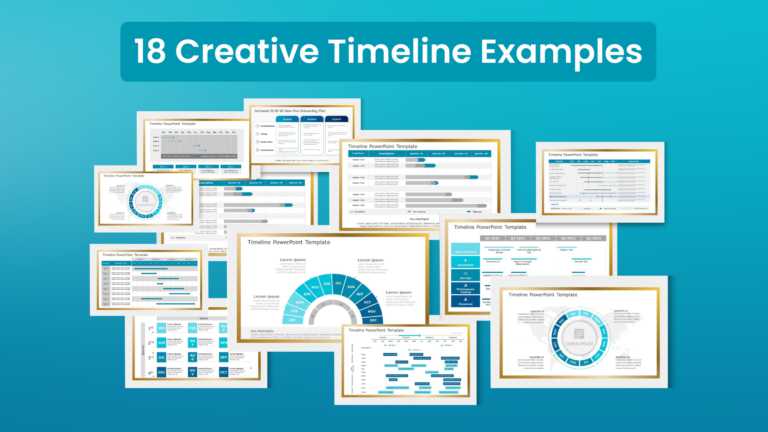
18 Timeline Examples for Presentations (+ Free Templates)
Quick answer: A timeline is a visual that shows events in chronological order, making milestones, schedules, and progress easy to follow at a glance. Presenters use them for project plans,

28 Mar, 2025 | SlideUpLift
Can ChatGPT Make a PowerPoint Presentation? Step-by-Step Guide
Yes, ChatGPT can help you make a presentation by generating the outline, slide-by-slide content, key messages, and speaker notes. It can also produce a basic downloadable PowerPoint file through supported
![How to Present an Action Plan in PowerPoint: Templates, Design Tips & Examples [2026]](https://slideuplift.com/wp-content/uploads/2024/12/Blog-Header-Image_How-To-Present-An-Action-Plan_Dec24-1-1.jpg "How to Present an Action Plan in PowerPoint: Templates, Design Tips & Examples [2026]")
2 Jan, 2025 | SlideUpLift
How to Present an Action Plan in PowerPoint: Templates, Design Tips & Examples [2026]
Why Presentation Matters You’ve created a solid action plan. Now comes the critical part: presenting it effectively to stakeholders, team members, and leadership. Here’s the reality: A brilliant action plan
![How to Write an Action Plan: 5-Step Guide with Examples [2026]](https://slideuplift.com/wp-content/uploads/2024/12/Header-Images-Blog-1.jpg "How to Write an Action Plan: 5-Step Guide with Examples [2026]")
2 Jan, 2025 | SlideUpLift
How to Write an Action Plan: 5-Step Guide with Examples [2026]
What Is An Action Plan? An action plan is a detailed roadmap that transforms your goals into concrete, executable steps. It’s not just a wish list—it’s a strategic document that

10 Dec, 2024 | SlideUpLift
How to Make a PowerPoint Presentation Attractive: 11 Design Techniques (2026)
Quick Answer: Making a PowerPoint attractive comes down to a set of repeatable layout techniques — visual bullets, split layouts, chunking, full-bleed images with overlays, icon systems, focal points, and

22 Nov, 2024 | SlideUpLift
Personal Timeline Examples: 15+ Ideas to Map Your Life Story
A personal timeline is a visual map of the key moments in your life — births, milestones, achievements, and turning points — arranged in chronological order. People use them for
![Org Chart Examples: 12 Real Examples by Type & Industry [+ Free Templates]](https://slideuplift.com/wp-content/uploads/2024/08/COVER-PAGE_12-Org-Chart-Examples-You-Need-To-Check-Out-Templates_JULY26.jpg "Org Chart Examples: 12 Real Examples by Type & Industry [+ Free Templates]")
5 Aug, 2024 | SlideUpLift
Org Chart Examples: 12 Real Examples by Type & Industry [+ Free Templates]
An organizational chart (org chart) is a diagram that shows a company's internal structure — who reports to whom, how teams are grouped, and where each role sits in the

24 Jul, 2024 | SlideUpLift
SWOT Analysis: The Complete Guide to Strengths, Weaknesses, Opportunities & Threats
One of the biggest challenges professionals face is a lack of structured thinking when strategizing plans, conducting competitor analysis, or evaluating current strategies. This often leads to wasted time, inconsistent

25 Jun, 2024 | SlideUpLift
Best PowerPoint Color Palettes for 2026 (Trends, Examples & Psychology)
The best PowerPoint color palette depends on the purpose and tone of your presentation. For corporate decks, use dependable blues, teals, whites, and neutrals to create a clear, credible look.

24 Apr, 2024 | SlideUpLift
How to Create a Project Timeline: Steps, Types & Examples
A project timeline is a visual schedule that lays out a project's phases, tasks, milestones, and deadlines in chronological order, so your team can see what is due and when.
![How To Make A Flow Chart In Google Slides [Step-by-Step Guide]](https://slideuplift.com/wp-content/uploads/2021/11/How-to-make-a-flowchart-in-google-slides.jpg "How To Make A Flow Chart In Google Slides [Step-by-Step Guide]")
19 Apr, 2024 | SlideUpLift
How To Make A Flow Chart In Google Slides [Step-by-Step Guide]
If you have been manually sketching process flows or copying shapes one by one, there is a faster way. Google Slides has everything you need to build a clean, professional

19 Mar, 2024 | SlideUpLift
How To Make A Flow Chart in PowerPoint Presentation?
To make a flowchart in PowerPoint, go to Insert → SmartArt → Process, select a layout, click OK, fill in your steps, and apply a color scheme under SmartArt Design.

5 Mar, 2024 | SlideUpLift
SWOT Analysis Examples: Real-World Examples for Business, Projects & Products
The fastest way to understand a SWOT analysis is to see completed ones. Below are five detailed SWOT examples — two well-known companies, a small business, a project, and a

4 Mar, 2024 | SlideUpLift
5 Whys Root Cause Analysis: How It Works (With Examples)
Quick Answer 5 Whys root cause analysis is a problem-solving technique developed at Toyota that asks “why” repeatedly (typically five times) to trace a problem from its symptoms back to

29 Feb, 2024 | SlideUpLift
How to Create Harvey Balls in PowerPoint: A Complete Step-by-Step Guide
Quick Answer: What Are Harvey Balls and How Do You Create Them? Harvey Balls are circular ideograms — partially filled circles — used to represent qualitative data such as project

20 Feb, 2024 | SlideUpLift
Start Stop Continue Retrospective: A Complete Guide With Examples, Templates & Exercises
A Start Stop Continue retrospective is a team reflection exercise where each member names one thing the team should start doing, one it should stop, and one it should continue.

9 Feb, 2024 | SlideUpLift
60+ Best Business Presentation Topics to Captivate Your Audience (2026)
Imagine standing in front of a room full of people waiting to hear what you have to say. Instead of feeling nervous, you feel confident and prepared — because you
![9 Box Talent Review Explained [Detailed 9 Box Matrix Guide]](https://slideuplift.com/wp-content/uploads/2024/01/9-Box-Talent-Review-Explained-and-detailed-guide.png "9 Box Talent Review Explained [Detailed 9 Box Matrix Guide]")
30 Jan, 2024 | SlideUpLift
9 Box Talent Review Explained [Detailed 9 Box Matrix Guide]
Quick Answer A 9 box talent review is a talent management tool that plots employees on a 3x3 grid across two dimensions: current performance and future potential. Managers use it

24 Jan, 2024 | SlideUpLift
How to Make a Roadmap Presentation That Wins Buy-In
Quick answer: To make a roadmap presentation that lands, tailor it to your audience, build it around a narrative instead of a list of dates, present at the right level

24 Jan, 2024 | SlideUpLift
How to Make a Business Plan Presentation: Guide, Examples & Free Template
Quick Answer A business plan presentation is a concise, visual slide deck — usually 10 to 12 slides — that communicates a company's business model, market analysis, competitive position, marketing

24 Jan, 2024 | SlideUpLift
What Is a Project Roadmap? A Complete Guide With Examples and Free Templates
A project roadmap is a high-level visual plan that shows a project’s goals, major milestones, key deliverables, and timeline at a glance. Unlike a detailed project plan that tracks tasks
21 Dec, 2023 | SlideUpLift
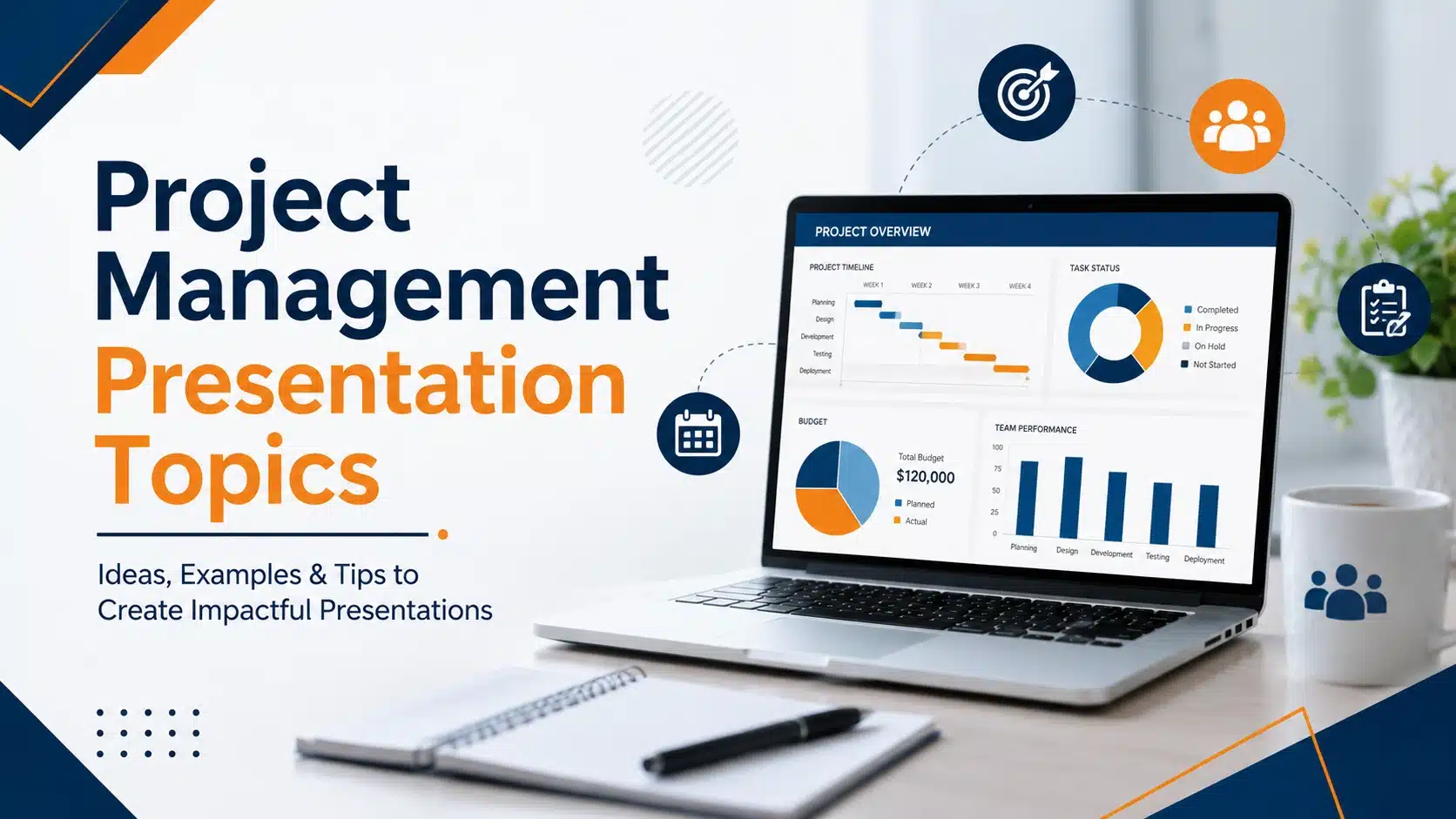
25+ Project Management Presentation Topics for 2026
Project management presentation topics span everything it takes to deliver work successfully — planning methods, team collaboration, risk management, leadership, and the trends reshaping how projects get done. Whether you're

18 Dec, 2023 | SlideUpLift
Project Proposal Presentation: How to Make One That Gets Approved
Quick Answer: A project proposal presentation is a slide deck that pitches a project to decision-makers — investors, management, or stakeholders — to win approval, funding, or resources. It covers

20 Nov, 2023 | SlideUpLift
How to Add Superscript and Subscript in Google Slides
Quick Answer: To add a superscript in Google Slides: Click inside a text box and type your full expression (e.g., x2). Highlight only the character to raise (e.g., the 2).

18 Nov, 2023 | SlideUpLift
How to Insert Icons in Google Slides Presentations
Quick Answer There are 5 ways to insert icons in Google Slides quickly and effectively: Install the Flaticon or Noun Project add-on via Extensions > Add-ons > Get add-ons Use
12 Oct, 2023 | SlideUpLift
How to Do Hanging Indent on Google Slides: 4 Easy Methods (Complete Guide)
Have you ever tried to format citations or multi-line bullet points in Google Slides, only to end up with text that wraps messily back to the left edge? You are

13 Sep, 2023 | SlideUpLift
How to Write a Presentation: Outline, Script & Examples
Quick Answer To write a presentation, work in this order: (1) write your message as one full sentence with a verb, (2) build an outline of 3–5 main points before

28 Feb, 2023 | SlideUpLift
Gardner’s Theory of Multiple Intelligences: All 8 Types Explained
Quick Answer: Gardner's Theory of Multiple Intelligences proposes that intelligence is not one fixed ability but a set of at least eight distinct types — linguistic, logical-mathematical, spatial, bodily-kinesthetic, musical,

21 Feb, 2023 | SlideUpLift
PowerPoint Design Ideas: Layouts, Colors, Charts & the Design Ideas Feature (2026)
A great message can still fail on a bad slide. Design is what carries your idea from your head into your audience's — the color choices, the layout, the way

14 Feb, 2023 | SlideUpLift
How to Make a Presentation: A Step-by-Step Guide
Quick answer: To make a presentation, work in this order — (1) write your one-sentence takeaway before you open any software, (2) outline your slides as plain text, (3) set

13 Oct, 2022 | SlideUpLift
Agile vs Traditional Project Management: Key Differences and Which Is Better
Agile project management is an iterative, flexible approach that delivers work in short cycles and adapts to change as it goes. Traditional (Waterfall) project management is a linear, plan-driven approach

8 Sep, 2022 | SlideUpLift
How to Add Background Music in PowerPoint: The Complete Guide (All Versions)
You've spent hours building the perfect presentation — your slides are polished, your data is solid, your design is on point. But something still feels flat. That missing ingredient? Background
1 Sep, 2022 | SlideUpLift
How To Group & Ungroup In Google Slides (Step-by-Step Guide)
This blog walks you through how to group and ungroup elements in Google Slides in a simple, practical way. It covers grouping images, shapes, text boxes, and objects, along with

25 Oct, 2021 | SlideUpLift
How To Make a Quiz in Google Slides? (Step-by-Step Guide)
Quick Answer: To make a quiz in Google Slides, create a question slide with answer options, then build separate “Correct Answer” and “Wrong Answer” feedback slides. Use Insert → Link

3 Mar, 2021 | SlideUpLift
30-60-90 Day Plan for Interview: Examples, Templates & Sample Answers
A 30-60-90 day plan for an interview is a short presentation or one-page document that outlines what you will accomplish in your first 30, 60, and 90 days in the
6 Jan, 2021 | SlideUpLift
Mastering Zoom in PowerPoint: Tips for Engaging Presentations
Quick Answer 1: How to use the PowerPoint Zoom navigation feature Go to Insert tab → Links group → Zoom Choose Slide Zoom, Section Zoom, or Summary Zoom Select your
17 Feb, 2020 | SlideUpLift
PowerPoint Arrows: How to Make an Arrow Diagram in PowerPoint | Step-by-Step Tutorial
Quick Answer — How to Insert Arrow in PowerPoint To insert arrow in PowerPoint and build a diagram: Go to Insert > Shapes and select a Rectangle. Duplicate it (Ctrl+D)

4 Dec, 2019 | SlideUpLift
How to Do Hanging Indent on PowerPoint: 5 Easy Methods (Windows & Mac)
Whether you're formatting an APA reference list on a slide, polishing multi-line bullet points, or creating a clean agenda, knowing how to do a hanging indent in PowerPoint is one

25 Mar, 2019 | SlideUpLift
16 PowerPoint Hacks You Didn’t Know for More Effective Presentations
Quick Answer: The most useful PowerPoint hacks include playing a video continuously behind your content, using Sections and Summary Zoom for smooth navigation, applying Morph transitions, embedding fonts before sharing,